


Most course creators underprice by default. Here is how to price an online course with confidence and how ThriveCart helps you maximize revenue
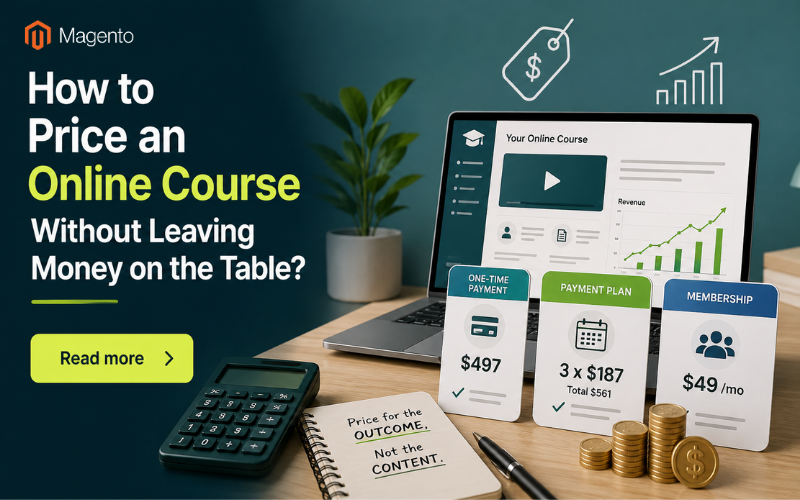
There is no single formula, but there is a reliable pricing framework that gives you a solid starting point.
The most common pricing mistake course creators make is not charging too much. It is charging too little.
Underpricing is the default for most people launching their first online course. It feels safer. It feels less risky. But a low price does not just reduce your revenue per sale. It signals low value to potential buyers and makes it harder to cover customer acquisition costs, stalling your digital business before it gains traction.
Knowing how to price an online course correctly is one of the highest-leverage decisions you will make. Get it right, and every other part of your business, your marketing, your conversions, and your profitability gets easier. Here’s a clear pricing framework to make that decision with confidence.
Why course pricing is not about what feels comfortable
Most first-time course creators set their first price based on one of three things: what they think sounds reasonable, what a competitor charges, or the lowest number they think someone would pay. None of these is a pricing strategy.
Price is a signal. Before a buyer reads your sales page, listens to your testimonials, or evaluates your curriculum, your price has already told them something about the quality of what they are about to buy.
A $27 online course and a $997 online course are processed very differently in a buyer's mind, even before they know what is inside. Premium pricing attracts buyers who are serious about the outcome.
Lower price points attract browsing buyers. That is not a value judgment. It is a conversion dynamic. And it matters for your digital business because the type of buyer you attract shapes your conversion rates, testimonials, refunds, and long-term reputation.
How to determine the right price for your online course
Start with the outcome, not the content.
Ask yourself: What is the measurable result a student achieves by completing this course? Then ask what that result is worth to them.
• A course that teaches a coaching session framework to new coaches, helping them charge $200 per session, is worth far more than $97.
• A course that helps a freelancer land their first $3,000 client is worth more than $197.
• A course that teaches a skill someone can use to earn money repeatedly over the years is worth more than a one-time $47 purchase.
Price toward the outcome. Not the hours of content.

Pricing models: Which one fits your course?
Before you settle on a number, decide on a pricing model. Different models work for different types of courses and audiences.
1. One-time payment
The simplest and most common model. The buyer pays once and gets lifetime access. No recurring billing. No ongoing commitments.
Best for: Self-paced courses with a defined curriculum and no ongoing support.
A one-time payment model has high perceived value because the buyer feels they own something permanently. It also avoids the friction of recurring billing, which can reduce conversion rate on the initial sale.
2. Payment plans
Instead of a single upfront amount, the buyer pays in installments. A $997 course offered as three payments of $367 becomes accessible to a much larger audience.
Offer payment plans when:
• Your course is priced above $300
• Your audience includes people who would buy if the upfront cost were lower
• You want to increase the average order value through split payments
The total paid under a payment plan is usually 10 to 20% higher than the one-time payment. That premium is standard and expected. A split-pay option does not cannibalize your full-pay sales as much as most creators fear.
3. Subscription or membership
Buyers pay monthly or annually for ongoing access, often to a content library, live calls, or a community.
Best for: Courses with evolving content, live coaching session components, or ongoing support elements.
This model generates predictable revenue but requires consistent content delivery to retain subscribers.
4. Tiered pricing
Offer two or three tiers of the same core course at different price points. A base tier might include only the curriculum. A mid-tier adds templates or workbooks. A premium tier adds access to group calls or coaching sessions.
Tiered pricing increases average order value across your full buyer pool and gives price-sensitive buyers an entry point without discounting your core offer.
Should you offer payment plans?
Yes, in most cases. Once your online course is priced above $300, not offering a split-payment option leaves a meaningful percentage of potential buyers on the table.
Here is why payment plans work:
• They lower the barrier to purchase without changing the actual price
• They expand your accessible audience without discounting
• They increase average order value because the installment total exceeds the one-time price
• They work seamlessly on platforms built for flexible checkout flows
How to structure a payment plan:
One-Time Price | Split Pay Option | Total Paid |
$297 | 3 x $109 | $327 |
$497 | 3 x $187 | $561 |
$997 | 3 x $367 | $1,101 |
$1,997 | 6 x $367 | $2,202 |
The key is making the installment plan feel like a genuine option, not a discount. Frame it as flexibility, not a reduction in value.
How ThriveCart helps you maximize revenue from every sale
Pricing strategy only works if your checkout infrastructure can execute it. That is where ThriveCart makes a direct, measurable difference.
Built specifically for course creators and digital product sellers.
ThriveCart is a course platform and high-converting checkout system built for people who sell digital products, online courses, and digital products of all kinds. It is not a general-purpose tool. Everything about it is designed to help course creators and digital business owners maximize revenue from every transaction.
If you want a course platform and checkout system that supports every pricing model, handles sales tax, enables payment plans, and increases average order value through order bumps and upsells, ThriveCart is built for exactly that.
FAQs
1. What is the right price for my first online course?
Use the outcome-based pricing framework: identify the measurable result your student achieves, estimate its value to them, and price accordingly.
For most first online course launches, $197 to $497 is a reasonable range for a focused, outcome-specific course. Start there and test. Adjust based on conversion rate data, not intuition.
2. Should I offer a free version of my course?
A free introductory module or lead magnet can work well for digital business growth, but pricing your full course at zero undermines perceived value.
3. How do payment plans affect my cash flow?
Payment plans spread revenue over multiple months, which can create short-term cash-flow gaps if there's an upfront cost. Offset this by pricing installment plans 10 to 20% above the one-time payment price and by using platforms like ThriveCart that handle split-pay collection automatically, so you are not chasing money manually.
4. When should I raise my price?
Raise your price when you have consistent testimonials and social proof, when your conversion rate holds steady or improves, and when your audience is buying without significant objection to the current actual price.
Conclusion
Pricing an online course is a decision grounded in the outcome you deliver, the audience you serve, and the infrastructure you use to convert interest into revenue.
Charge based on real value, not on comfort. Offer payment plans to expand your accessible audience without discounting. Use order bumps and upsells to increase average order value beyond the headline price. And use a course platform built to support every element of your pricing strategy without adding complexity to your workflow. That is how a course creator builds a compounding digital business, rather than one that stalls every time they question whether their price is right.
Related Posts
- Top 5 Enterprise Laptop Return Shipping Solutions for Remote Workforce Asset Recovery
- International Link Building for E-commerce Brands: A Practical Guide
- Server Refresh vs Third-Party Maintenance: Which Option Makes More Sense?
- The Best Funnel Builder for Coaches and Course Creators
- How Magento Powers Modern eCommerce Businesses
- How to Price an Online Course Without Leaving Money on the Table?