


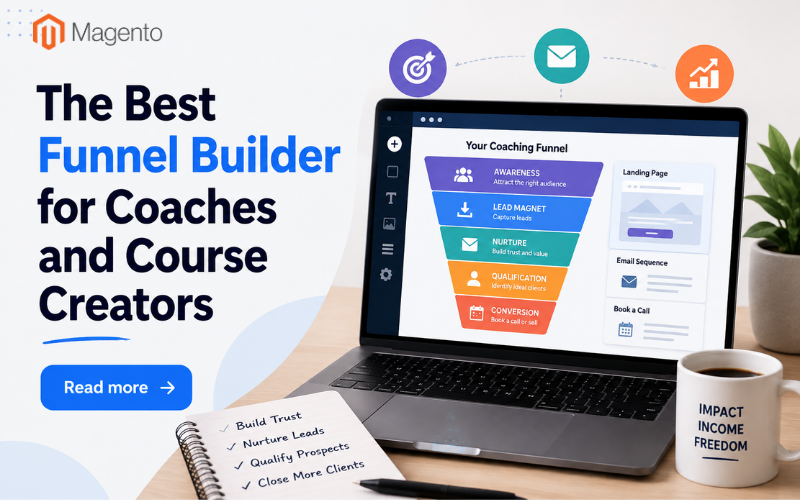
Not all funnel builders fit how coaches and course creators sell. Here's what to look for, what most platforms miss, and which tool delivers results.
Most funnel builders are designed for ecommerce. Coaches and course creators have a completely different sales process, and the tools need to match it.
A product seller needs a cart, a checkout, and a thank-you page. A coach needs to build trust, demonstrate expertise, qualify prospects, and guide prospects through a relationship before they become paying clients. That journey looks nothing like buying a pair of shoes online.
The coaching funnel is longer, more personal, and more relationship-driven than a standard ecommerce flow. A funnel builder that does not account for that will create more friction than it removes. You will spend time working around the tool instead of closing clients.
Here’s what a funnel builder for coaches and course creators needs to do, which platforms get it right, and how to choose the one that fits your specific coaching business and growth goals.
Why Coaches and Course Creators Need a Different Kind of Funnel
The coaching industry runs on trust. Your funnel has to build it before it asks for anything.
When someone buys a $27 digital product, they make a fast decision based on price and a short sales page. When someone invests $3,000 in a coaching program, they need to believe the coach understands their current situation, can get them to their goal, and is worth the price.
That difference changes everything about how the funnel works.
What a coaching funnel needs to do:
• Attract the right target audience, not just traffic
• Deliver valuable resources that demonstrate expertise before the sale
• Qualify prospects so the coach spends time with the right people
• Create enough trust that a discovery call feels like a natural next step
• Convert qualified leads into paying clients without excessive manual work
Most platforms are built to shorten the path from ad click to purchase. That works for low-ticket products. For coaches selling coaching programs at $1,500 to $10,000+, the funnel needs to do more relationship work, not less.
The Anatomy of an Effective Coaching Funnel
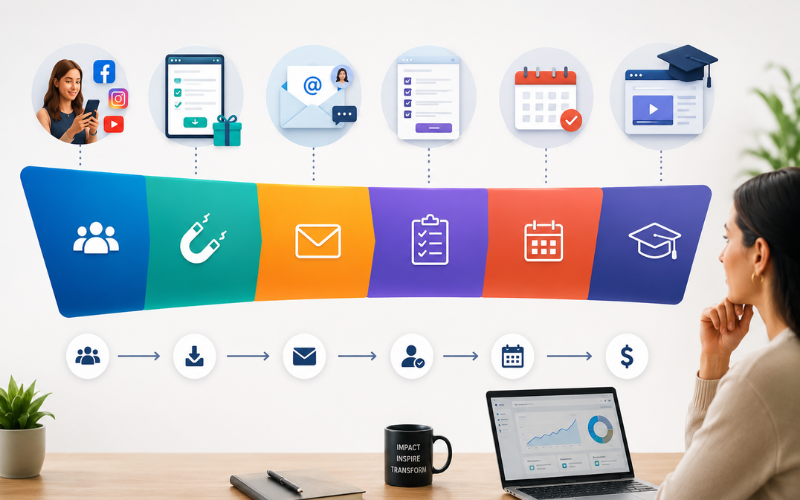
A coaching funnel has distinct stages, and each one needs a different tool or page type.
Stage | Goal | Funnel Element |
Initial awareness | Get in front of the right people | Blog content, paid ads, social media, YouTube |
Interest and opt-in | Capture contact details | Lead magnet + landing page |
Nurture | Build trust with potential clients | Email sequence, case studies, video content |
Lead qualification | Identify ideal prospects | Application form or quiz |
Conversion | Book a discovery call or purchase | Sales page + booking tool |
Delivery | Fulfill the promise | Membership sites or a course platform |
Each stage is a crucial step. A funnel that skips nurture and jumps straight to the sales pitch will see low conversion rates regardless of how much traffic you send to it.
The most common gap in coaching funnels:
Most coaches nail the lead magnet and the sales page. The stage that falls apart most often is the middle, the email nurture sequence that moves someone from "interested" to "ready to invest." Without a strong nurture stage, even the best landing page does not deliver results.
What to Look For in a Funnel Builder
Before comparing platforms, know what your coaching niche actually needs.
Non-negotiables for coaches and course creators:
• Landing page builder with fast load times and mobile optimization
• Email integration with major email marketing platforms
• Drag and drop editor that does not require a developer
• Sales funnels with upsell and downsell sequencing
• A/B testing (also called B testing) to improve conversion rates over time
• Social proof elements: testimonials, case studies, review blocks
• Interactive elements like countdown timers and exit intent
• Multiple offers support if you sell at different pricing start points
• Fast page load speed, especially on mobile devices
Nice to have for growing coaching businesses:
• Built-in email marketing, so you are not paying for two platforms
• Application or quiz pages for lead qualification
• Membership sites for course delivery
• Integration with booking tools for discovery call scheduling
• Behavior-based automation to reduce manual work
Where most platforms fall short:
• Page speed. Slow pages kill conversion rates on paid ad campaigns.
• Flexibility. Grid-based editors force you into layouts that do not match your brand.
• Cost structure. Many tools lock essential features behind higher tiers, making the actual cost significantly higher than the advertised entry price.
Convertri is purpose-built for funnel building with speed as the core differentiator. Pages load in under three seconds consistently, which directly affects quality scores when running paid ads and conversion rates from cold traffic. The free-form drag-and-drop editor places elements anywhere on the page without row or column constraints, giving coaches full control over how their coaching funnel looks and performs.
Best Funnel Builders for Coaches and Course Creators
Choosing the right funnel builder depends on your business goals, technical experience, and the type of coaching programs or online courses you offer. Below are some popular funnel-building platforms worth considering.
1. Onepage – Best for Lead Generation and Simple Funnel Management
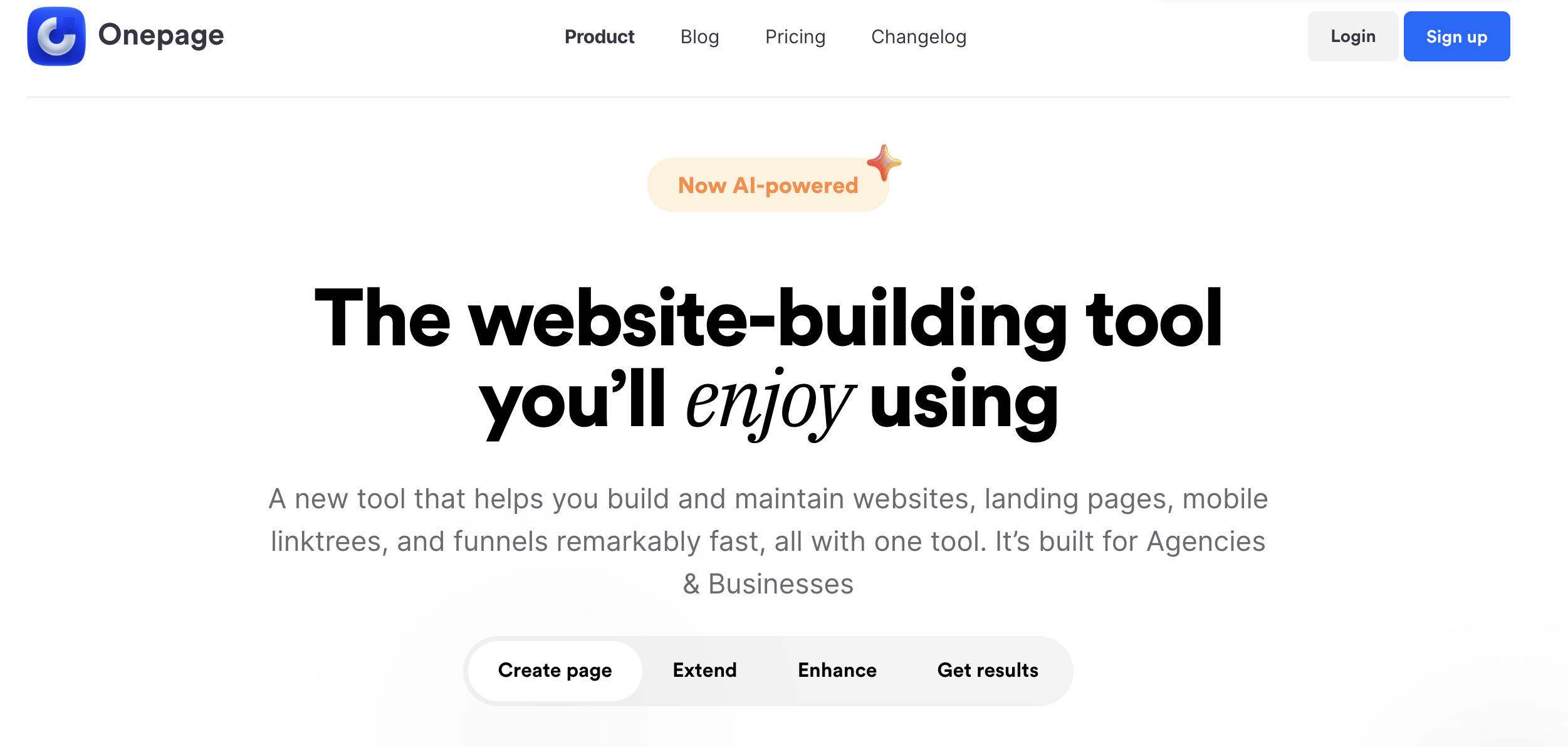
Onepage is a no-code website and funnel builder designed to help businesses create professional landing pages, capture qualified leads, and manage conversion funnels without complex technical setups. For coaches and course creators, it offers a practical way to attract potential clients and guide them toward consultations, coaching programs, or online course offers.
Key features:
• Drag-and-drop page builder: Create responsive landing pages and customize layouts without coding.
• Multi-step forms and quizzes: Collect visitor information, qualify potential clients, and create personalized lead generation experiences.
• Built-in CRM: Store and organize leads directly within the platform.
• AI-powered page creation: Speed up the process of building and customizing pages and forms.
• Funnel analytics: Track visitor interactions, form submissions, and conversion performance.
• Ready-made templates: Launch landing pages and lead generation funnels more efficiently.
For example, a business coach can create a landing page offering a free consultation, add an interactive questionnaire to understand visitors' needs, and collect their contact information for follow-up.
Best for: Coaches, consultants, and course creators looking for an easy-to-use solution focused on lead generation, client qualification, and funnel management.
Onepage is particularly useful for businesses that want to simplify their marketing workflow without relying on multiple complicated tools. However, advanced course delivery features may require a separate learning management platform.
2. ClickFunnels – Best for Sales Funnels and Conversion Optimization
ClickFunnels is a sales funnel platform that helps coaches and digital product creators build structured customer journeys, from lead generation to product purchases.
Key features:
• Landing page and sales funnel builder.
• Sales pages and checkout flows.
• Upsells and order bumps.
• Email marketing and automation capabilities.
• Tools for selling online courses and digital products.
Best for: Coaches and course creators focused on selling high-ticket programs, digital products, and online courses through structured sales funnels.
ClickFunnels is particularly useful for businesses with established offers that want to optimize their sales processes. However, its range of features may require additional time to learn.
3. Kajabi – Best for Online Course Creators
Kajabi is an all-in-one platform designed for entrepreneurs who create, market, and sell online educational products. It combines course hosting with marketing and sales tools.
Key features:
• Online course creation and hosting.
• Landing pages and sales funnels.
• Email marketing and automation.
• Coaching programs and membership options.
• Payment processing and digital product management.
Best for: Course creators, educators, and coaches who want to manage their digital products and marketing activities within a single platform.
Kajabi is especially suitable for businesses that prioritize course delivery and student experience alongside lead generation.
4. Systeme.io – Best for Beginners and Budget-Conscious Creators
Systeme.io is an all-in-one marketing platform that combines sales funnels, email marketing, online course hosting, and automation tools.
Key features:
• Drag-and-drop sales funnel builder.
• Email campaigns and marketing automation.
• Online course hosting.
• Sales pages and checkout functionality.
• Affiliate program management.
Best for: New coaches, independent educators, and small businesses looking for an affordable way to launch their first coaching or online course funnel.
Systeme.io provides an accessible starting point for creators who need several marketing tools without managing multiple subscriptions.
5. Leadpages – Best for Landing Pages and Lead Capture
Leadpages is a landing page builder focused on helping businesses convert website visitors into leads and potential customers.
Key features:
• Customizable landing page templates.
• Drag-and-drop page editor.
• Lead capture forms and pop-ups.
• Conversion testing capabilities.
• Integrations with email marketing platforms.
Best for: Coaches and course creators who primarily need conversion-focused landing pages for webinars, free resources, consultation bookings, or promotional campaigns.
Leadpages is a practical option for businesses focused on landing page performance rather than managing an entire course delivery system.
Which Funnel Builder Should You Choose?
The best platform depends on how you plan to attract, convert, and serve your customers.
• Onepage: For lead generation, interactive forms, and simple funnel management.
• ClickFunnels: For structured sales funnels and conversion-focused marketing.
• Kajabi: For course hosting, coaching programs, and integrated marketing.
• Systeme.io: For beginners seeking an affordable all-in-one solution.
• Leadpages: For landing pages and lead capture campaigns.
Before choosing a platform, consider your budget, technical requirements, marketing goals, and whether you need built-in course hosting or primarily want to generate qualified leads.
FAQs
What is a coaching funnel?
A coaching funnel is a systematic sequence of pages, emails, and interactions that guides a potential client from first discovering you to becoming a paying client. It typically starts with a coaching lead funnel magnet that captures their email, moves through a nurture sequence that builds trust and demonstrates expertise, and ends with a sales page or discovery call booking page where the conversion happens. A well-built coaching funnel does the client relationship-building work that most coaches currently do manually.
What is the best funnel builder for coaches?
The best funnel builder depends on your specific needs. For coaches running paid ads who need fast pages and strong A/B testing, Convertri is the strongest technical choice.
How many pages does a coaching funnel need?
A minimal effective funnel for a coaching business needs four pages:
1. a landing page for the lead magnet opt-in
2. a thank-you page with the next step
3. a sales page or application page
4. a booking or confirmation page
Most coaches add a nurture email sequence between the opt-in and the sales page to build enough trust before asking for the investment.
Do I need an all-in-one platform or separate tools?
Not necessarily. For coaches focused on running paid ads and optimizing conversion rates, a dedicated funnel builder like Convertri, paired with a strong email marketing tool, typically outperforms an all-in-one platform on the metrics that matter most.
Parting thoughts
A funnel builder is only as useful as the strategy behind it. The best tool in the world will not fix a coaching funnel that skips nurture, speaks to the wrong audience, or sends traffic to a slow-loading page. You still need to identify your ideal client through surveys and market research. Also, make sure to track key metrics to optimize the funnel efficiently.
The right platform for your coaching business is the one that removes friction at the stage where you are currently losing leads. Identify where your coaching funnel actually breaks down, then choose the funnel builder that addresses that specific gap. Build the minimal version first. Test it with real traffic. Optimize based on what the data shows. That systematic approach is what separates coaches who build sustainable, paying-client pipelines from those who keep rebuilding their funnels and wonder why the results never come.
Related Posts
- How to Start an Automotive Dropshipping Business in 2026
- 12 Best Custom Software Development Companies for Scalable EdTech Platforms in 2026
- How to Build a Sustainable Backlink Strategy for an E-commerce Website
- Top 5 Enterprise Laptop Return Shipping Solutions for Remote Workforce Asset Recovery
- International Link Building for E-commerce Brands: A Practical Guide
- Server Refresh vs Third-Party Maintenance: Which Option Makes More Sense?