



Discover how Magento powers modern eCommerce businesses with flexible catalogs, B2B features, payment integrations, AI, and scalable performance.
If you've spent any time researching platforms for an online store, you've probably run into Magento more than once. It's been around since 2007, and it still comes up whenever a business needs more than a basic storefront. That's largely thanks to Magento development services, which give companies the flexibility to build stores that match how they actually operate. For brands that outgrow simpler tools, Magento is often where they land.
So what makes it worth? Magento doesn't lock you into a rigid template.
You decide on how your catalog works, what happens when an order comes in, and how checkout flows. That's exactly why Magento development services show up so often in conversations about scaling an online business.
Smaller platforms work fine until your catalog gets complicated, or you start selling to other businesses too. That's usually when Magento starts making sense.
Why Businesses Still Turn to Magento
Setting it up takes more effort than most platforms, and nobody really pretends otherwise. Once it's running though, Magento handles complexity better than most alternatives. You can manage multiple stores from one backend, run different pricing for different customer groups, and build catalogs with thousands of products without things slowing down. Getting this right usually means working with a web development company that understands Magento's architecture, not one that's just added it to a long service list.
In various cases, companies choose Magento because they tried something simpler first and hit a wall somewhere. Maybe checkout couldn't handle custom pricing rules. Maybe the old platform couldn't keep up with inventory across several warehouses. Whatever the reason, Magento tends to be the answer once a store needs more control than a templated solution allows.
Magento Website Development: What It Actually Involves
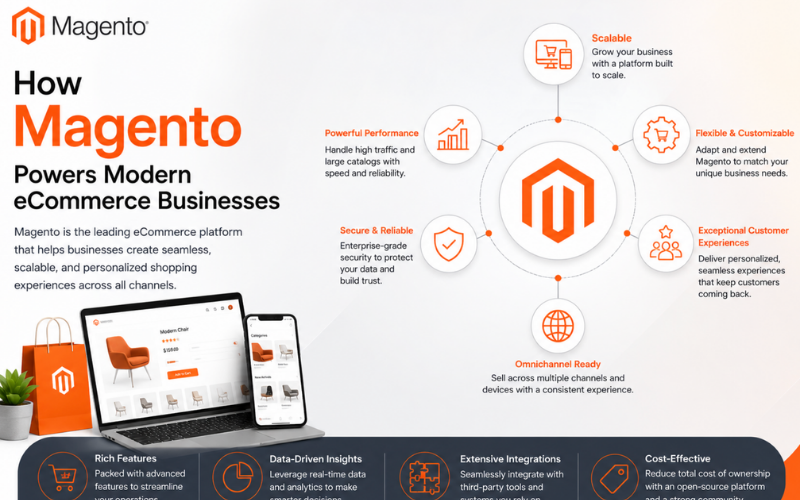
Developing a Magento store the ideal way covers more ground than people usually expect. It's not just front-end design and a theme. Developers work inside Magento's module system, set up the catalog's database structure, configure caching so pages load quickly and build custom functionality around whatever the business needs. A small store selling t-shirts has very different requirements than a B2B distributor managing wholesale accounts and custom quotes, and Magento can support both, just through different configurations.
A lot of the real work happens behind the scenes, things like:
• Setting up indexing so catalog search stays fast as the product count grows
• Configuring caching layers, Varnish or Redis, so pages don't lag under traffic
• Building custom modules for features the platform doesn't include by default
• Testing checkout flows across devices before anything goes live
Well, none of this is fancy work. But it's the difference between a Magento store that runs smoothly and one that frustrates both shoppers and the team running it.
Magento as an Enterprise eCommerce Platform
Adobe Commerce, the paid version of Magento, gets marketed almost entirely toward bigger businesses, and there's a real reason for that. At this level, it handles things smaller tools weren't built for: multi-currency stores, region-specific pricing, B2B account hierarchies, and ERP or CRM integrations larger companies already rely on. Magento has a real foothold here too. Among the top 1,000 US retailers, roughly 20% currently run their stores on Magento, according to recent platform research, which is notable since Magento trails Shopify and WooCommerce on raw market share but holds up well where store complexity matters most.
Generative AI in eCommerce and Where Magento Fits
One thing that's shifted a lot over the past couple of years is how AI shows up inside these platforms. Adobe Commerce has leaned into product recommendations, personalized search results, and automated content tools through Adobe Sensei. It's not full automation by any means, but it's a noticeable change from just a few years back. If you're curious how this trend plays out across the wider industry, our piece on Generative AI in eCommerce goes into more depth on where things are headed. For Magento stores specifically, AI tools right now are mostly used for personalization, showing the right products to the right shoppers, and for speeding up some of the more repetitive parts of running a store, like writing product descriptions or tagging inventory.
Payment Gateway Integration on Magento
Checkout is where a lot of stores lose customers, so how payments connect on the backend matters more than people sometimes give it credit for. Magento supports a long list of payment providers out of the box, PayPal, Stripe, Authorize.net, and Braintree among them, and it's fairly straightforward to add more through extensions if a business needs something region-specific. The bigger question usually isn't whether Magento can connect to a given payment provider.
Whether that integration is set up properly, with the correct fraud checks, correct currency handling and a checkout flow that doesn't add unnecessary friction. You'll sometimes see stores with 5 payment options and a clunky checkout anyway. The integration itself is only half the job. The experience built around it matters just as much.
Choosing the Right Magento Development Services Partner
Running a Magento store well usually comes down to having the right team behind it, whether that's in-house or through an agency. Look for Magento development services that go beyond basic setup and actually understand performance, security patching, and planning for growth, not just getting a store live and walking away. You might notice that plenty of agencies can build a store quickly, but fewer of them can maintain one well over several years as the product catalog and traffic keep growing. It's worth asking about their experience with version upgrades too, since Magento 2 ships security patches on a regular schedule, and a team that stays on top of these keeps a store both safe and fast.
Magento isn't the right fit for every business and it's fair to say it asks more of you upfront than some no-code alternatives do. But for businesses dealing with complex catalogs, B2B requirements or multiple sales channels, it tends to deliver where lighter platforms fall short. If you're weighing your options right now, it's worth talking to a development team that's actually worked with Magento at this level before you make a final call.
Related Posts
- Top 5 Enterprise Laptop Return Shipping Solutions for Remote Workforce Asset Recovery
- International Link Building for E-commerce Brands: A Practical Guide
- Server Refresh vs Third-Party Maintenance: Which Option Makes More Sense?
- The Best Funnel Builder for Coaches and Course Creators
- How Magento Powers Modern eCommerce Businesses
- How to Price an Online Course Without Leaving Money on the Table?