


Learn how to start an automotive dropshipping business in 2026, from choosing a niche and suppliers to pricing, inventory, compatibility, and scaling.
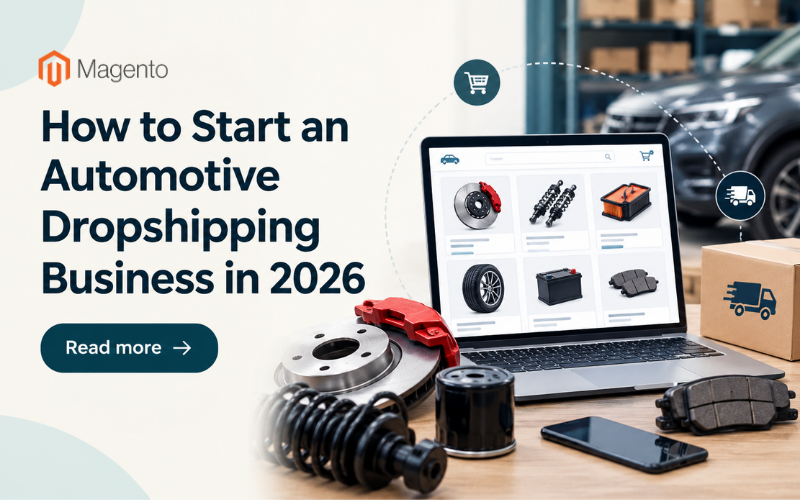
What if you could sell automotive products online without filling a warehouse with parts?
That’s the basic appeal of dropshipping, but auto parts come with a catch: customers need confidence that what they’re buying will actually work for their vehicle.
That makes this business a little different from ordinary ecommerce.
You’re not just selling a product. You’re helping someone make a decision that can involve compatibility, shipping, price, and a fair bit of uncertainty.
Still, the opportunity is there.
The U.S. light-duty automotive aftermarket is projected to grow 5.2% in 2026. So, if you're considering getting into the business, here's what you need to know before you start.
Why Automotive Dropshipping Is Getting Attention in 2026
Walk into an auto parts store, and you’ll notice something quickly. There’s a lot of stuff.
Filters, lighting, suspension components, wheels, accessories, performance parts. Keeping all of that on hand would be a serious undertaking for a new business.
Dropshipping offers another route. You can build the storefront and customer experience while suppliers handle the physical inventory and fulfillment. Let’s expound on why automotive dropshipping is the next big thing in the business world.
You Don’t Need to Hold Inventory
Traditional auto-parts retailing can involve warehouses, shelves, forklifts, and a lot of capital tied up in stock. Dropshipping changes that equation.
A customer buys from your store, the order goes to your supplier, and the supplier ships the product directly to the customer. That doesn't make the business effortless. It simply moves where some of the operational work happens.
Automotive Has More Than One Customer
There’s the person looking for a replacement component because their car has suddenly developed a problem.
Then there’s the enthusiast who has spent three weeks comparing suspension kits at midnight.
Those are completely different buyers.
SEMA’s research found that pickups, CUVs, and SUVs accounted for more than half of accessory and performance-parts sales in 2023, showing how useful it can be to understand specific vehicle segments rather than treating “car owners” as one giant audience.
A focused store can speak to one of those groups much more naturally.
How to Start an Automotive Dropshipping Business
The easiest mistake is starting with the website. A nice homepage feels like progress, but it doesn't answer the harder questions: What are you selling? Who needs it? Which supplier will fulfil it? And does the margin survive once all the costs arrive?
Get those answers first. Then build the store around them.
So, before you start tweaking logos and arguing over button colours, here are the steps that can turn the idea into a working automotive dropshipping business.
1. Pick a Niche You Can Actually Understand
“Automotive” is not a niche. It’s an enormous category.
You could focus on truck accessories, off-road products, replacement components, performance parts, interior accessories, or products for a particular vehicle segment. The narrower starting point isn't a limitation. It can actually make the business easier to manage.
Imagine building a store specifically for off-road truck owners.
Your product descriptions, buying guides, social content, and customer support can all speak the same language. Compare that with trying to sell floor mats, turbo components, motorcycle helmets, and replacement mirrors to everyone at once. Messy.
2. Research Products Before Adding Them
Don't build a 10,000-product catalog just because a supplier gives you access to one.
Look at demand, competition, shipping costs, product dimensions, and likely return rates. A product that looks fantastic at wholesale can become a headache when freight charges and customer acquisition costs enter the picture.
Pay particular attention to products that require vehicle-specific information.
That's where automotive e-commerce gets interesting.
3. Choose Suppliers That Can Keep Up
Your supplier is effectively part of your customer service team, whether you like it or not.
If their inventory feed says a turbocharger is available when it actually sold out yesterday, your customer won’t blame the supplier. They’ll blame you. Fair or not, that’s ecommerce.
This is where automation becomes useful rather than just another shiny software feature. An automotive dropshipping setup can connect a storefront with multiple automotive distributors and keep product, inventory, pricing, order, and tracking information moving between systems.
Spark Shipping’s automotive integrations, for example, can map one storefront product to multiple supplier SKUs, bring available vehicle fitment information into listings, and route orders according to rules you configure.
That matters when the same brake rotor sits in several distributor catalogs with different prices, stock levels, and SKUs.
4. Build a Store That Answers One Question Quickly
Does this part fit my vehicle?
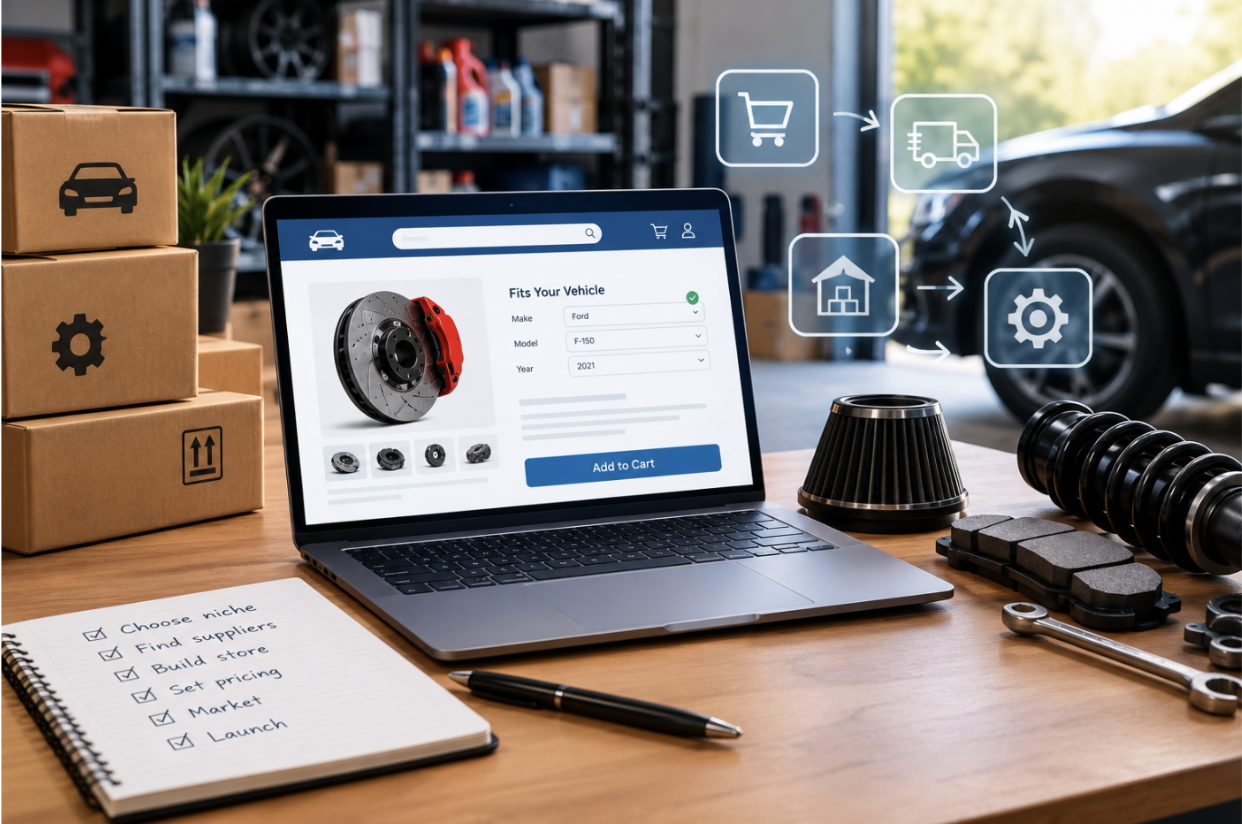
That question should be almost impossible to miss. Product pages need clear specifications, images, manufacturer details, and compatibility information where applicable.
If a customer has to open three tabs and email you just to work out whether a component fits a 2018 Ford F-150, you've already made the buying experience harder than it needs to be.
Keep shipping and returns visible too.
Nobody enjoys discovering the return policy after clicking “buy.”
5. Connect Inventory and Orders
Once the catalog starts growing, manual updates become painful.
A supplier changes stock. Your store still shows the product as available. Someone buys it. Then you discover the supplier ran out yesterday.
Not ideal.
Automated inventory synchronization can reduce that kind of mismatch.
The exact capabilities depend on the supplier and connection, so test the setup rather than assuming every feed behaves identically.
6. Price for Profit, Not Just Sales
Here's a simple trap.
You find a product that costs $70 wholesale and sell it for $100. Looks like $30 profit.
Except there’s shipping. Payment processing. Advertising. Returns. Platform fees. Maybe customer support costs.
That $30 can evaporate surprisingly quickly.
Create a basic margin calculation for every product before promoting it heavily. If the numbers only work when everything goes perfectly, the product probably isn't ready for prime time.
7. Test Before You Scale
Place test orders yourself.
Check the product information. Watch the inventory update. Follow the order through fulfilment. See when tracking reaches the store.
It's a little tedious, but this is the point where small mistakes are cheap.
Once real customers are involved, they're not mistakes anymore. They're support tickets.
Start Small, Then Let the Data Pull You Forward
The temptation with dropshipping is to think bigger means better. More suppliers. More products. More categories. More ads.
It doesn't always work that way.
Start with a manageable range and watch what customers actually do. Which products attract attention? Which ones convert? Which generate questions? Which suppliers consistently fulfil orders without drama?
Once you’ve got the answers to all these questions, you’re ready to scale.
Related Posts
- How to Start an Automotive Dropshipping Business in 2026
- 12 Best Custom Software Development Companies for Scalable EdTech Platforms in 2026
- How to Build a Sustainable Backlink Strategy for an E-commerce Website
- Top 5 Enterprise Laptop Return Shipping Solutions for Remote Workforce Asset Recovery
- International Link Building for E-commerce Brands: A Practical Guide
- Server Refresh vs Third-Party Maintenance: Which Option Makes More Sense?