


Compare ESG reporting and disclosure software for US enterprises, including Workiva, Watershed, Sweep, Persefoni, IBM Envizi, and Novisto.
If you run sustainability reporting for a large company, you already know the feeling. Spreadsheets everywhere, a dozen frameworks to satisfy, and a deadline that never seems to move. ESG reporting and disclosure software can help US enterprises manage these demands more efficiently, especially as SB 253, SB 261, and CDP create more complex reporting requirements. Between SB 253, SB 261, and CDP, US enterprises now face reporting demands that a manual process simply cannot keep up with.
This guide breaks down the ESG reporting and disclosure platforms that actually hold up under enterprise conditions. We looked at how each one handles multi-framework reporting, audit readiness, and Scope 3 data collection, since those are the three things that tend to slow teams down the most.
The strongest ESG reporting and disclosure platforms for US enterprises right now are Workiva, Watershed, Sweep, Persefoni, IBM Envizi, and Novisto. Each one fits a slightly different type of team, so the right pick depends on your reporting scope and how many frameworks you're juggling.
How We Evaluated These Tools
We focused on platforms built for companies that report to more than one framework at once, since that's the reality for most large US organizations today. Ease of audit, supplier data collection, and how well the platform scales across business units all factored into the ranking. Audit readiness matters.
We also looked at whether each tool was built primarily for finance teams, sustainability teams, or a mix of both. That distinction matters more than most buyers expect when it comes to day-to-day usability.
The Best ESG Reporting and Disclosure Software Right Now
1. Workiva
Workiva is a familiar name for finance and compliance teams, and it shows in how the platform is built. It's especially strong for companies that need SEC-aligned filing controls alongside their sustainability disclosures.
• Strong fit for finance-led ESG reporting teams
• XBRL tagging and filing controls built in
• Works well alongside existing SEC reporting workflows
2. Watershed
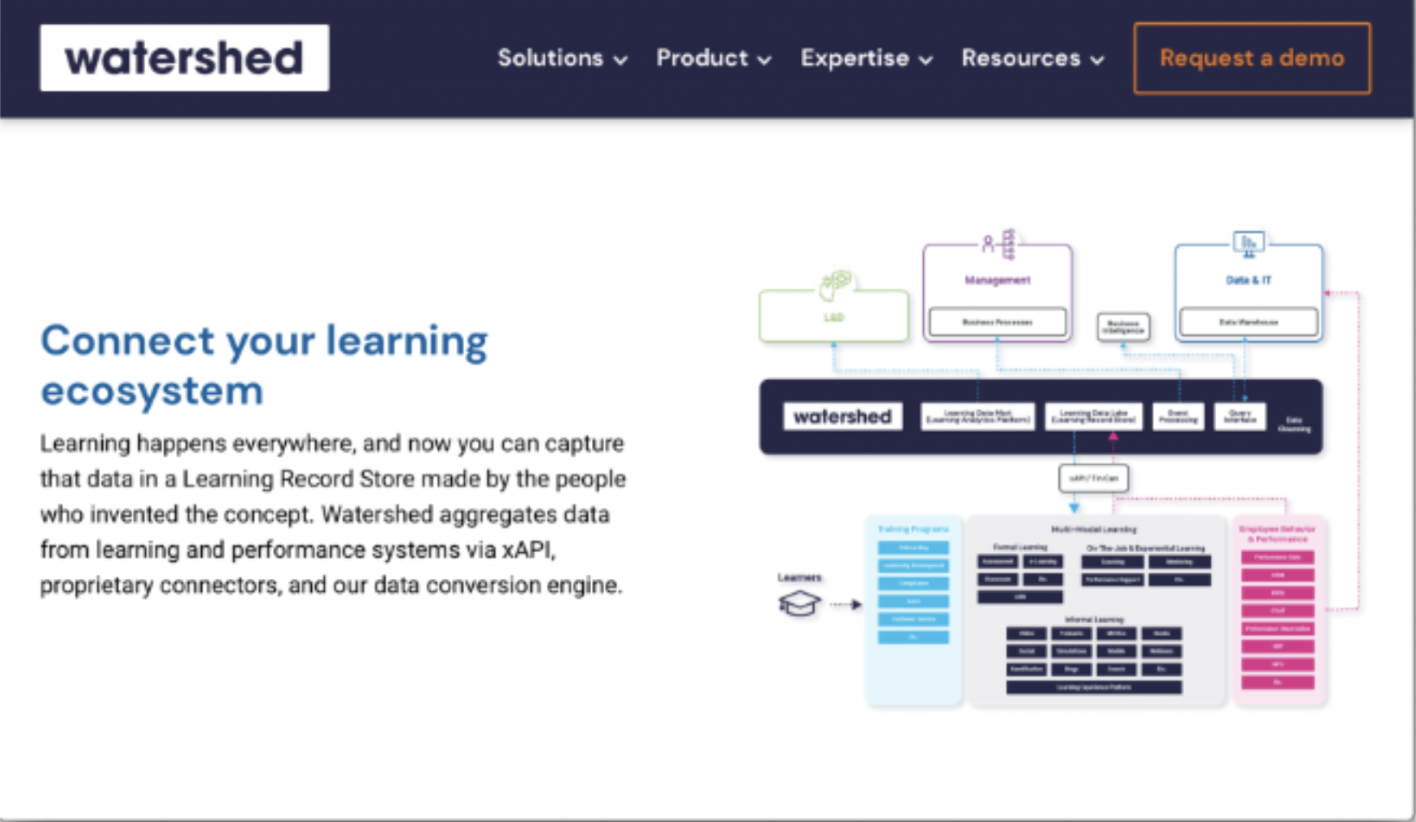
Watershed leans heavily into carbon data and emissions calculations, with a large emission factor library behind it. Teams that are still early in their carbon accounting journey tend to like how much of the heavy lifting it automates.
• Deep emission factor library
• AI-assisted drafting for disclosure narratives
• Popular with tech and consumer companies building out carbon programs
3. Sweep
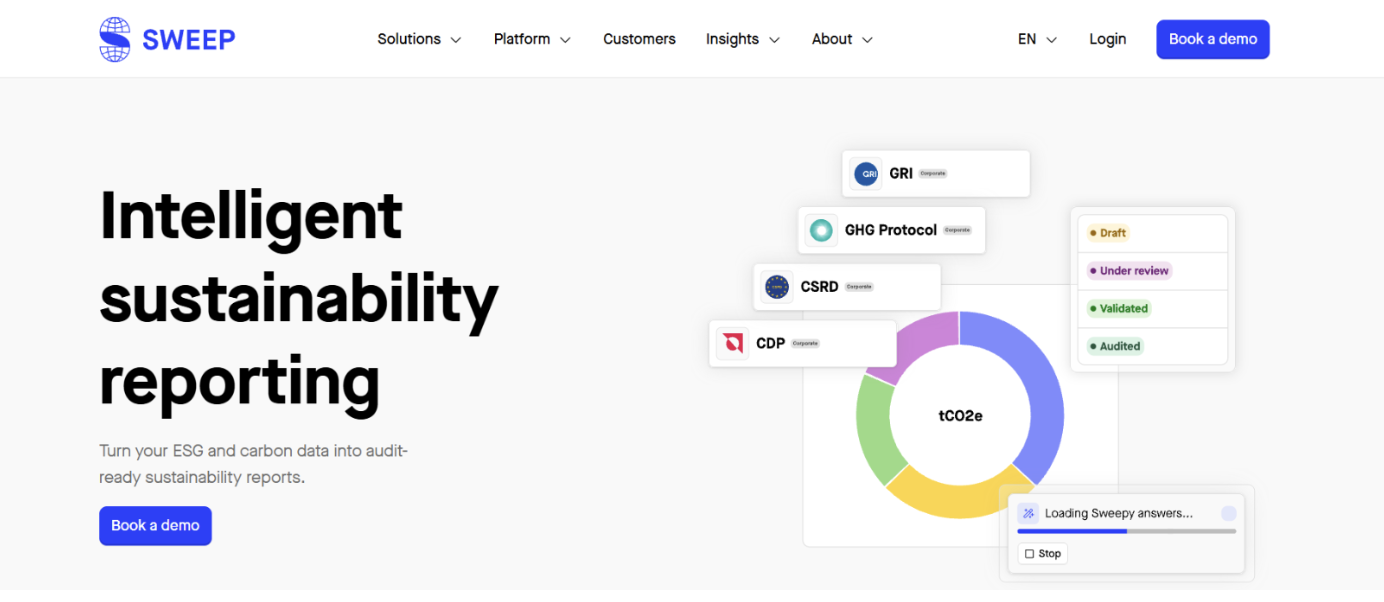
Sweep, the sustainability intelligence platform, also works as a disclosure platform for enterprises managing sustainability programs across multiple teams, entities, and value chains. Instead of treating reporting as a separate exercise, it connects your ESG and carbon data into one workspace that maps to every framework you have to file, including CSRD, CDP, GRI, ISSB, and SB 253/261.
What stands out is the audit trail. Every figure traces back to its source with full methodology and version history, so when an auditor asks where a number came from, the answer is already there. Sweep also brings in supplier portals for Scope 3 data collection, which tends to be the hardest part of any ESG program to scale.
• Report once, map to CSRD, GRI, ISSB, CDP, SB 253, SB 261, and UK SRS
• Full audit trail and version history on every data point
• Supplier portals for value chain and Scope 3 data
• AI support for data validation and drafting disclosure narratives
4. Persefoni
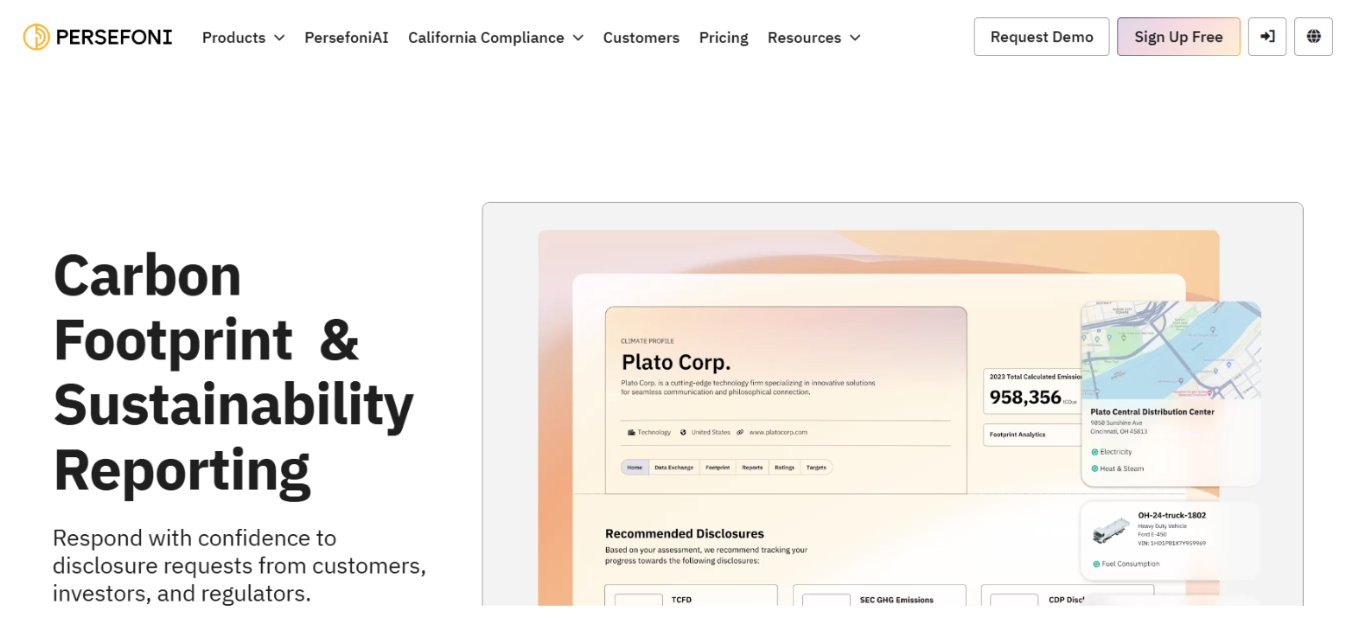
Persefoni started as a carbon accounting tool and has since expanded into broader disclosure support. It's a solid option for financial institutions that need to calculate financed emissions alongside standard Scope 1 and 2 reporting.
• Built with financial institutions in mind
• Handles financed emissions calculations
• Straightforward interface for teams new to carbon accounting
5. IBM Enviz
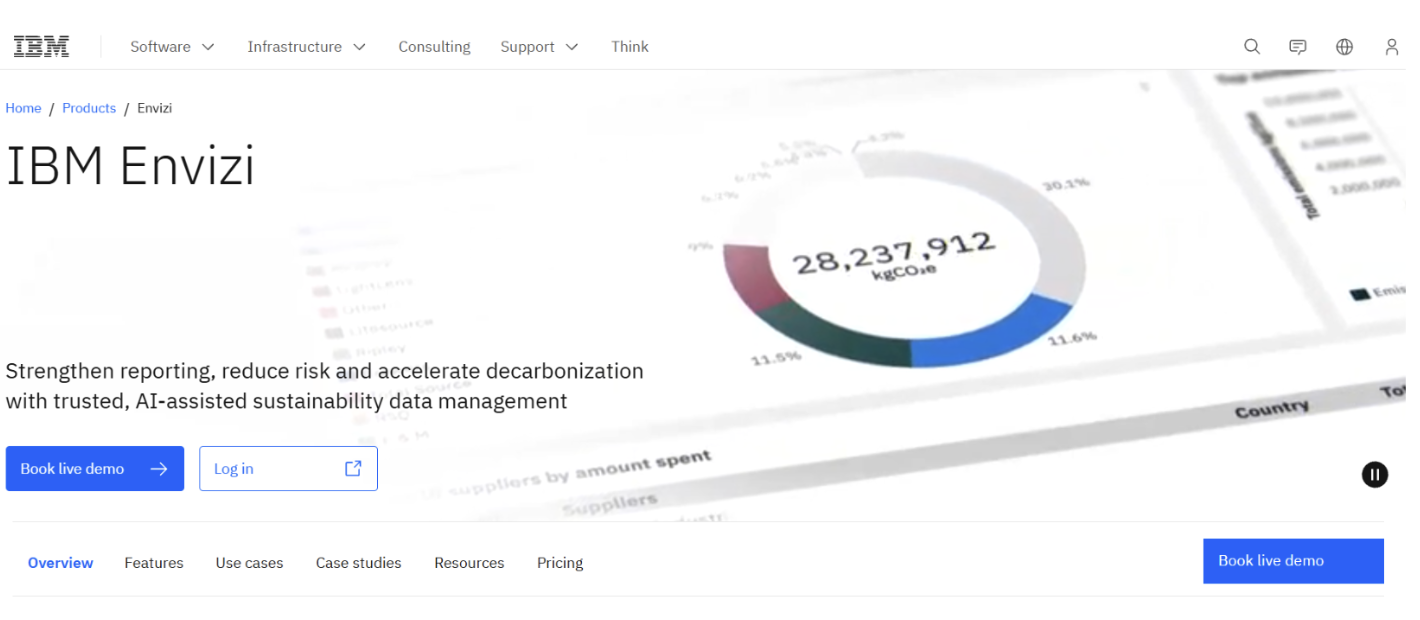
IBM Envizi fits large operations with heavy energy and utility data, which makes sense given IBM's enterprise software background. Companies with big facility footprints or complex supplier networks tend to get the most value from it.
• Strong for energy and utility-heavy operations
• Backed by IBM's broader enterprise software ecosystem
• Handles large volumes of operational data well
6. Novisto
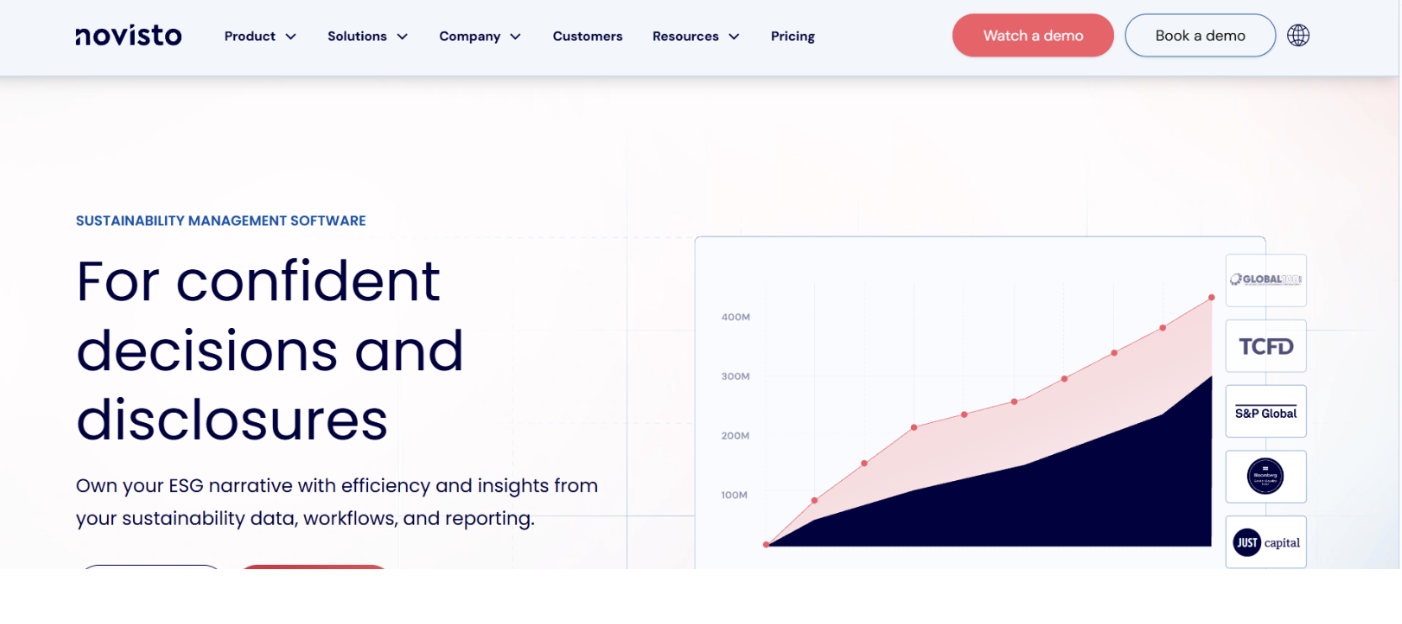
Novisto has built a reputation around double materiality, which is one of the more complicated parts of CSRD compliance. Its platform lets teams collect stakeholder input, generate financial and impact materiality scores, and document the reasoning behind each decision in one place.
• Built-in double materiality assessment software with AI-assisted scoring
• Supports CSRD, ISSB, GRI, SASB, and TCFD from a shared dataset
• Detailed audit trail linking materiality decisions to final disclosures
Comparison at a Glance
Platform | Best For | Key Frameworks | Standout Feature |
Workiva | Finance-led reporting teams | SEC filings, CSRD, GRI | XBRL tagging and filing controls |
Watershed | Early-stage carbon programs | GHG Protocol, CDP | Large emission factor library |
Sweep | Multi-entity enterprises and financial institutions | CSRD, CDP, GRI, ISSB, SB 253/261 | Full audit trail and supplier data collection |
Persefoni | Financial institutions | SFDR, TCFD, GHG Protocol | Financed emissions calculations |
IBM Envizi | Facility-heavy operations | GRI, CDP, SASB | Handles large operational datasets |
Novisto | Mid-market financial services | CSRD, SASB | Built-in double materiality tools |
How to Choose the Right Platform for Your Team
SStart with how many frameworks you actually need to file against, not just today but over the next two years. Keep your requirements clear. A tool that only covers one framework well will cost you more time later when a second regulation shows up.
Think about who owns the reporting process day to day. If it's mostly finance, a platform like Workiva might feel more natural. If sustainability and operations teams are doing the heavy lifting across multiple entities, a platform like Sweep that centralizes data and builds in the audit trail from the start will likely save more time.
Finally, look closely at supplier and Scope 3 support. This is where most reporting programs get stuck, so a platform with dedicated supplier portals is worth prioritizing if value chain emissions are a big part of your footprint.
Conclusion
There's no single best ESG reporting tool for every company. What matters is matching the platform to how your team actually works and which frameworks are on your compliance calendar. Keep the process simple. Workiva suits finance-first teams, Watershed works well for early carbon programs, and platforms like Sweep are built for enterprises that need one dataset to cover multiple frameworks with a full audit trail behind it. Whichever you choose, the goal is the same: less time chasing spreadsheets, more time acting on what the data actually tells you.
FAQs
1. What is ESG reporting and disclosure software?
It's a platform that helps organizations collect, organize, and report their environmental, social, and governance data to regulators, investors, and other stakeholders in a structured, auditable way.
2. Do US companies need to comply with CSRD?
Some US companies with significant EU operations or revenue do fall under CSRD's scope. Even companies that aren't directly in scope often face similar pressure from investors and customers who expect CSRD-aligned disclosures.
3. What's the difference between SB 253 and SB 261?
SB 253 requires companies with more than $1 billion in annual revenue doing business in California to disclose Scope 1, 2, and 3 emissions, with Scope 1 and 2 due in 2026 and Scope 3 following in 2027. SB 261 applies to companies with more than $500 million in revenue and requires a biennial climate-related financial risk report, though enforcement of SB 261 is currently paused pending a court appeal.
4.How long does it typically take to implement ESG reporting software?
Implementation timelines vary depending on how much data needs to be migrated and how many business units are involved, but most enterprise rollouts take a few months from kickoff to first live report.
Related Posts
- How Shoppers Discover Products in AI Answers - What Ecommerce Sites Should Do
- Best ESG Reporting and Disclosure Software for US Enterprises in 2026
- How Entrepreneurs Can Turn Business Success Into Lasting Wealth
- Rust for E-commerce: When Performance-Critical Backends Outgrow PHP
- E-commerce Virus Removal: How to Detect and Clean an Infected Website
- Top Data Privacy Management Software for 2026