



Discover how shoppers find products through AI answers and learn practical ways ecommerce sites can improve AI visibility, accuracy, and product discovery.
AI product discovery has quietly moved somewhere most store owners aren't looking: inside AI answers. When shoppers ask ChatGPT, Gemini, or Perplexity "what's the best [product] for [need]?", the AI responds with a shortlist of two to five brands - often before anyone visits a results page or a storefront. For ecommerce sites, that changes where the front door is. This guide covers what's shifted, what the data shows, and the practical audit any store can run this week to see and improve - how it shows up.
The shift: how AI product discovery replaced the storefront visit
The scale of the change is easy to underestimate. Industry research found that 45% of consumers used AI tools for local-business and product recommendations in the past year, up from 6% the year before (BrightLocal, 2026). 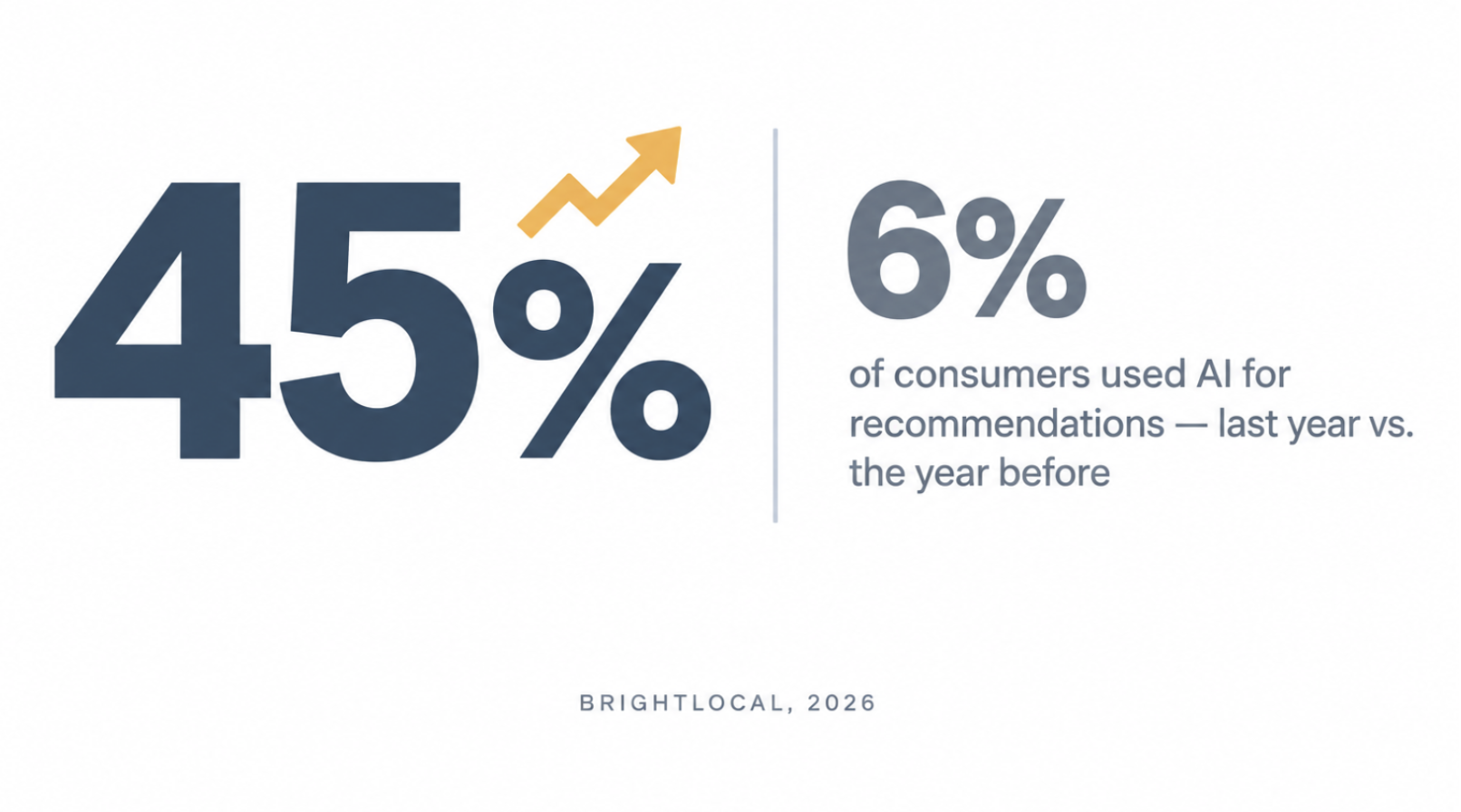
Shoppers increasingly treat AI answers as the first step in product research - asking for comparisons, "best of" lists, and buying advice in plain language. The answer they get back is a shortlist of a few names, assembled from whatever evidence the AI trusts. Stores that aren't on it rarely know they lost the sale before it started. And stores whose information the AI has wrong are losing it twice - once for not appearing, and again when a wrong fact sends the shopper to a competitor.
The data: per-engine divergence and wrong product facts
Cross-platform research shows two findings every merchant should know before spending another hour on traditional SEO. First, the same store is frequently recommended on one AI engine and invisible on another for identical product queries - the shortlists genuinely differ per platform, so optimizing for one engine means ignoring the rest. Second, AI engines routinely state wrong facts about products and stores: outdated pricing, incorrect shipping details, discontinued features.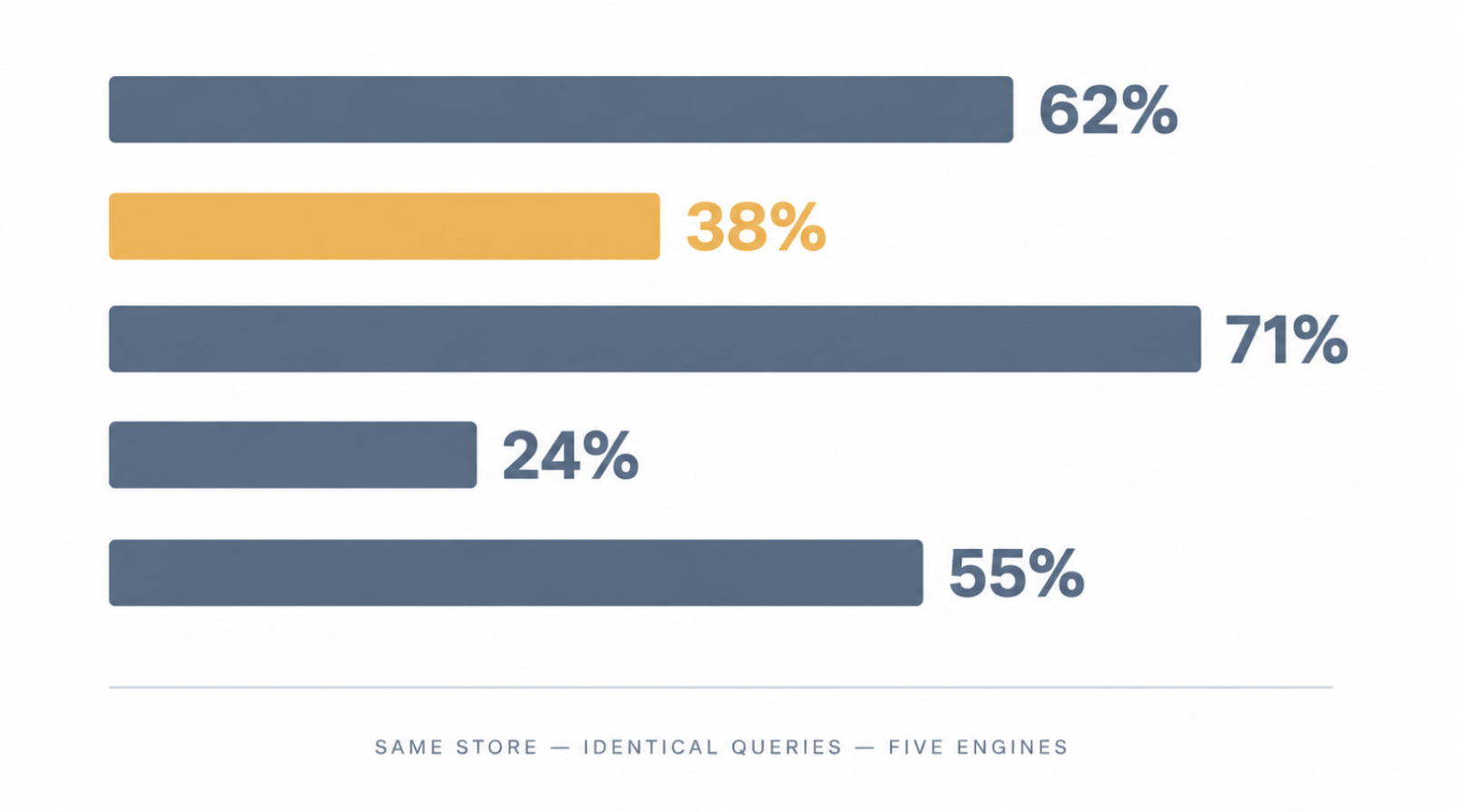 In our cross-platform AI visibility research, a substantial share of AI answers contained at least one factual error about the brands they described. A store can't win the shortlist while the AI's version of its catalog is wrong and no amount of content marketing fixes a wrong price the AI keeps repeating.
The 30-minute AI product discovery audit
The audit fits in an afternoon and needs no platform budget. Build a set of twenty buying-intent prompts for your category: "best [product] for [use case]," "[product] vs [product]," "what should I buy for [specific need]." Run them on each major AI engine. For every run, log five fields: context (date, engine, prompt, settings), presence tier (mentioned, cited, or recommended - three different things), position within the answer, accuracy (does the AI's description of your products and pricing match your public facts), and sources (which URLs the engine cited). That log is the measurement instrument - everything else builds on it.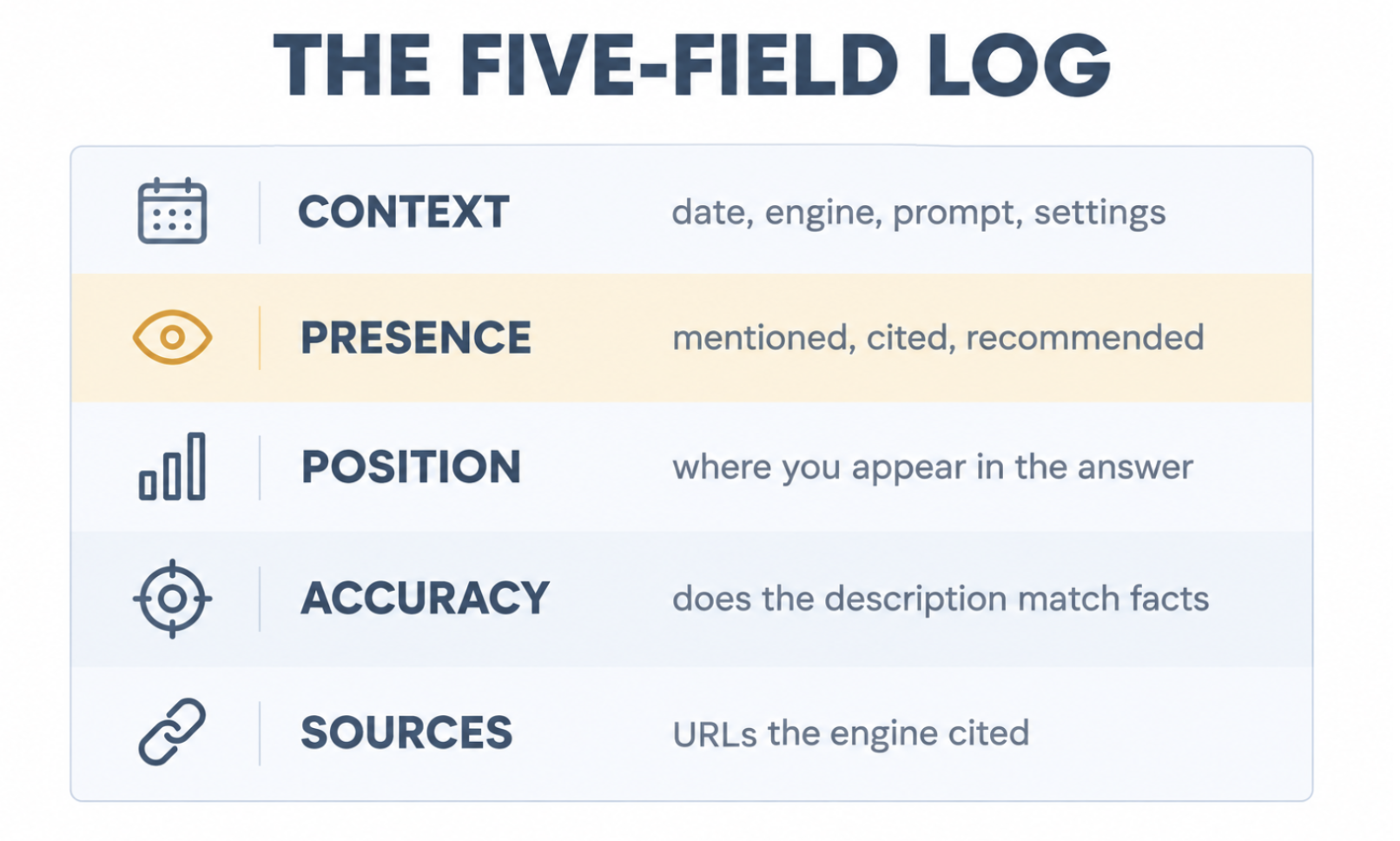
Two readings matter most. The divergence between engines is the diagnostic: when one engine recommends you and another doesn't, the gap usually points to weak entity signals on the weak engine's source ecosystem - third-party coverage, structured data, listing consistency - rather than weak content. And the accuracy column is the prerequisite: correct wrong product facts at the source (structured data, consistent listings, current crawlable content) before chasing recommendations, or the visibility you earn converts into corrected sales calls.
Fixing what AI gets wrong, then building what it needs
The correction workflow is unglamorous and effective. Audit what AI asserts about your products - pricing, shipping, features, policies. Fix it at the source: structured data the engines can parse, consistent listings across directories and marketplaces, current content they can actually reach, and third-party mentions they weight more heavily than your own site. Then measure monthly: re-run the twenty-prompt set, track share-of-shortlist per engine, watch the trend rather than the snapshot. One run tells you almost nothing; six runs tell you whether the fixes held. For developers supporting merchants, the structured-data and feed-side steps are where the leverage is - the merchant fixes the facts once, and every engine's summary improves from the same correction.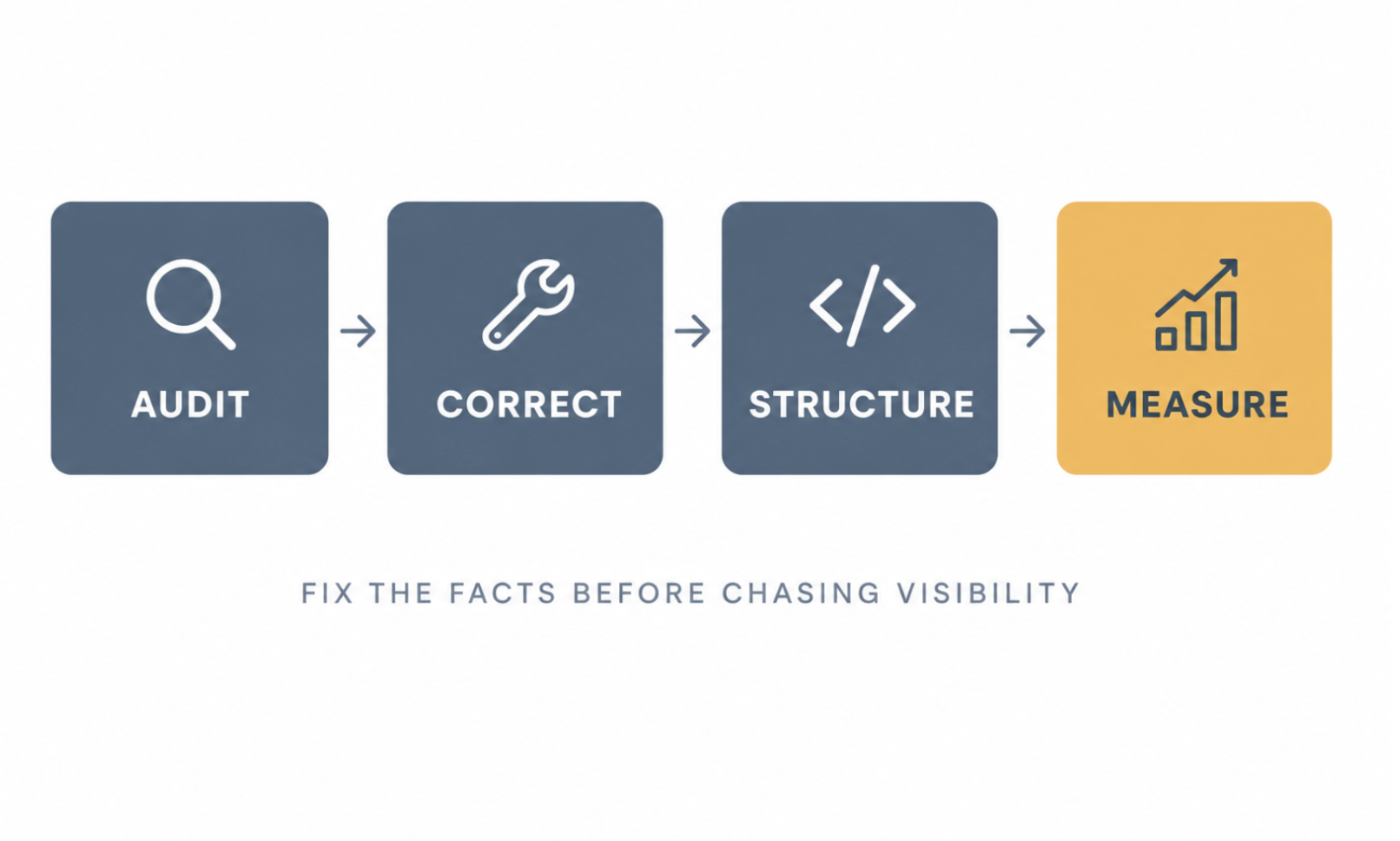
Conclusion
AI product discovery isn't a future trend - it's the current front door for a growing share of shoppers, and it behaves nothing like search rankings. The stores that win it won't be the ones with the biggest ad budgets; they'll be the ones that audited what AI says about them, fixed what's wrong, and measure monthly. Start with the twenty-prompt audit this week. Everything else compounds from there.
Author bio: Musa Aykac is a digital marketing and technology professional with over 20 years in SEO, PPC, and analytics, and founder of Llumo, an AI search visibility research project. His work has appeared on StoryChief and he's been quoted in TechRound.
Related Posts
- How Shoppers Discover Products in AI Answers - What Ecommerce Sites Should Do
- Best ESG Reporting and Disclosure Software for US Enterprises in 2026
- How Entrepreneurs Can Turn Business Success Into Lasting Wealth
- Rust for E-commerce: When Performance-Critical Backends Outgrow PHP
- E-commerce Virus Removal: How to Detect and Clean an Infected Website
- Top Data Privacy Management Software for 2026