


Compare the best data privacy management software for 2026, including Enzuzo, Osano, BigID, OneTrust, and TrustArc, to find the right fit for your business.
Quick answer: If you're a growing business and want to manage privacy without getting into a complicated enterprise setup, Enzuzo is probably the best place to start. It covers consent, privacy policies, DSARs, and reporting, and its pricing is easy to find and understand.
Osano is a better fit if you need something more advanced, especially for data mapping, assessments, and vendor risk. BigID makes the most sense for companies dealing with large amounts of data across different systems, while OneTrust and TrustArc are more suited to bigger organizations with complex privacy and compliance needs.
There isn't really one platform that's best for everyone. That's why we've ranked these tools based on who they're actually useful for, rather than simply looking at which one has the longest feature list.
What counts as data privacy management software?
Privacy management software goes quite a bit further than a standard cookie banner.
A cookie consent tool mainly helps you ask visitors for consent and keep a record of their choices. A privacy management platform can also help with things like DSARs, data mapping, privacy assessments, vendor risk, retention, compliance reporting, and other ongoing privacy tasks.
BigID, for example, brings together data rights, consent, PIAs, DPIAs, RoPA, retention, deletion, and other privacy workflows. Osano takes a similarly broad approach, combining consent with subject rights, data mapping, assessments, vendor risk, and privacy documentation. (Source: BigID Privacy Suite and Osano Data Privacy Platform, accessed August 2026.)
That doesn't mean every business needs all of this.
If you mainly need a cookie banner and a few basic privacy tools, an enterprise platform will probably be overkill. But if your customer data is spread across lots of systems, a simpler consent tool may not be enough either.
The five strongest options at a glance
• Choose Enzuzo if you want a straightforward way to manage consent, policies, DSARs, and website privacy.
• Choose Osano if you're looking for a broader privacy platform without going straight to a heavy enterprise solution.
• Choose BigID if finding and managing personal data across different systems is your biggest challenge.
• Choose OneTrust if you're running privacy operations across a large organization.
• Choose TrustArc if compliance controls, assessments, data mapping, and regulatory guidance are your priorities.
Top 5 Data Privacy Management Software Reviewed
1. Enzuzo
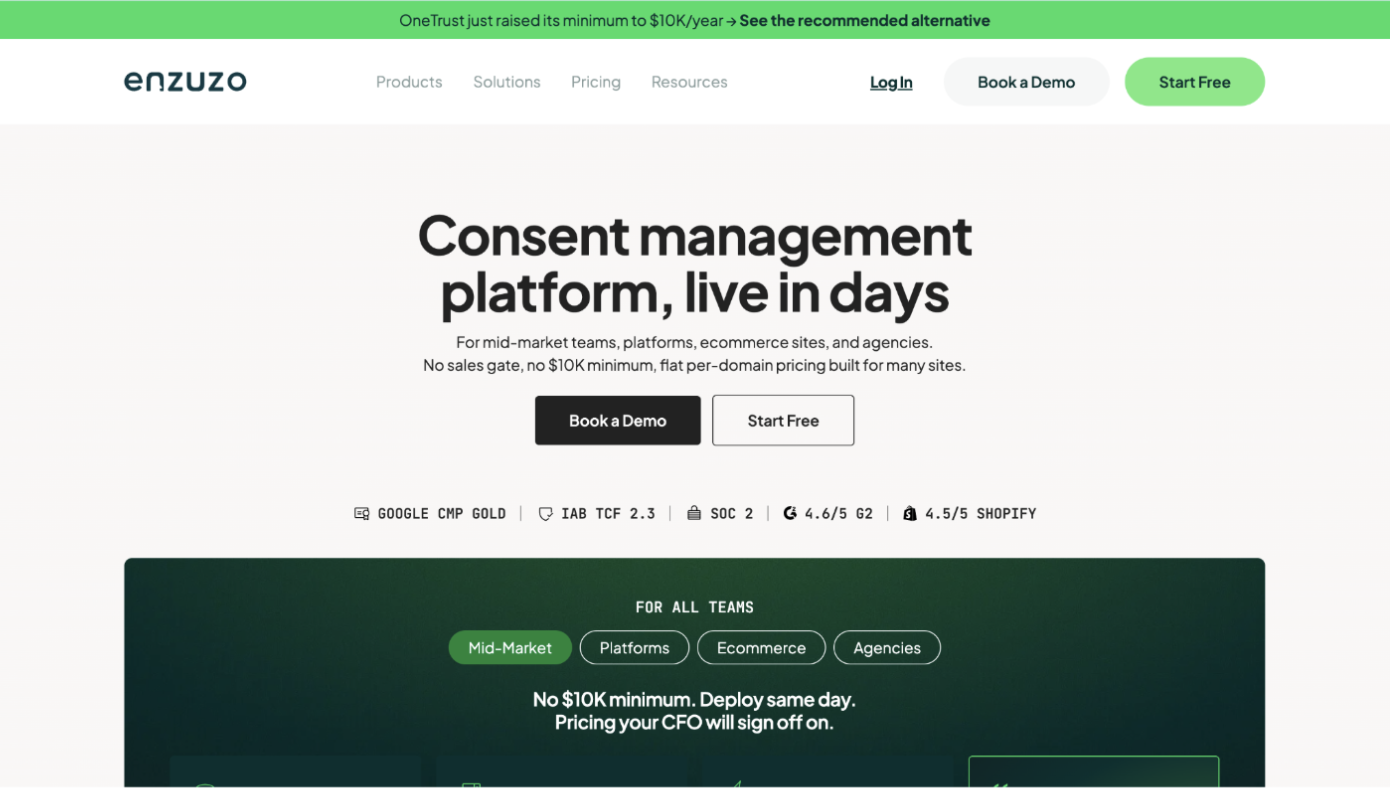
Enzuzo is probably the easiest option on this list to recommend to a growing business.
It's more than a basic cookie banner, but it doesn't immediately throw you into the complexity that comes with some of the bigger enterprise platforms.
You get consent management, consent logs, compliance reporting, privacy policies, terms of service, DSAR forms and workflows, country detection, multi-language support, and multi-domain management. Higher plans also add things like API access, webhooks, and agency features. (Source: Enzuzo pricing, accessed August 2026.)
What we like most here is how approachable everything is.
Enzuzo is aimed at mid-market teams, ecommerce businesses, platforms, and agencies, and you don't necessarily have to go through a long sales process just to get started. There are public plans and self-serve options, while larger customers can get additional onboarding support. (Source: Enzuzo platform, accessed August 2026.)
Why Enzuzo ranks first
The main reason Enzuzo takes the top spot is that it covers most of the privacy tasks a growing business is likely to need without making things unnecessarily complicated.
That includes:
• Cookie consent and consent logs
• Google Consent Mode v2 and Microsoft Consent Mode
• Privacy policy and other legal policy tools
• DSAR forms and request management
• Compliance reporting and audit trails
• Multi-domain management
• API and webhook access
• Support for 24+ languages on listed plans
Pricing
Pricing is another big plus.
Instead of making you contact sales before you even know whether the platform is within budget, Enzuzo publishes its standard pricing.
There's a free plan, while Starter costs $9 per month or $7 per month with annual billing. Growth is $29 per month, or $22 per month when billed annually. Pro is $79 per month, or $59 per month when billed annually. Depending on the plan, you can manage one, four, or ten domains. (Source: Enzuzo pricing, accessed August 2026.)
Where Enzuzo falls short
The trade-off is that Enzuzo isn't trying to be a huge enterprise data governance platform.
It covers the main things most businesses need, including cookie consent, privacy policies, reporting, DSARs, and managing multiple websites. (Source: Enzuzo platform and pricing, accessed August 2026.)
For larger companies with more complex privacy needs, it may not offer everything required. But for most small and growing businesses, it should cover all the essentials.
Choose Enzuzo if…
You want one relatively simple platform for consent, privacy policies, DSARs, and reporting without paying for an enterprise privacy system you probably won't fully use.
2. Osano
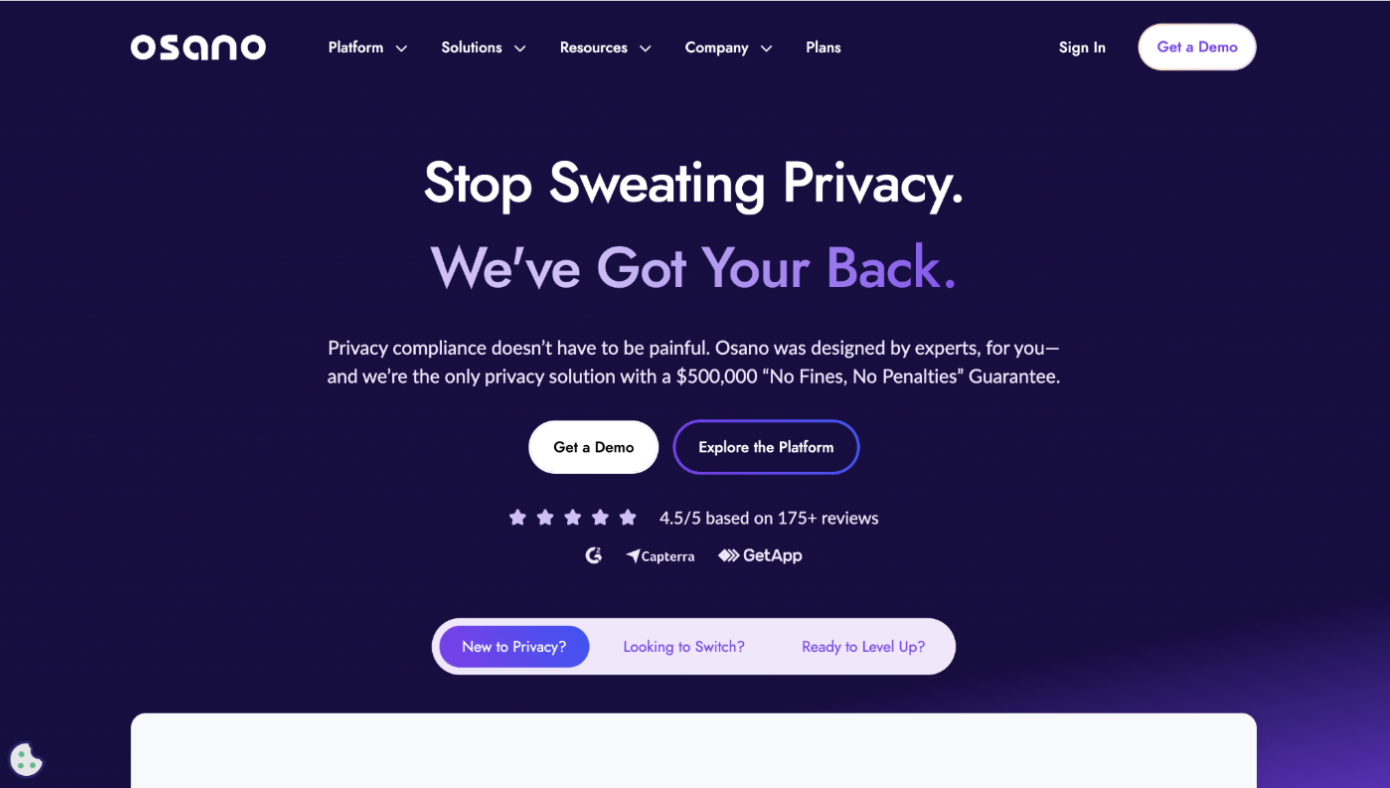
Osano is where things start getting a little more advanced.
It's a good middle ground for organizations that have moved beyond basic website privacy but still want something designed to be relatively easy to work with.
The platform covers cookie consent, subject rights, consent and preference management, data mapping, privacy assessments, vendor privacy risk, TrustHub, compliance monitoring, templates, and regulatory guidance. (Source: Osano Data Privacy Platform, accessed August 2026.)
Osano also supports consent management across more than 50 countries and offers localized banner templates in more than 45 languages. Its subject rights tools can handle the process from request intake and identity verification through to routing, responses, and audit logs. (Source: Osano enterprise privacy software and subject rights management, accessed August 2026.)
What makes Osano different
What stands out about Osano is that the different parts of privacy management aren't treated as completely separate tasks.
For example, its data mapping tools can help discover data stores through SSO and other connected sources. That information can then feed into other privacy workflows, including DPIAs, RoPAs, and vendor assessments. (Source: Osano Data Mapping and Osano Data Privacy Platform, accessed August 2026.)
Vendor risk management is another area where Osano goes further than a typical consent platform. It provides vendor privacy scores, tracks things like policy changes and lawsuits, and supports vendor assessment workflows. (Source: Osano Data Privacy Platform, accessed August 2026.)
Where Osano falls short
If all you need is a cookie banner, Osano is probably more platform than you need.
The broader privacy features are useful, but they also mean you're moving away from a simple self-serve tool and towards something that may involve demos, implementation, and a conversation with sales.
Pricing isn't as straightforward either.
Pricing
Osano offers a free trial, but the official plans page does not display a standard price for the broader data privacy platform. To understand the cost of the full platform, buyers will need to speak with Osano. (Source: Osano plans and pricing, accessed August 2026.)
Choose Osano if…
You've outgrown basic consent management and want DSARs, data mapping, assessments, vendor risk, and privacy documentation connected in the same platform.
3. BigID
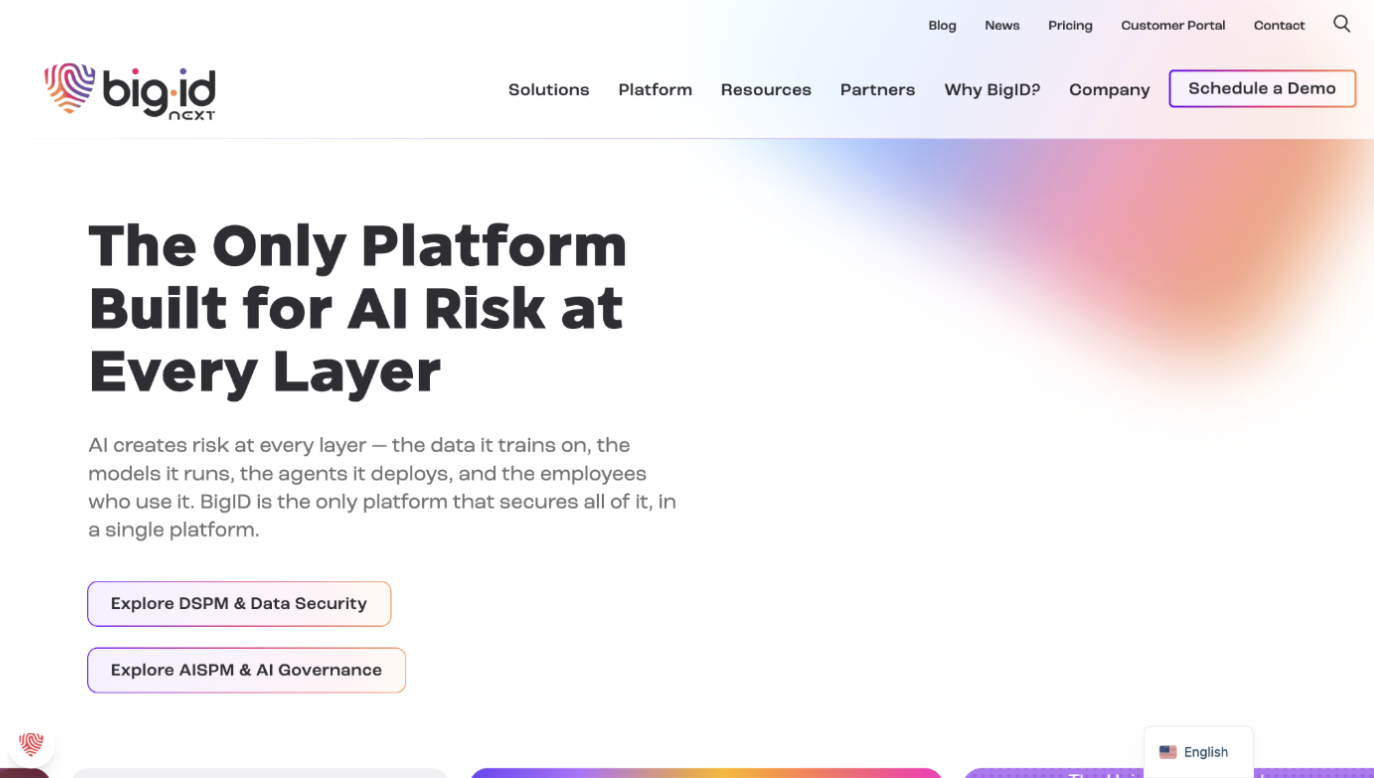
BigID is quite different from Enzuzo and Osano.
Its biggest strength is the data itself.
Instead of starting mainly with cookie banners, forms, and compliance workflows, BigID focuses heavily on helping organizations understand where their data actually lives and what it contains.
Its Privacy Suite covers data rights requests, consent, PIAs, DPIAs, RoPA, retention, minimization, deletion, data transfers, cookie consent, and AI privacy risk. It can also discover personal and sensitive data across cloud, SaaS, hybrid, on-premises, and AI environments. (Source: BigID Privacy Suite, accessed August 2026.)
What BigID is strongest at
BigID makes the most sense when your privacy problems sound something like this:
• Where is this customer's personal data actually stored?
• Which systems contain information about this person?
• Why are we storing this data?
• What needs to be deleted?
• What needs to be kept?
• What privacy risks are connected to our AI systems?
That's where its data-first approach becomes useful.
Its DSAR tools can support intake, discovery, redaction, validation, fulfillment, and evidence collection. Consent preferences can also be connected with discovered data, purposes, policies, and other systems. (Source: BigID Privacy Suite, accessed August 2026.)
BigID also offers separate privacy bundles for data rights, preferences, and data mapping. (Source: BigID pricing, accessed August 2026.)
Where BigID falls short
For a small business, BigID is probably too much.
If you just need a cookie banner, privacy policy, and an easy way to handle DSARs, you won't get much value from all of its data discovery and governance capabilities.
There's also likely to be more technical work involved than with a lightweight privacy platform. BigID becomes most useful when it's actually connected to the different systems and data sources your organization uses.
Pricing
BigID doesn't publish a standard price for its Privacy Suite.
Pricing depends on factors such as data sources, apps, connectors, deployment type, and the level of services and support required. A free trial is available. (Source: BigID pricing, accessed August 2026.)
Choose BigID if…
You have personal data spread across lots of systems and need to find it, classify it, manage it, delete it, retain it, and keep a clear record of what you're doing.
4. OneTrust
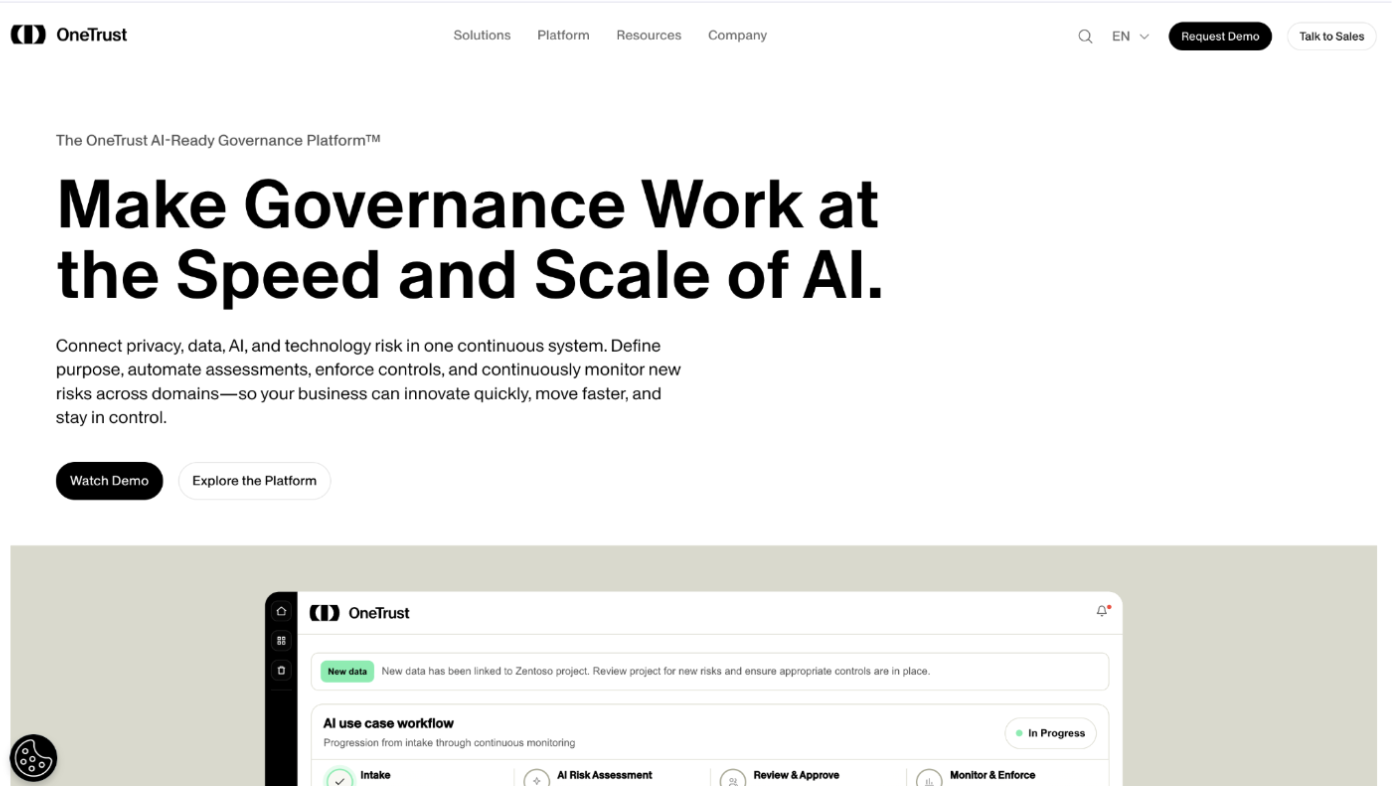
OneTrust is one of the broadest platforms in this comparison.
That's both its biggest strength and the main reason it won't be right for everyone.
It's built for organizations managing privacy across different departments, systems, business units, and regulatory environments.
Its Privacy Operations product covers asset detection, personal data identification, data-flow mapping, processing records, data transfers, privacy impact assessments, vendor assessments, AI risk assessments, incident management, and privacy notices. (Source: OneTrust Privacy Operations, accessed August 2026.)
OneTrust also has separate products for consent and preference management, data subject requests, regulatory intelligence, compliance automation, third-party management, and AI governance. (Source: OneTrust Products, accessed August 2026.)
Why large organizations choose OneTrust
The biggest advantage here is simply how much OneTrust can cover.
For a large company with dedicated privacy, legal, compliance, security, and governance teams, having those different privacy activities connected in one ecosystem can be valuable.
The platform can connect with identity systems, cloud providers, and configuration management databases to find assets and trigger privacy workflows. It can also bring together information about assets, processing activities, and vendors. (Source: OneTrust Privacy Operations, accessed August 2026.)
And privacy is only part of the wider platform. OneTrust also covers areas such as third-party risk, responsible data use, compliance, consent, and AI governance. (Source: OneTrust Products, accessed August 2026.)
Where OneTrust falls short
The obvious downside is complexity.
If you're a small business that mainly needs consent management, OneTrust is probably far more software than you need.
There's also more work involved in getting value from a platform this broad. The more modules you use, the more workflows, inventories, stakeholders, and internal processes you'll need to manage.
So while its size is a major advantage for large organizations, it can easily become a disadvantage for smaller teams.
Pricing
OneTrust doesn't publish one standard starting price for its privacy platform.
Pricing depends on the products you use and different usage measures, including admin users, assets, third parties, average daily visitors, data subject profiles, and data volume. You'll need to contact OneTrust for a customized price. (Source: OneTrust pricing and packaging, accessed August 2026.)
Choose OneTrust if…
You're managing privacy across a large organization and genuinely need a broad platform covering areas like data inventories, assessments, incidents, consent, DSRs, third-party risk, and AI governance.
5. TrustArc
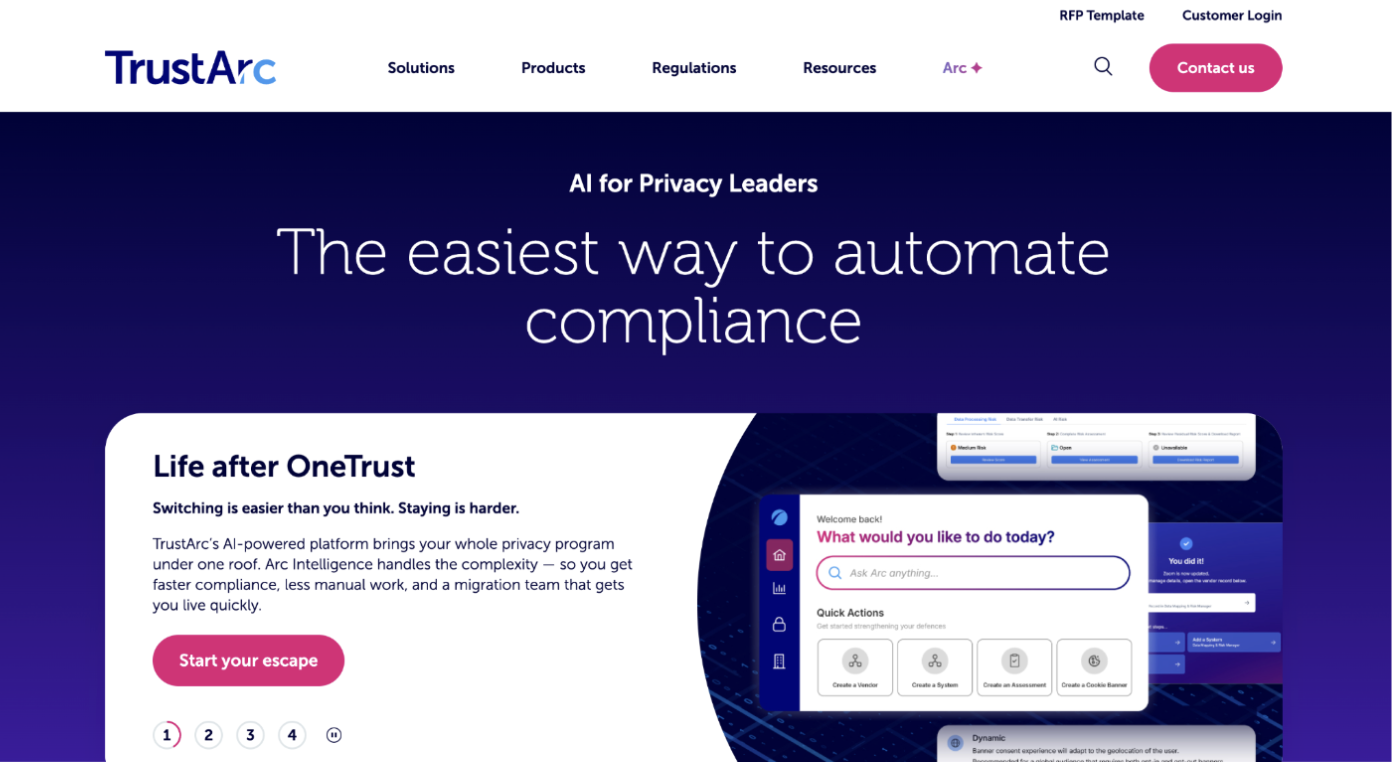
TrustArc is another platform aimed more at established privacy and compliance teams than smaller businesses.
Its biggest strength is helping organizations turn privacy requirements into a structured program they can actually track.
The Governance Suite includes PrivacyCentral, Data Mapping & Risk Manager, Assessment Manager, and Nymity Research. Together, these tools cover areas like data mapping, privacy assessments, vendor assessments, AI risk assessments, regulatory research, and workflow tracking. (Source: TrustArc Privacy and Data Governance, accessed August 2026.)
What TrustArc does well
TrustArc stands out if your privacy team spends a lot of time working with laws, controls, evidence, and assessments.
PrivacyCentral uses a controls-based system to help teams find compliance gaps, review evidence, track progress, and decide what needs fixing first.
TrustArc says its library contains more than 20,000 controls mapped across more than 140 privacy and security laws and standards. (Source: TrustArc PrivacyCentral, accessed August 2026.)
Its Data Mapping & Risk Manager also helps teams build an ongoing inventory of systems, vendors, and business processes.
It can map data flows, calculate risk, and trigger additional assessments such as PIAs, DPIAs, TIAs, vendor assessments, and AI assessments. (Source: TrustArc Data Mapping & Risk Manager, accessed August 2026.)
For a global privacy team that needs to show exactly how its compliance program works, that's a useful combination.
Where TrustArc falls short
Like OneTrust and BigID, TrustArc is probably more than a small company needs.
Its strengths are governance, regulatory coverage, assessments, and evidence management. Those are valuable if you have a dedicated privacy or compliance team, but they may feel excessive if you're mainly trying to keep a website compliant.
Pricing
TrustArc doesn't publish standard list pricing for the products covered here. Buyers should confirm pricing directly with TrustArc.
Choose TrustArc if…
You have a dedicated privacy or compliance team and need a structured way to manage regulatory controls, assessments, data mapping, risk, evidence, and ongoing regulatory research.
Which platform should you choose?
The easiest way to choose is to think about how complicated your privacy needs actually are.
If you're a growing business, ecommerce store, agency, or managing a few websites, Enzuzo is probably the most practical starting point. You get consent, policies, DSAR management, and reporting without immediately moving into enterprise-level complexity. (Source: Enzuzo platform and pricing, accessed August 2026.)
If your privacy program is becoming more advanced, Osano gives you more room to grow with data mapping, assessments, vendor risk, and subject rights management. (Source: Osano Data Privacy Platform, accessed August 2026.)
BigID makes more sense when the real problem is your data — where it lives, what it contains, and how you manage it across different systems. (Source: BigID Privacy Suite, accessed August 2026.)
For very large organizations, OneTrust offers one of the broadest sets of privacy and governance tools, but you'll need the people and resources to actually manage them. (Source: OneTrust Privacy Operations and Products, accessed August 2026.)
And TrustArc is worth considering if your privacy program is heavily focused on regulatory controls, assessments, evidence, data mapping, and ongoing compliance. (Source: TrustArc Privacy and Data Governance, accessed August 2026.)
Frequently asked questions
1. Do I really need data privacy management software?
Not every business does. But if you collect customer data, receive privacy requests, use tracking tools, or operate in different regions, privacy software can make these tasks much easier to manage.
2. Can privacy software help with GDPR compliance?
Yes. Many privacy platforms include tools for consent, DSARs, data mapping, and other GDPR-related tasks. However, using privacy software doesn't automatically make your business fully compliant.
3. What's the difference between a DSAR tool and privacy software?
A DSAR or data subject rights tool helps organizations receive, verify, track, and complete requests such as access, deletion, correction, portability, or restriction requests. Privacy management software usually includes DSARs alongside other tools like consent management, data mapping, and compliance reporting.
4. Can one privacy platform manage multiple websites?
Yes, some platforms support multiple websites or domains from one account. This can be especially useful for agencies, ecommerce businesses, or companies managing several brands.
5. Is free privacy management software enough?
It can be if your needs are simple. Free plans are usually better suited to smaller websites, while growing businesses may eventually need more domains, reporting, automation, or advanced privacy tools.
6. How hard is privacy management software to set up?
It depends on the platform. Simpler tools can be set up relatively quickly, while enterprise platforms may require integrations, configuration, onboarding, and help from your privacy or IT team.
Related Posts
- How Shoppers Discover Products in AI Answers - What Ecommerce Sites Should Do
- Best ESG Reporting and Disclosure Software for US Enterprises in 2026
- How Entrepreneurs Can Turn Business Success Into Lasting Wealth
- Rust for E-commerce: When Performance-Critical Backends Outgrow PHP
- E-commerce Virus Removal: How to Detect and Clean an Infected Website
- Top Data Privacy Management Software for 2026