



AI tools can help students learn, but they also spread false facts fast. Here is why academic trust, research habits, and critical thinking are at risk.
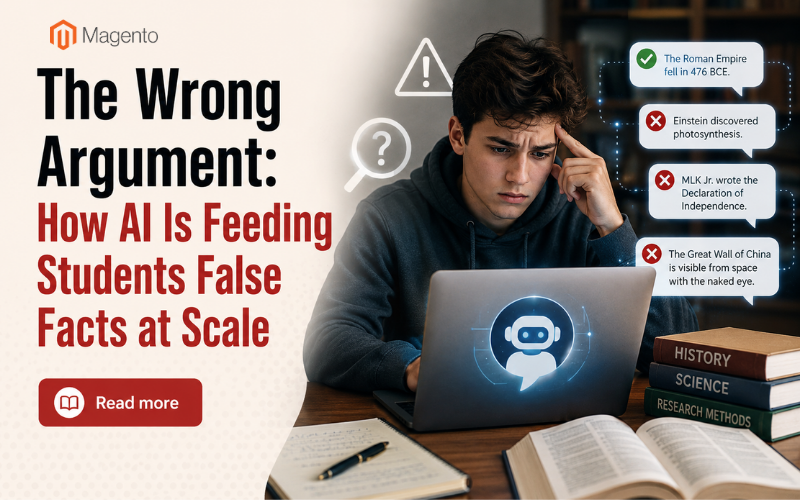
Students have always looked for shortcuts, summaries, and help when deadlines pile up. What has changed is the speed and confidence of the tools now available to them. Generative AI can produce essays, outlines, citations, thesis statements, and explanations in seconds. That convenience makes it tempting for students to treat AI output as reliable knowledge instead of a starting point for research.
The problem is not simply that students are using AI. The deeper problem is that AI often sounds correct even when it is wrong. It can invent statistics, misread historical events, simplify scientific debates, and cite sources that do not exist. When a student has a request to pay for homework at EssayPro or asks an AI tool to “create a lit review,” the answer may arrive polished, structured, and persuasive, but that polish can hide factual errors at scale.
The Real Risk Is Confidence Without Verification
False information in education is not new. Students have copied from unreliable websites, misquoted sources, and misunderstood readings for decades. AI makes this old problem more dangerous because it removes friction. A weak search result might look suspicious, but an AI paragraph often sounds authoritative.
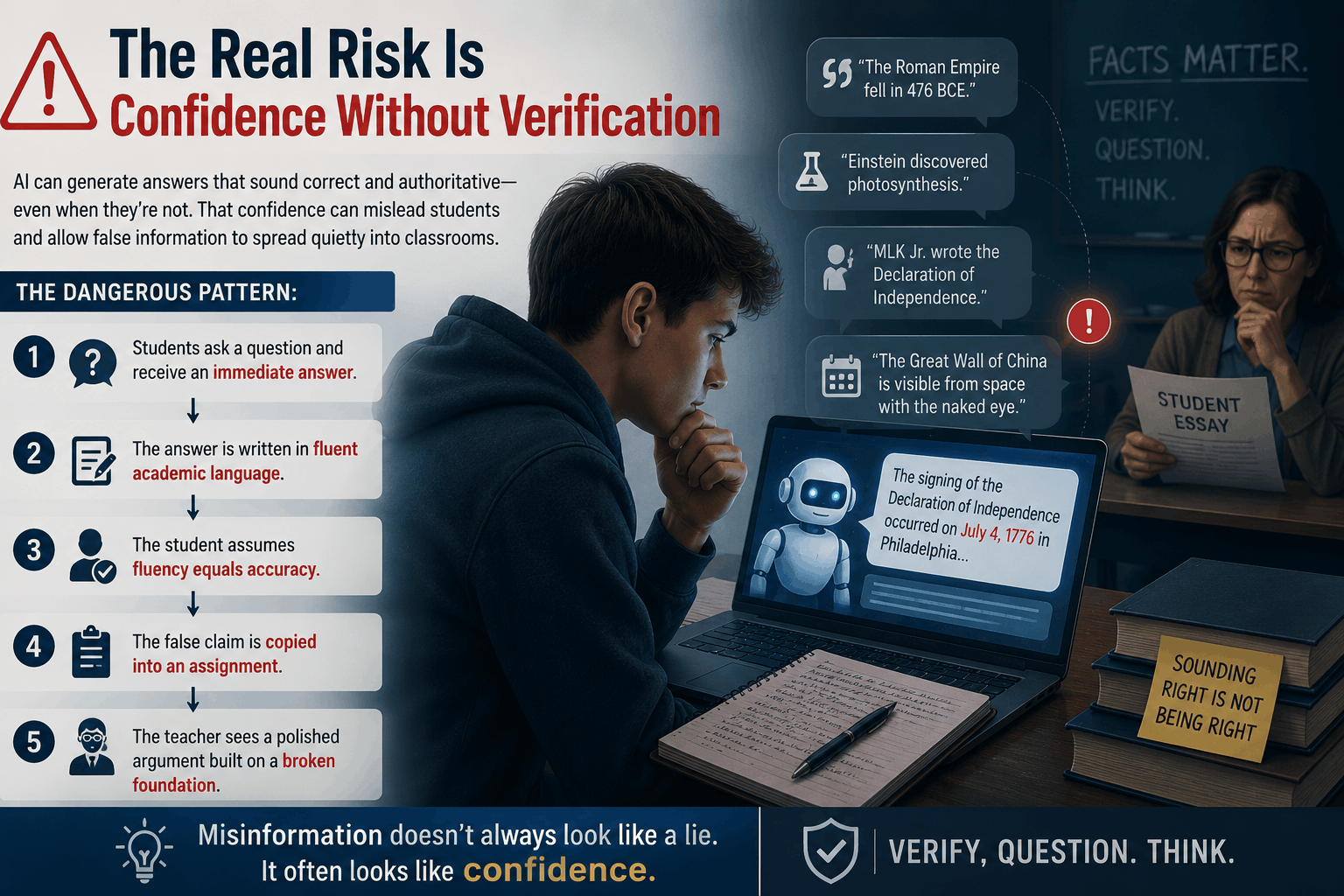
This creates a dangerous pattern:
• Students ask a question and receive an immediate answer.
• The answer is written in fluent academic language.
• The student assumes fluency equals accuracy.
• The false claim is copied into an assignment.
• The teacher sees a polished argument built on a broken foundation.
This is how misinformation enters classrooms quietly. It does not always appear as an obvious lie. It often appears as a confident half-truth, a fabricated quotation, or a historical claim with the wrong date attached.
Why AI Hallucinations Are Especially Harmful in School
AI hallucinations are not random mistakes in the ordinary sense. They are outputs that appear meaningful but are not grounded in verified fact. A student may ask for an explanation of a court case, a novel, or a chemistry concept and receive an answer that blends accurate details with invented ones.
That blend is what makes the problem hard to detect. A completely false answer is easier to challenge. A mostly correct answer with one crucial error can pass through unnoticed.
For example, an AI system might summarize a real book but invent a scene that never happened. It might explain a scientific theory but overstate what the evidence proves. It might name a scholar who exists, then attribute a fake argument to that scholar. A student who decides to pay for homework at EssayPro may still need enough subject knowledge to recognize factual inaccuracies or unsupported claims before submitting the work.
Students Are Losing the Habit of Productive Doubt
Education depends on uncertainty. Good students learn to ask: Is this source credible? What evidence supports this claim? What is missing? Who disagrees? AI can weaken that habit if students treat its output as an endpoint rather than a prompt for investigation.
The danger is not only incorrect assignments. The danger is intellectual dependency. When students stop struggling with sources, comparing interpretations, and revising their own claims, they lose the mental discipline that education is meant to build.
Teachers are now facing work that looks complete but may not reflect real understanding. A student can submit an essay with proper structure, transitions, and academic vocabulary while having little grasp of the topic. That creates a grading problem, but it also creates a learning problem. The assignment may look finished, while the student has skipped the thinking.
What Schools Should Teach Instead of Panic
Banning AI entirely is unlikely to solve the issue. Students will still find tools, and many AI systems are already embedded in search engines, writing platforms, and study apps. The better response is to teach verification as a core academic skill.
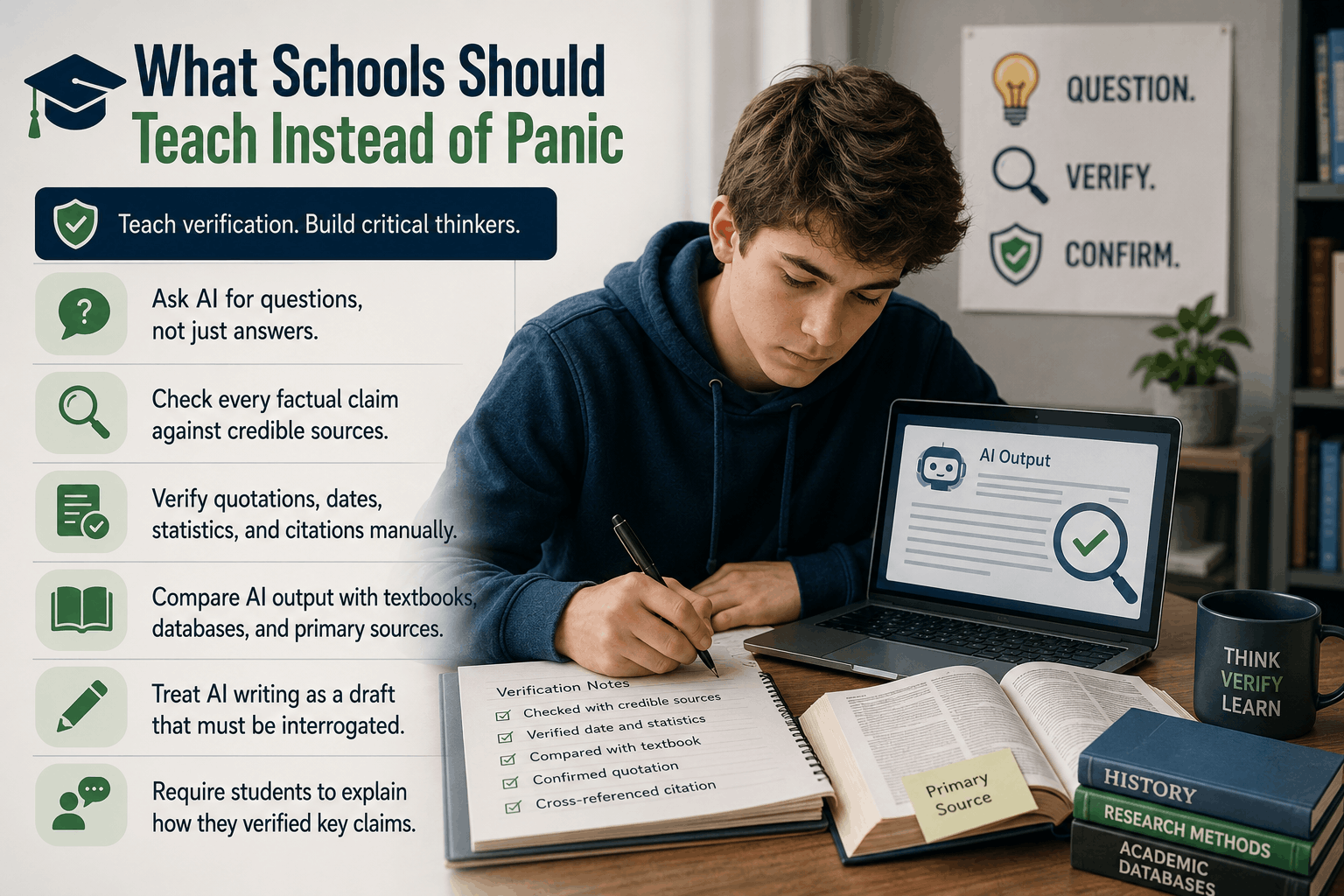
Schools should train students to use AI critically:
• Ask AI for questions, not just answers.
• Check every factual claim against credible sources.
• Verify quotations, dates, statistics, and citations manually.
• ompare AI output with textbooks, databases, and primary sources.
• Treat AI writing as a draft that must be interrogated.
• Require students to explain how they verified key claims.
This approach does not pretend that AI is harmless. It recognizes that students need rules for using it responsibly. A student who uses AI to brainstorm has a different learning experience from a student who relies on AI-generated content and submits it without checking whether it is accurate or well supported.
The New Academic Skill: Fact-Checking the Machine
The future of education will not be defined by whether AI exists in classrooms. It will be defined by whether students know how to challenge it. The most important academic skill may soon be the ability to read AI-generated text with suspicion.
That means teachers should design assignments that make verification visible. Students can be asked to submit source logs, annotated bibliographies, reflection notes, or fact-checking tables. Oral defenses and in-class writing can also help teachers see what students actually understand.
AI can support learning when used carefully. It can explain difficult concepts, suggest essay structures, generate practice questions, and help students revise unclear sentences. But it becomes harmful when it replaces evidence, judgment, and original thought.
The issue reflects a broader challenge in modern education. It is not just about getting academic assistance. It can also mean shifting responsibility for learning to someone else. When students rely on AI-generated or externally completed work without verifying the facts, the consequences extend beyond a single assignment. It weakens trust in student work, makes teachers more suspicious, and teaches students that sounding right matters more than being right.
The wrong argument is not that AI should never be used. The wrong argument is the one AI can generate so easily: fluent, confident, and false. Education must now teach students to recognize that difference before false facts become the default language of learning.
Related Posts
- Top 5 Enterprise Laptop Return Shipping Solutions for Remote Workforce Asset Recovery
- International Link Building for E-commerce Brands: A Practical Guide
- Server Refresh vs Third-Party Maintenance: Which Option Makes More Sense?
- The Best Funnel Builder for Coaches and Course Creators
- How Magento Powers Modern eCommerce Businesses
- How to Price an Online Course Without Leaving Money on the Table?