


Discover the top print-on-demand apps for online stores. Compare features, pricing, and integrations to choose the best POD platform for your business.
Selling custom products online has never been easier, but choosing the right print-on-demand (POD) app can make or break your store’s success. With dozens of platforms promising seamless integrations, high-quality products, and fast fulfillment, it’s easy to feel overwhelmed. The reality is that not all POD apps are created equal: some excel in product variety, others in pricing, branding options, or shipping reliability.
In this guide, we cut through the noise to highlight the top-rated print-on-demand apps for online stores, focusing on the tools that consistently deliver for entrepreneurs, creators, and growing ecommerce brands. Whether you’re launching your first Shopify store, expanding an Etsy shop, or scaling a global brand, the right POD partner can streamline your operations and unlock new revenue streams, without the hassle of inventory or upfront costs.
What Are Print-on-Demand Apps and Why Do They Matter for Online Stores?
Print-on-demand (POD) apps allow online store owners to sell custom products—like t-shirts, mugs, or phone cases—without holding any inventory. Instead of producing items in bulk, products are only created after a customer places an order. The POD provider takes care of printing, packaging, and shipping.
These apps integrate with platforms like Shopify, Etsy, and WooCommerce, automating the entire fulfillment process. When a customer makes a purchase, the order is sent to the POD provider, who fulfills it under your brand.
POD apps are important because they remove many of the traditional challenges of ecommerce. There’s no upfront investment in stock, no risk of unsold products, and no need to manage logistics. This makes it easier to test new ideas, grow your product range, and scale your business.
Overall, print-on-demand apps offer a simple, low-risk way to run and expand an online store.
Comparison Table of Top Print on Demand Apps
Tool | Best For | Starting Price | Key Differentiator | Ease of Use |
| Scaling & product variety | Free / $39/mo or $299/year (~$24.99/mo billed annually)) | 90+ Print Providers + 2,000+ customizable products | ⚠️ Moderate |
Printful | Branding & premium stores | Free / ~$24.99/mo (Growth) | Advanced branding (labels, packaging, inserts) | ✅ Easy |
Podbase | Niche stores (tech accessories) | Free (pay per order) | In-house production with consistent quality | ✅ Easy |
Gelato | Global fulfillment | Free / ~$23.99/mo | Local production in 30+ countries | ✅ Easy |
Gooten | High-volume scaling | Free (pay per order) | Automated order routing & fulfillment | ⚠️ Moderate |
Custom Cat | Fast, affordable apparel | Free / ~$30/mo (Pro) | 2–3 day fulfillment (US-based) | ✅ Easy |
Apliiq | Premium apparel brands | Free (pay per order) | Custom patches, embroidery & private labeling | ⚠️ Moderate |
Spring | Creators & influencers | Free (revenue share) | Built-in storefront (no Shopify needed) | ✅ Very Easy |
Top Print-on-Demand Apps — Best Picks for Every Online Store
If you’re looking for a quick way to choose the right print-on-demand app, here are the standout options to consider. Podbase is the go-to choice for print on demand phone cases and tech accessories, offering a focused catalog and reliable print quality. Printful is best for building a strong brand, thanks to its premium products and custom branding features, while Printify stands out for its wide product range and competitive pricing through its global supplier network.
For stores targeting international customers, Gelato is a strong pick with its local production model that speeds up global delivery. Meanwhile, Spring (Teespring) is ideal for creators and influencers who want to sell directly through social media without relying on a traditional ecommerce store.
Ultimately, each platform serves a different need—whether it’s niche specialization, branding, scalability, or global reach. Choosing the right one depends on your business goals and how you want to grow your online store.
1. Printify
Description
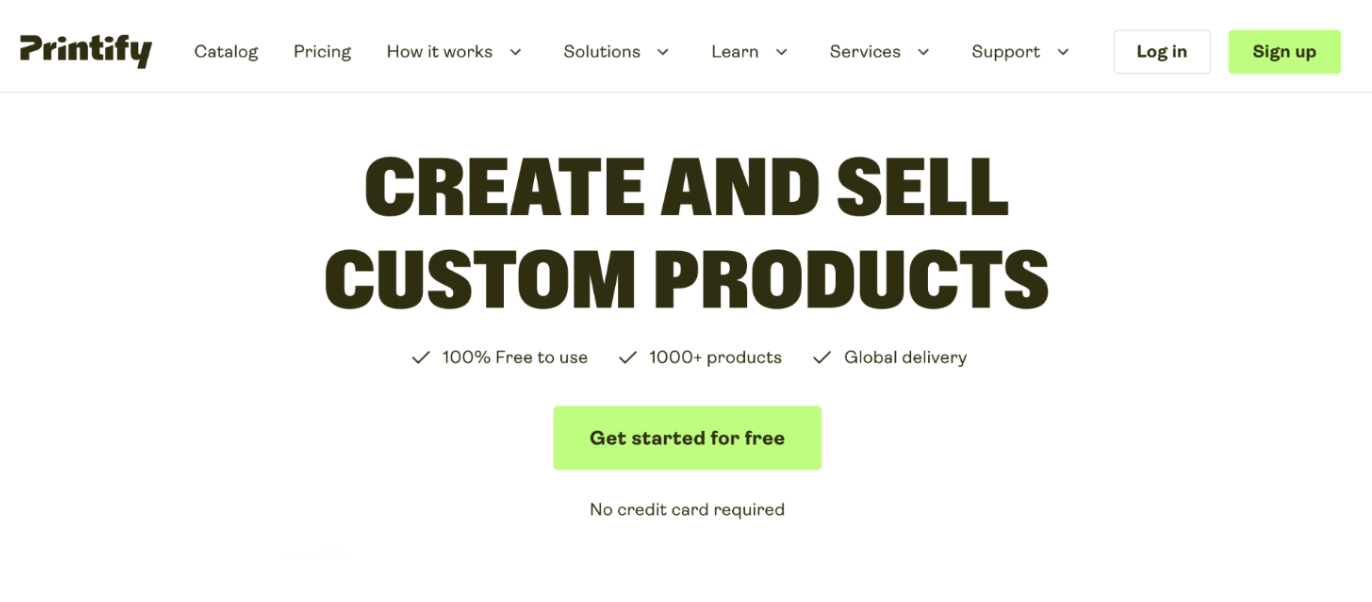
Printify is a print-on-demand platform that connects merchants with a global network of 90+ print providers operating across 140+ fulfillment facilities. Unlike Printful or Podbase, Printify lets you choose your fulfillment partner based on pricing, production location, shipping speed, and customer ratings, giving you significantly more flexibility.
Its biggest strength is scale. With 2,000+ customizable products, Printify offers one of the largest POD catalogs, making it ideal for expanding into new niches such as apparel, home décor, accessories, pet products, and more. The trade-off is that product quality, production times, and shipping consistency vary by print provider, so selecting and testing suppliers is essential. Compared to Printful, Printify requires more hands-on management but typically delivers better profit margins thanks to its competitive base pricing.
Pros
• Huge catalog (2,000+ products)
• Lower base prices for higher profit margins
• 90+ global print providers to choose from
• Flexible supplier selection by price, quality, and location
Cons
• Print quality and shipping consistency vary by provider
• Requires testing suppliers and managing fulfillment choices
• Less streamlined than fully managed POD platforms like Printful
Pricing
• Free plan available
• Premium: $39/month or $24.99/month (billed annually)
• Enterprise plan with custom pricing for high-volume sellers
• Premium includes up to 20% off most products, additional discounts on select new products, Printify Connect, AI mockups, and other growth tools
Compared to Others
Best for sellers focused on maximizing margins and scaling their business. Printify offers the widest product selection and the greatest supplier flexibility among major POD platforms, making it ideal for experienced sellers willing to optimize providers. If your priority is consistent quality with minimal management, platforms like Printful or Gelato provide a more hands-off experience.
2. Printful
Description
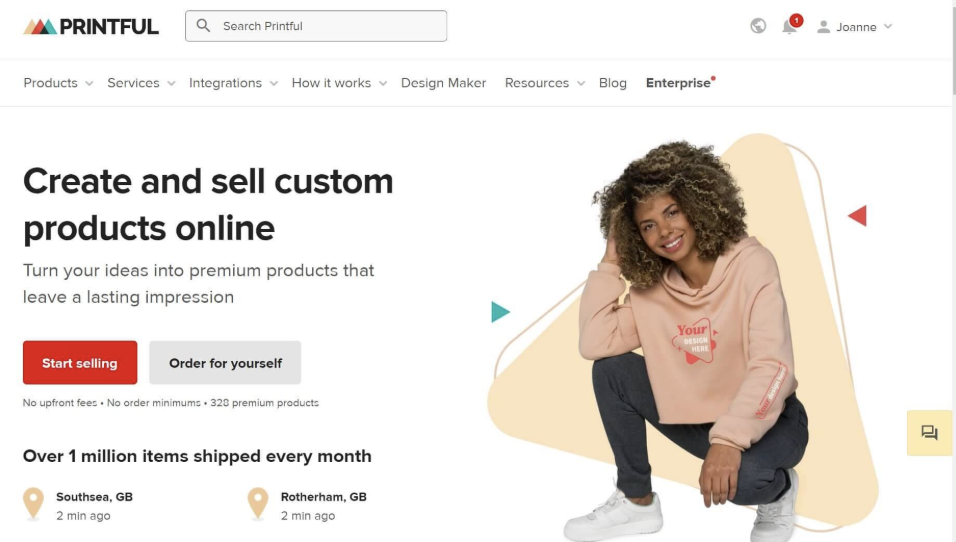
Printful is one of the most established POD platforms, built around a vertically integrated model. Unlike marketplaces like Printify, Printful owns and operates many of its production facilities, which helps maintain consistent quality across orders.
Its biggest strength is branding. Printful offers advanced customization features such as branded labels, packaging inserts, and custom packing slips—making it ideal for businesses building a long-term brand rather than testing quick designs. Compared to Gelato, Printful offers stronger brand control, but slightly less focus on localized production.
Pros
• High, consistent product quality
• Excellent branding options (labels, packaging, inserts)
• Strong integrations (Shopify, Etsy, Amazon, etc.)
Cons
• Higher base costs than Printify
• Smaller catalog than Printify
Pricing
• Free plan available (no monthly fee to start)
• Optional Growth plan (~$24.99/month) for discounts and perks
• Pay per product + shipping
Compared to others: Printful is typically more expensive per item than Printify but offers better consistency and branding tools.
3. Podbase
Description
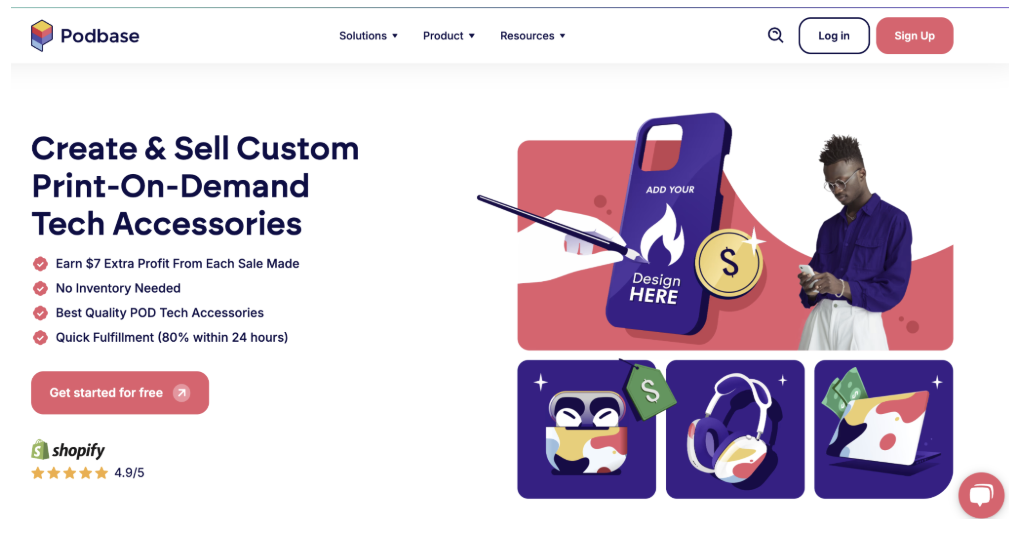
Podbase is a specialized print-on-demand platform focused almost entirely on tech accessories, especially phone cases. Unlike broader POD tools, it keeps its catalog intentionally narrow to optimize production quality and efficiency. This focused approach allows Podbase to control manufacturing in-house, ensuring more consistent output compared to platforms relying on third-party suppliers.
Because Podbase handles production internally (primarily in Europe), it emphasizes quality control and streamlined fulfillment. This makes it particularly attractive for brands that want to dominate a niche (like mobile accessories) rather than manage a large, complex product catalog.
Pros
• Strong niche focus (phone cases & tech accessories)
• In-house production = consistent quality
• Simple catalog, easy to manage
Cons
• Limited product range
• Not ideal for multi-category stores
Pricing
• Free to use
• No monthly subscription
• You pay per product + shipping only
Compared to others: Podbase is the simplest pricing model—no subscriptions like Printify Premium or Gelato+, but fewer cost optimization tools.
4. Gelato
Description
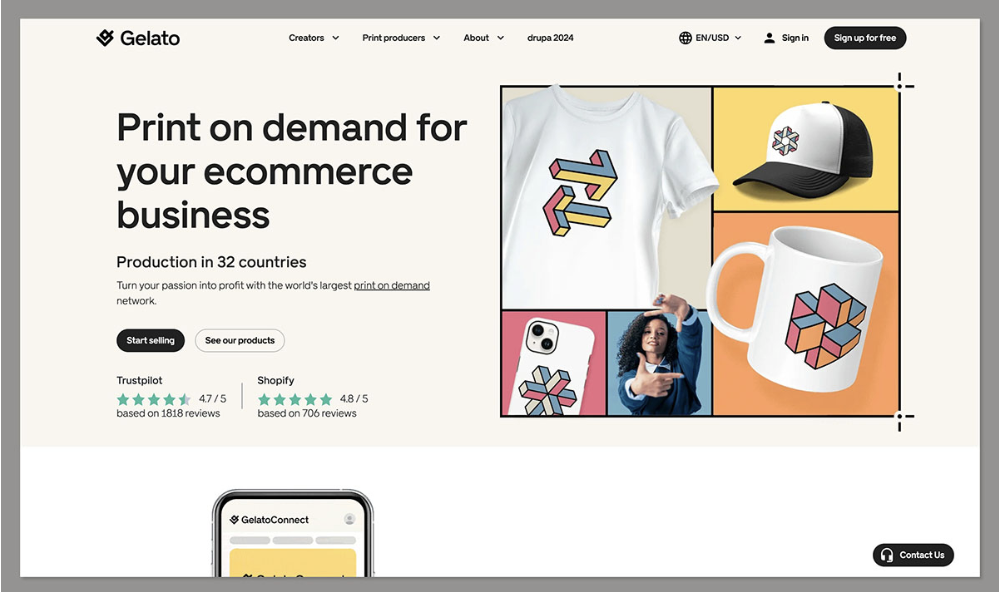
Gelato is built around a “local production” model, meaning products are printed as close as possible to the end customer. With over 140 production partners in 30+ countries, it prioritizes fast delivery and reduced shipping costs.
This makes Gelato especially strong for global ecommerce. Instead of shipping internationally, orders are fulfilled locally—often arriving faster and with lower carbon impact. Compared to Printful, Gelato is more optimized for international scaling, but slightly weaker on branding features.
Pros
• Fast global shipping via local production
• Strong sustainability positioning
• Automated fulfillment
Cons
• Smaller catalog (~250+ products)
• Advanced features require paid plans
Pricing
• Free plan available
• Gelato+ (~$23.99/month or ~$19.99/yearly)
• Paid plans unlock discounts and branding features
Compared to others: Best for international sellers; weaker for branding than Printful and less flexible than Printify.
5. Spring (formerly Teespring)
Description
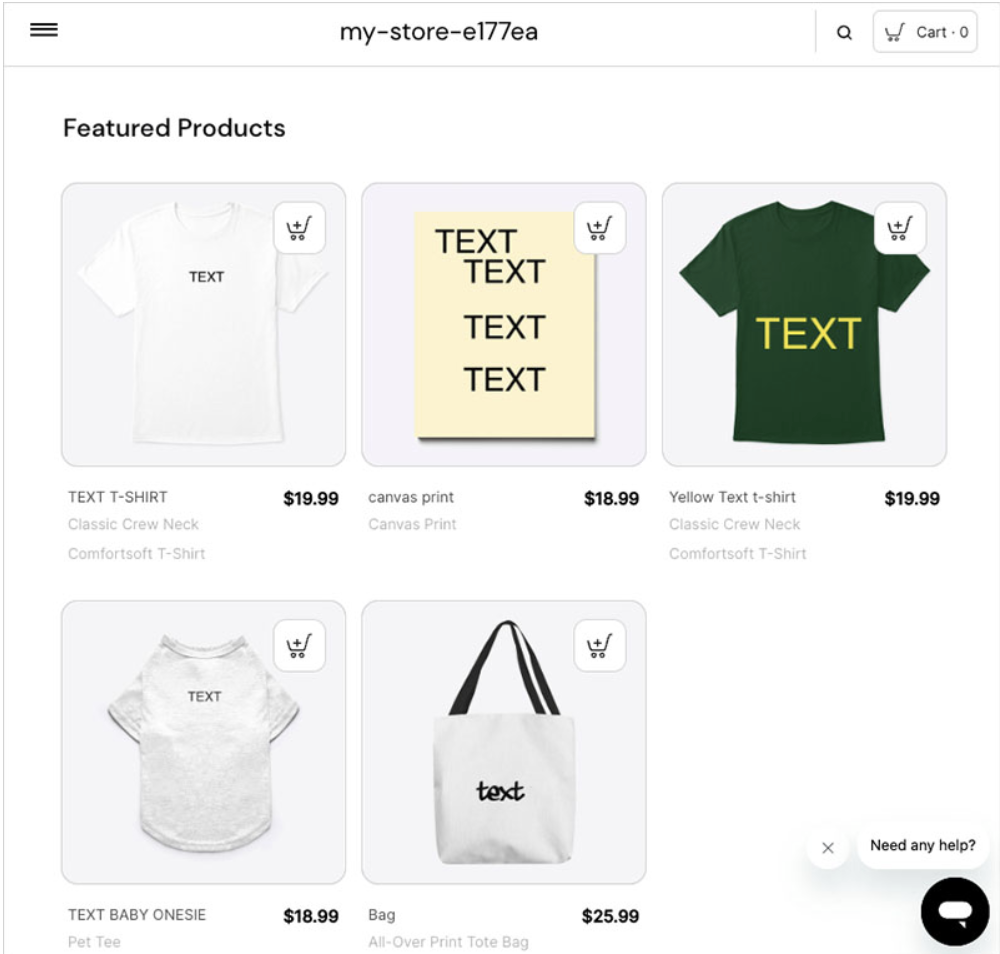
Spring takes a different approach by combining print-on-demand with a built-in storefront. Instead of integrating with Shopify or WooCommerce, it allows creators to sell directly through its platform—making it especially popular with influencers and content creators.
This makes Spring more beginner-friendly than other POD apps. However, compared to platforms like Printful or Printify, it offers less control over branding and customer experience. It’s best suited for social selling rather than building a standalone ecommerce brand.
Pros
• No need for external ecommerce platform
• Ideal for creators and influencers
• Simple setup
Cons
• Limited branding control
• Fewer integrations
Pricing
• Free to use
• Platform takes a margin from each sale
Compared to others: Easiest to start with, but least flexible for scaling a branded ecommerce store.
6. Gooten
Description
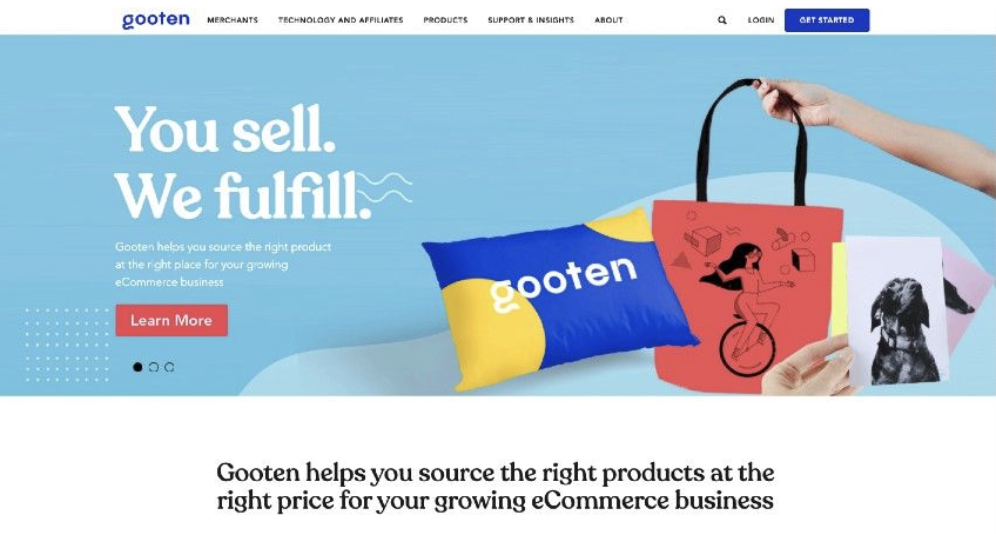
Gooten is a print-on-demand platform designed with scalability in mind, offering a wide product catalog that goes beyond standard apparel into categories like home goods, wall art, and lifestyle products. Unlike Printful, which focuses heavily on in-house production, Gooten operates through a global network of vetted manufacturing partners to fulfill orders efficiently.
Its strength lies in automation and operational efficiency, making it a strong choice for growing businesses handling higher order volumes. Compared to Printify, Gooten offers less manual control over supplier selection but provides a more streamlined, hands-off experience with consistent fulfillment workflows.
Pros
• Strong focus on scalability and automation
• Wide product range (especially home goods)
• Reliable fulfillment network
Cons
• Less control over production partners
• Interface can feel less intuitive for beginners
Pricing
• Free to use
• No monthly subscription
• Pay per product + shipping
Compared to others: More scalable and automated than Printify, but less flexible in supplier selection.
7. CustomCat
Description
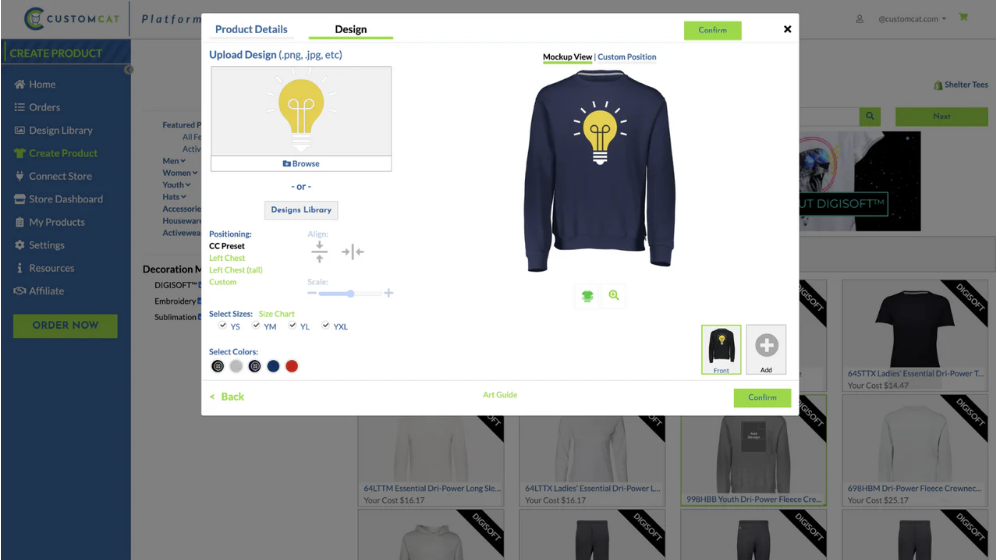
CustomCat is a US-based print-on-demand provider known for its fast fulfillment and competitive pricing, particularly in the apparel category. It focuses on efficiency, with many orders produced and shipped within 2–3 business days, making it one of the faster options compared to platforms like Printify or Gelato.
The platform offers a solid catalog of customizable products, with a strong emphasis on clothing and accessories. Its pricing structure is designed to help sellers maintain healthy margins, especially at scale. Compared to Printful, CustomCat typically offers lower base costs, but with fewer advanced branding features.
Pros
• Fast fulfillment (2–3 business days)
• Competitive pricing for better margins
• Strong apparel selection
Cons
• Limited branding/custom packaging options
• Smaller catalog compared to Printify
Pricing
• Free plan available
• Optional CustomCat Pro (~$30/month) for discounted product pricing
• Pay per product + shipping
Compared to others: Faster and cheaper than Printful for apparel, but with fewer branding capabilities.
8. Apliiq
Description
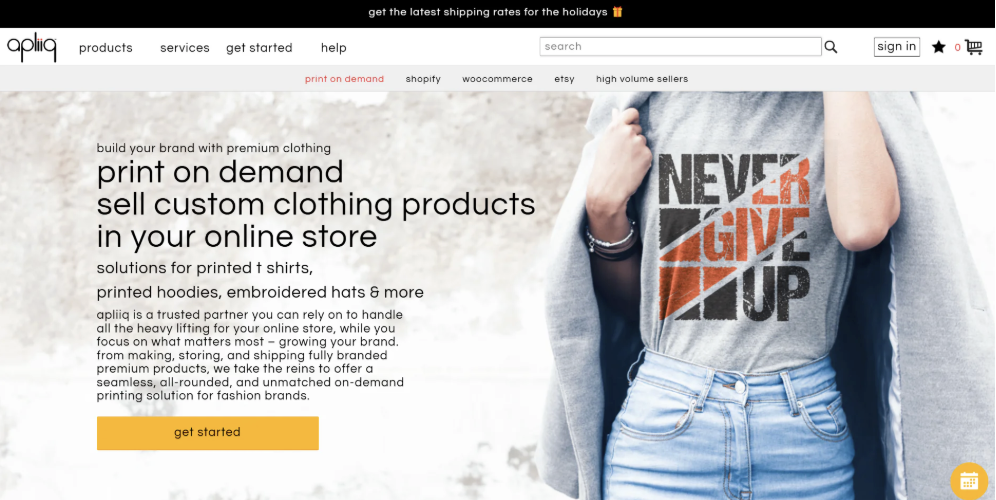
Apliiq is a print-on-demand platform focused on premium apparel and streetwear, offering advanced customization options like custom patches, embroidery, and private labeling. Unlike most POD platforms that rely on simple print designs, Apliiq enables deeper product customization, making it ideal for fashion-focused brands.
Its key differentiator is branding. Sellers can create truly unique clothing pieces with sewn-in labels and custom finishes—something Printify and Gelato don’t specialize in. However, this level of customization comes with higher costs and longer production times compared to standard POD providers.
Pros
• Advanced apparel customization (patches, embroidery)
• Strong private labeling and branding options
• Ideal for premium/streetwear brands
Cons
• Higher production costs
• Longer fulfillment times
Pricing
• Free to use
• No monthly subscription required
• Pay per product (premium pricing due to customization)
Compared to others: Best for high-end apparel branding, but not ideal for low-cost or high-speed scaling like CustomCat or Printify.
Key Benefits of Using Print-on-Demand Apps for Online Stores
Print-on-demand (POD) apps have become a go-to solution for modern ecommerce businesses—and for good reason. They remove many of the traditional challenges of running an online store while giving you the flexibility to experiment, grow, and scale with minimal risk.
1. No Inventory, No Upfront Costs
One of the biggest advantages of POD is that you don’t need to invest in inventory. Products are only created after a customer places an order, which means:
• No bulk purchasing
• No warehousing costs
• No risk of unsold stock
This makes POD especially appealing for new entrepreneurs or brands testing new ideas.
2. Easy to Launch and Manage
Most POD apps integrate seamlessly with platforms like Shopify, Etsy, and WooCommerce. Once set up, the entire fulfillment process is automated—from order placement to shipping.
This allows you to focus on:
• Marketing and growth
• Product design
• Customer experience
Instead of handling logistics and operations.
3. Low-Risk Product Testing
With no upfront investment, you can quickly test new designs, niches, or product categories without financial pressure. If something doesn’t sell, you can simply remove it—no leftover stock or losses.
This makes POD ideal for:
• Trend-based products
• Seasonal campaigns
• Niche experimentation
4. Scalability Without Complexity
As your store grows, POD platforms scale with you. Whether you’re processing 10 or 1,000 orders, the fulfillment process remains the same.
Unlike traditional ecommerce, you don’t need to:
• Hire staff
• Expand storage
• Manage supply chains
The infrastructure is already built for scale.
5. Global Reach Made Simple
Many POD providers have international fulfillment networks, allowing you to sell to customers worldwide without worrying about shipping logistics.
Benefits include:
• Faster delivery times
• Lower shipping costs
• Access to global markets
6. Custom Branding Opportunities
While POD is often seen as a simple fulfillment model, many platforms (like Printful or Apliiq) offer advanced branding options:
• Custom labels
• Branded packaging
• Personalized inserts
This helps you build a recognizable brand—not just sell products.
FAQ
1. What is the best print-on-demand app for beginners?
Platforms like Printful and Printify are popular starting points thanks to their ease of use and broad integrations. If you want a simpler setup with a more focused product range, Podbase is also a strong option—especially for tech accessories.
2. Are print-on-demand apps free to use?
Yes, most POD apps including Podbase, Printful, and Printify—are free to start. You only pay when you make a sale (product + shipping), with optional paid plans available for additional features or discounts.
3. Which print-on-demand app is the most profitable?
Profitability depends on your niche and pricing strategy. Printify and CustomCat are known for lower base costs, while Podbase and Printful can support higher margins through consistent quality and more premium positioning.
4. Which POD app is best for branding?
Printful and Apliiq offer the most advanced branding features, including custom packaging and labels. At the same time, platforms like Podbase can support clean, product-focused branding, especially within a specific niche.
5. Can print-on-demand apps scale with my business?
Yes, POD apps are built to scale. Printify and Gooten are well-suited for large, multi-product stores, while platforms like Podbase can work well for scaling within a focused niche.
6. Which print-on-demand app should I choose?
• Podbase → Best for niche tech accessories
• Printful → Best for branding and consistency
• Printify → Best for variety and pricing flexibility
• Gelato → Best for global fulfillment
The final right choice depends on your goals—whether that’s building a brand, maximizing margins, or focusing on a specific product category.
Related Posts
- How Shoppers Discover Products in AI Answers - What Ecommerce Sites Should Do
- Best ESG Reporting and Disclosure Software for US Enterprises in 2026
- How Entrepreneurs Can Turn Business Success Into Lasting Wealth
- Rust for E-commerce: When Performance-Critical Backends Outgrow PHP
- E-commerce Virus Removal: How to Detect and Clean an Infected Website
- Top Data Privacy Management Software for 2026