


Discover the top ad tech companies in 2026, including the biggest global players and leading DSP, SSP, retail media, mobile ads, and verification platforms.
The advertising technology industry is changing how businesses reach customers, optimize campaigns, and measure marketing performance. From AI-powered programmatic advertising to connected TV and retail media, top ad tech companies are building the infrastructure that powers digital advertising worldwide.
For brands, agencies, and publishers, choosing the right advertising technology partner can improve campaign efficiency, audience targeting, inventory monetization, and return on advertising investment.
However, not all adtech companies offer the same solutions. Some specialize in automated media buying, while others focus on publisher monetization, mobile advertising, identity resolution, or independent ad verification.
According to the Interactive Advertising Bureau (IAB), U.S. digital advertising revenue reached $294.6 billion in 2025, increasing 13.9% year over year. Programmatic advertising revenue also increased 20.5%, reaching $162.4 billion.
These figures highlight the growing importance of technology-driven advertising.
In this guide, we explore 16 of the best ad tech companies in the world in 2026, compare their capabilities, and explain how to choose the right platform for different business needs.
What Are AdTech Companies?
Adtech companies, short for advertising technology companies, develop software and infrastructure that help businesses buy, deliver, manage, optimize, and measure digital advertisements.
Instead of relying entirely on manual media buying, advertisers can use adtech platforms to automate advertising workflows and improve campaign targeting through data analysis and machine learning.
Advertising technology also helps publishers generate revenue from websites, mobile applications, streaming services, and other digital properties.
Common adtech solutions include:
• Demand-Side Platforms (DSPs): Help advertisers purchase digital advertising inventory programmatically.
• Supply-Side Platforms (SSPs): Help publishers manage and monetize their advertising inventory.
• Ad Exchanges: Connect advertisers and publishers through automated advertising transactions.
• Ad Servers: Manage ad delivery, campaign tracking, and reporting.
• Data and Identity Platforms: Support audience matching, data collaboration, and targeting.
• Ad Verification Platforms: Measure viewability, invalid traffic, brand suitability, and media quality.
• Retail Media Platforms: Enable retailers and marketplaces to monetize their first-party shopping environments.
For example, an ecommerce brand might use a DSP to display product advertisements to relevant audiences, while the publisher displaying those advertisements uses an SSP to manage demand and maximize revenue.
An independent verification platform can then help evaluate whether the advertisements reached real users in suitable environments.
Together, these systems form the modern digital advertising ecosystem.
Top 16 AdTech Companies in 2026: Quick Comparison
The following advertising tech companies represent major platforms and specialists across the global adtech ecosystem.
| Company | Primary Specialization | Best For |
|---|---|---|
Search, display, video, programmatic | Broad digital advertising reach | |
Meta | Social media advertising | Social audience targeting and conversions |
Amazon Ads | Retail media, display, video, streaming | Ecommerce and commerce-driven advertising |
The Trade Desk | Independent demand-side platform | Enterprise omnichannel campaigns |
Magnite | Sell-side advertising technology | Publishers and connected TV monetization |
PubMatic | Programmatic infrastructure | Publisher revenue and supply optimization |
Criteo | Commerce media and retail advertising | Retailers and ecommerce brands |
AppLovin | AI-powered performance advertising | Mobile and performance-focused campaigns |
StackAdapt | Omnichannel advertising platform | Agencies and cross-channel marketers |
Moloco | AI-powered performance and retail media | App growth and marketplace monetization |
Index Exchange | Programmatic ad exchange | Premium publishers and inventory monetization |
OpenX | Supply-side advertising and curation | Publishers and curated programmatic supply |
Teads | Omnichannel advertising | Premium open-internet advertising |
DoubleVerify | Ad verification and measurement | Brand protection and media quality |
Integral Ad Science | Media quality and optimization | Ad fraud prevention and brand suitability |
LiveRamp | Data collaboration and identity | First-party data activation and measurement |
Editorial note: This is a curated list of prominent companies and platforms, not a ranking by revenue, market capitalization, or customer satisfaction. The companies serve different parts of the advertising ecosystem.
1. Google — Best for Comprehensive Digital Advertising
Website: https://ads.google.com/
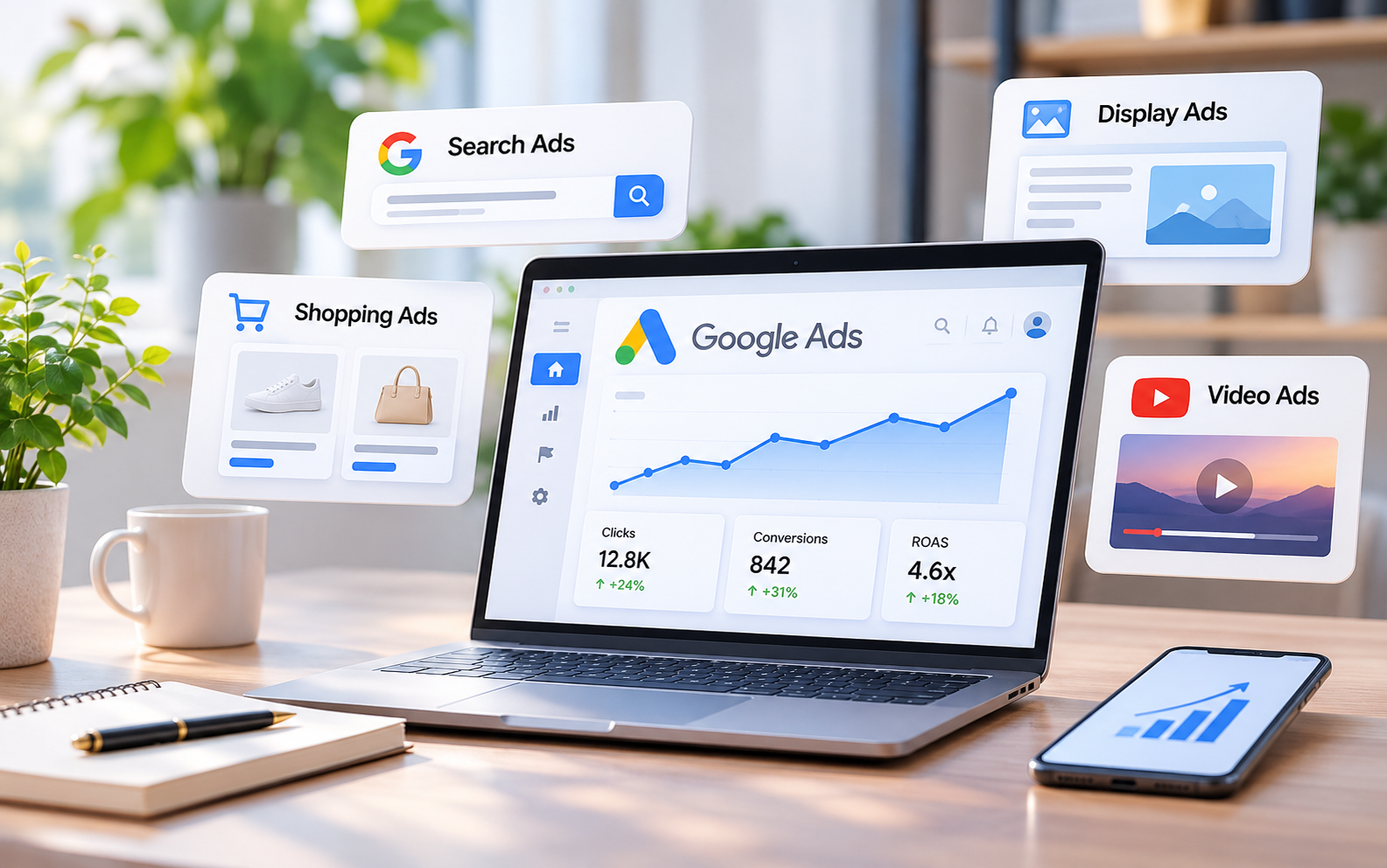
Google is one of the biggest advertising tech companies in the world, providing advertising solutions across search engines, websites, mobile applications, and video platforms.
Its advertising ecosystem includes Google Ads, Google Ad Manager, and Display & Video 360.
Google Ads allows businesses to connect with potential customers through formats such as Search, Shopping, Display, and YouTube advertising. Display & Video 360 supports more advanced programmatic media buying and campaign management.
Key Features
• Search, display, shopping, and video advertising
• AI-powered campaign optimization
• Audience targeting and conversion measurement
• Programmatic media buying through Display & Video 360
• Integration with Google's broader marketing ecosystem
Why Google Stands Out
Google combines high-intent search advertising with substantial reach across video and the open web. This makes it especially valuable for organizations that want to combine customer acquisition with broader brand awareness campaigns.
Its extensive advertising infrastructure also supports businesses ranging from small online stores to multinational enterprises.
Best for: Ecommerce companies, service providers, digital marketing agencies, and enterprises seeking scalable, multichannel advertising.
Considerations: Campaign performance depends on bidding strategy, tracking quality, creative assets, and competition. Advanced programmatic workflows may require additional expertise.
2. Meta — Best for Social Media Advertising
Website: https://www.facebook.com/business/ads
Meta is a major advertising technology company operating advertising solutions across Facebook, Instagram, Messenger, and its broader family of applications.
Meta Ads Manager allows businesses to launch, manage, and measure campaigns targeting audiences based on supported targeting options, engagement signals, and conversion objectives.
The company's advertising technology increasingly incorporates AI-driven campaign delivery, automated optimization, and creative tools.
Key Features
• Advertising across Facebook and Instagram
• Automated campaign optimization
• Audience and conversion-based targeting
• Video, image, carousel, and other creative formats
• Campaign analytics and performance measurement
Why Meta Stands Out
Meta's strength lies in its social ecosystem, where businesses can connect with audiences throughout the discovery, consideration, and purchasing journey.
Its advertising tools are particularly useful for visual products, consumer brands, and businesses that rely on social engagement.
Best for: Consumer brands, ecommerce retailers, social commerce businesses, and performance marketing teams.
Considerations: Meta primarily operates within its own advertising ecosystem. Advertisers should independently evaluate attribution, creative fatigue, and incremental performance.
3. Amazon Ads — Best for Retail Media and Purchase-Driven Advertising
Website: https://advertising.amazon.com/
Amazon Ads is one of the largest advertising ecosystems globally, combining shopping signals with digital advertising technology.
It provides advertising solutions across Amazon's retail properties, Prime Video, Twitch, Fire TV, and eligible third-party digital inventory.
Historically, Amazon DSP was the company's programmatic advertising platform. In 2026, Amazon brought its DSP and sponsored advertising interfaces into Amazon Ads Agent, with programmatic buying capabilities accessible through Display, Video, and Audio campaigns and advanced settings.
Key Features
• Sponsored product and brand advertising
• Retail and shopping-related audience signals
• Display, video, and streaming TV advertisements
• Programmatic media buying capabilities
• Advertising measurement and campaign optimization
Why Amazon Ads Stands Out
Amazon's advertising ecosystem combines customer shopping activity with purchase-oriented campaign measurement.
Retailers and consumer brands can use these capabilities to reach customers researching products, considering purchases, or engaging with streaming entertainment.
Best for: Ecommerce businesses, consumer product brands, retail advertisers, and agencies managing commerce-focused campaigns.
Considerations: Product eligibility, available inventory, campaign tools, and advertising requirements vary by region and campaign type.
4. The Trade Desk — Best for Independent Programmatic Advertising
Website: https://www.thetradedesk.com/
The Trade Desk is one of the most recognized independent demand-side platforms in the digital advertising industry.
Its technology allows advertisers and agencies to plan, execute, and optimize programmatic campaigns across multiple digital channels.
The company's Kokai platform incorporates machine learning, advanced measurement, and media-buying tools to support data-driven advertising decisions.
Key Features
• Programmatic display and video advertising
• Connected TV advertising
• Digital audio advertising
• AI-powered campaign optimization
• Audience data activation and measurement
• Cross-channel campaign management
Why The Trade Desk Stands Out
Unlike advertising platforms primarily focused on their own consumer properties, The Trade Desk concentrates on media buying across the open internet and participating inventory sources.
This approach gives advertisers an alternative for coordinating campaigns across different publishers, devices, and channels.
Its enterprise-oriented capabilities make it particularly relevant for complex media strategies.
Best for: Large advertisers, media agencies, and enterprises managing significant omnichannel advertising programs.
Considerations: Advanced campaign structures and data integrations generally require experienced programmatic teams.
5. Magnite — Best for Publisher Monetization and Connected TV
Website: https://www.magnite.com/
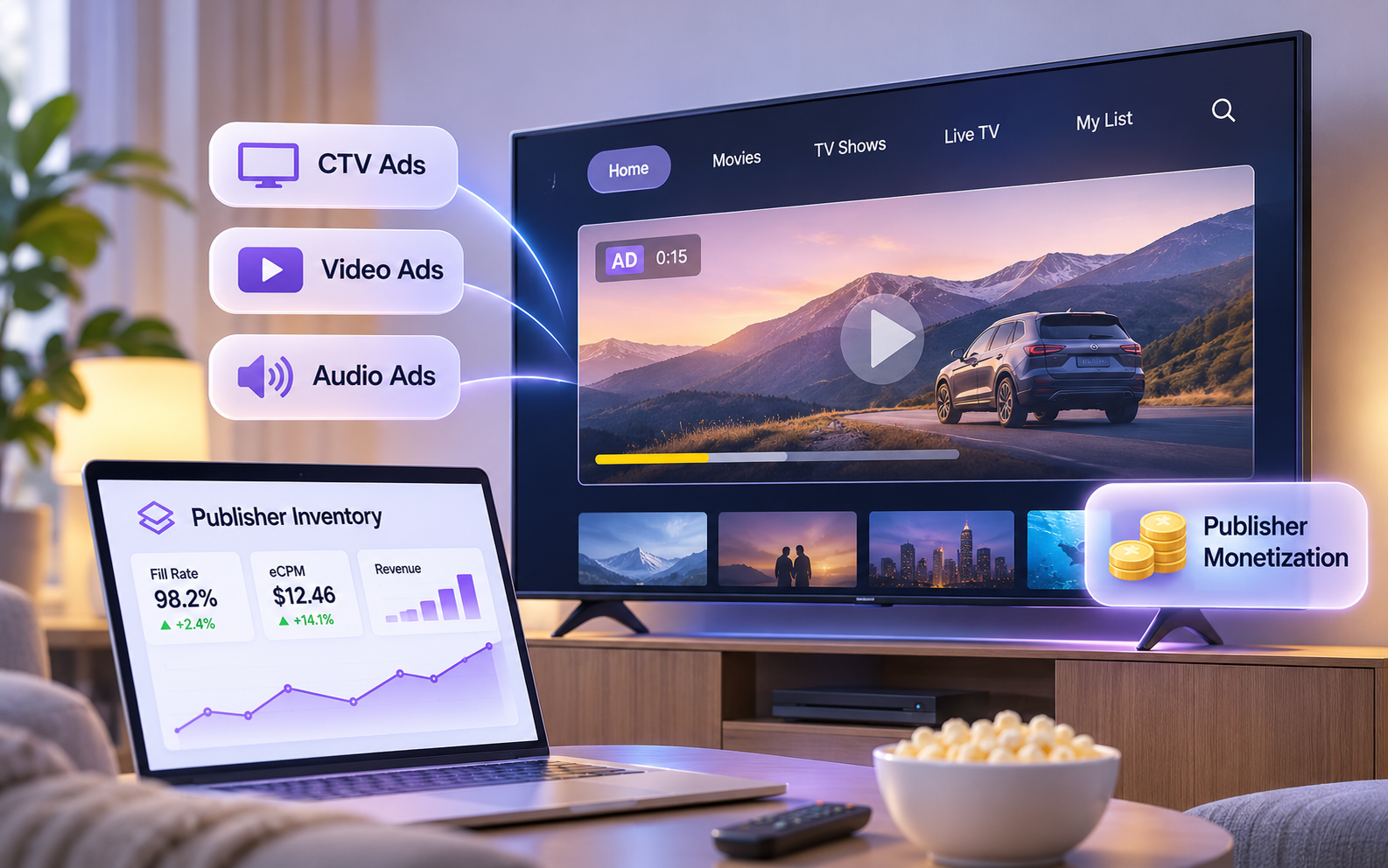
Magnite is a leading independent sell-side advertising company that helps publishers monetize digital advertising inventory.
Its technology supports connected TV, online video, display, and audio advertising.
Magnite also develops infrastructure for streaming media owners, including solutions that connect ad serving with programmatic demand.
Key Features
• Supply-side advertising technology
• Connected TV and streaming monetization
• Programmatic video advertising
• Publisher yield optimization
• Demand management and inventory controls
• Streaming advertising infrastructure
Why Magnite Stands Out
As video consumption shifts toward streaming services, publishers need technology capable of managing advertising across connected devices.
Magnite focuses on this infrastructure, helping media owners connect advertising demand with premium inventory.
Its emphasis on CTV makes it an important participant in the evolution of television advertising.
Best for: Streaming platforms, broadcasters, digital publishers, and media companies monetizing video inventory.
Considerations: Magnite is primarily a supply-side technology provider rather than a general self-service advertising platform for small businesses.
6. PubMatic — Best for Programmatic Advertising Infrastructure
Website: https://pubmatic.com/
PubMatic is a global advertising technology company offering infrastructure that connects publishers, advertisers, data partners, and commerce media businesses.
The platform uses automation and AI-driven optimization to improve advertising transactions and media monetization.
PubMatic supports connected TV, mobile applications, and other digital advertising environments.
Key Features
• Publisher monetization technology
• Programmatic advertising infrastructure
• AI-powered optimization
• Connected TV and mobile advertising
• Supply-path efficiency
• Audience and data collaboration capabilities
Why PubMatic Stands Out
PubMatic emphasizes infrastructure efficiency and transparency in programmatic advertising.
Its technology is designed to help publishers improve advertising yield while offering buyers access to digital inventory through programmatic workflows.
Its integrated approach also extends into buyer solutions and commerce media.
Best for: Digital publishers, app developers, streaming media businesses, and advertising technology partners.
Considerations: Businesses should evaluate inventory integrations, revenue-sharing arrangements, reporting transparency, and operational requirements before implementation.
7. Criteo — Best for Commerce Media and Retail Advertising
Website: https://www.criteo.com/
Criteo is a prominent commerce media company that helps advertisers and retailers connect advertising activity with shopping behavior.
Although the company is widely associated with retargeting, its technology portfolio extends into retail media, commerce-focused media buying, and publisher monetization.
Its Commerce Media Platform includes solutions such as Commerce Max, Commerce Growth, Commerce Grid, and Commerce Yield.
Key Features
• Commerce-focused audience targeting
• Retail media advertising
• Dynamic product advertising
• Commerce media buying
• Retailer and publisher monetization
• Purchase-oriented measurement
Why Criteo Stands Out
Criteo focuses on the relationship between advertising exposure and commercial activity.
By using commerce-related data and machine learning, its technology helps brands reach consumers throughout the shopping journey.
Retailers can also use Criteo's monetization capabilities to develop advertising revenue from their own digital properties.
Best for: Ecommerce brands, retailers, marketplaces, and advertisers focused on measurable shopping outcomes.
Considerations: Data availability, retailer integrations, inventory coverage, and measurement capabilities can vary between products and markets.
8. AppLovin — Best for AI-Powered Performance Advertising
Website: https://www.applovin.com/
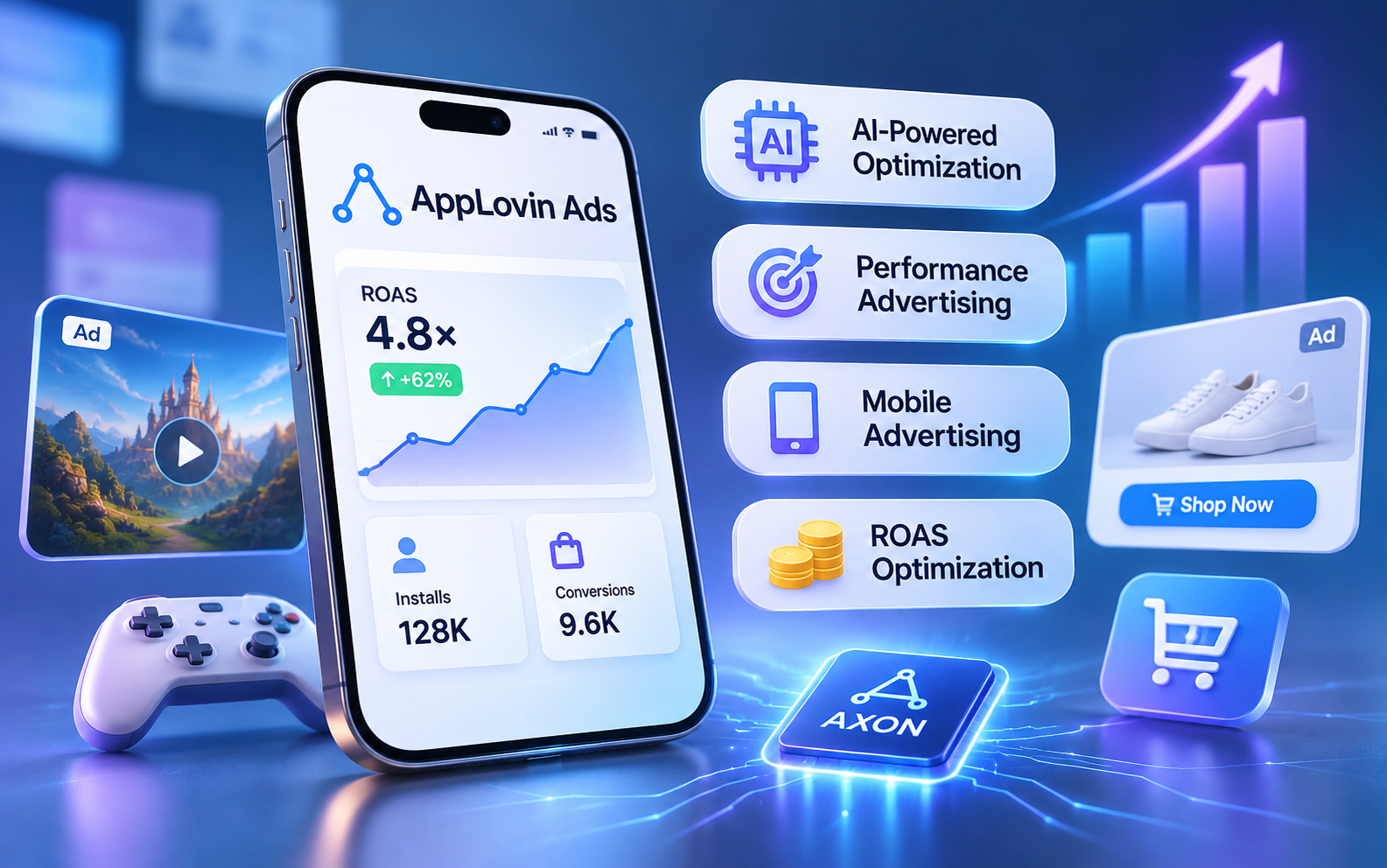
AppLovin is a major advertising technology company known for machine-learning-driven advertising and mobile monetization.
Its advertising platform helps businesses reach audiences and optimize campaigns toward measurable outcomes.
In June 2026, the company announced that its self-service advertising platform was open to all advertisers and would operate under the name AppLovin Ads. Axon remains the name of its AI recommendation technology.
Key Features
• AI-powered advertising optimization
• Mobile advertising inventory
• Performance-focused campaign buying
• Return-on-ad-spend optimization
• Customer acquisition campaigns
• Advertising monetization technology
Why AppLovin Stands Out
AppLovin combines automated decision-making with substantial reach across mobile applications.
Its advertising model focuses on measurable performance objectives rather than relying exclusively on impressions or brand awareness.
The company has also expanded access to its advertising capabilities beyond its historical mobile gaming customer base.
Best for: Performance marketers, mobile-focused businesses, ecommerce brands, and advertisers testing incremental acquisition channels.
Considerations: Advertisers should validate attribution quality, customer acquisition costs, audience suitability, and incremental revenue before scaling campaigns.
9. StackAdapt — Best for Omnichannel Marketing Campaigns
Website: https://www.stackadapt.com/
StackAdapt provides an AI-powered advertising platform for planning, activating, and optimizing campaigns across multiple channels.
Its platform combines programmatic advertising with audience management, creative workflows, measurement, and marketing orchestration.
StackAdapt supports a range of channels, including native advertising, display, video, connected TV, audio, and digital out-of-home.
Key Features
• Omnichannel programmatic advertising
• Native and display advertising
• Connected TV and video campaigns
• Contextual and audience targeting
• AI-assisted campaign optimization
• Campaign analytics and marketing workflows
Why StackAdapt Stands Out
StackAdapt is designed for marketers who want to coordinate advertising activities without maintaining completely separate workflows for each channel.
Its integrated approach can be useful for agencies managing different client objectives and campaign formats.
The platform also provides capabilities for connecting advertising with broader marketing activities.
Best for: Digital marketing agencies, B2B advertisers, mid-market brands, and organizations managing cross-channel campaigns.
Considerations: Evaluate supported markets, integration requirements, service options, and commercial terms for the channels you intend to use.
10. Moloco — Best for AI-Driven Mobile Growth and Retail Media
Website: https://www.moloco.com/
Moloco is an AI-native advertising technology company focused on performance advertising and commerce media.
Its core offerings include Moloco Ads, which supports mobile app growth, and Moloco Commerce Media, which helps retailers and marketplaces build advertising businesses.
The company's technology uses machine learning to optimize advertising decisions around business outcomes.
Key Features
• Machine-learning-driven advertising
• Mobile app acquisition and re-engagement
• Advertising optimization based on performance goals
• Retail media monetization
• Sponsored advertising infrastructure
• First-party data activation
Why Moloco Stands Out
Moloco applies AI-driven optimization to advertising opportunities across the open internet and commerce platforms.
Its technology is particularly relevant for businesses that want to acquire valuable app users or monetize an existing marketplace.
By supporting both advertisers and commerce media operators, Moloco addresses two important parts of the advertising ecosystem.
Best for: Mobile app businesses, growth marketers, ecommerce marketplaces, and retailers launching sponsored advertising programs.
Considerations: Mobile performance advertising and retailer monetization are distinct products, so buyers should assess the specific offering that matches their business model.
11. Index Exchange — Best for Premium Programmatic Inventory
Website: https://www.indexexchange.com/
Index Exchange is a global supply-side advertising platform that connects media owners with programmatic advertising demand.
Its technology supports publishers in managing advertising inventory while helping marketers access inventory across digital channels.
The company focuses on transparency, efficiency, and automated media transactions.
Key Features
• Programmatic advertising exchange
• Publisher inventory monetization
• Omnichannel advertising transactions
• Demand access and marketplace optimization
• Supply-chain transparency
• Advertising infrastructure innovation
Why Index Exchange Stands Out
Index Exchange concentrates on the infrastructure connecting advertising buyers and sellers.
Its technology is designed to support efficient transactions while giving publishers more control over how their advertising inventory is offered to the market.
For media companies with significant advertising inventory, exchange quality and demand connectivity can materially affect monetization.
Best for: Premium publishers, digital media owners, and programmatic advertising partners.
Considerations: Integration requirements and potential revenue benefits depend on inventory quality, demand relationships, and a publisher's existing technology stack.
12. OpenX — Best for Supply-Side Targeting and Curated Advertising
Website: https://www.openx.com/
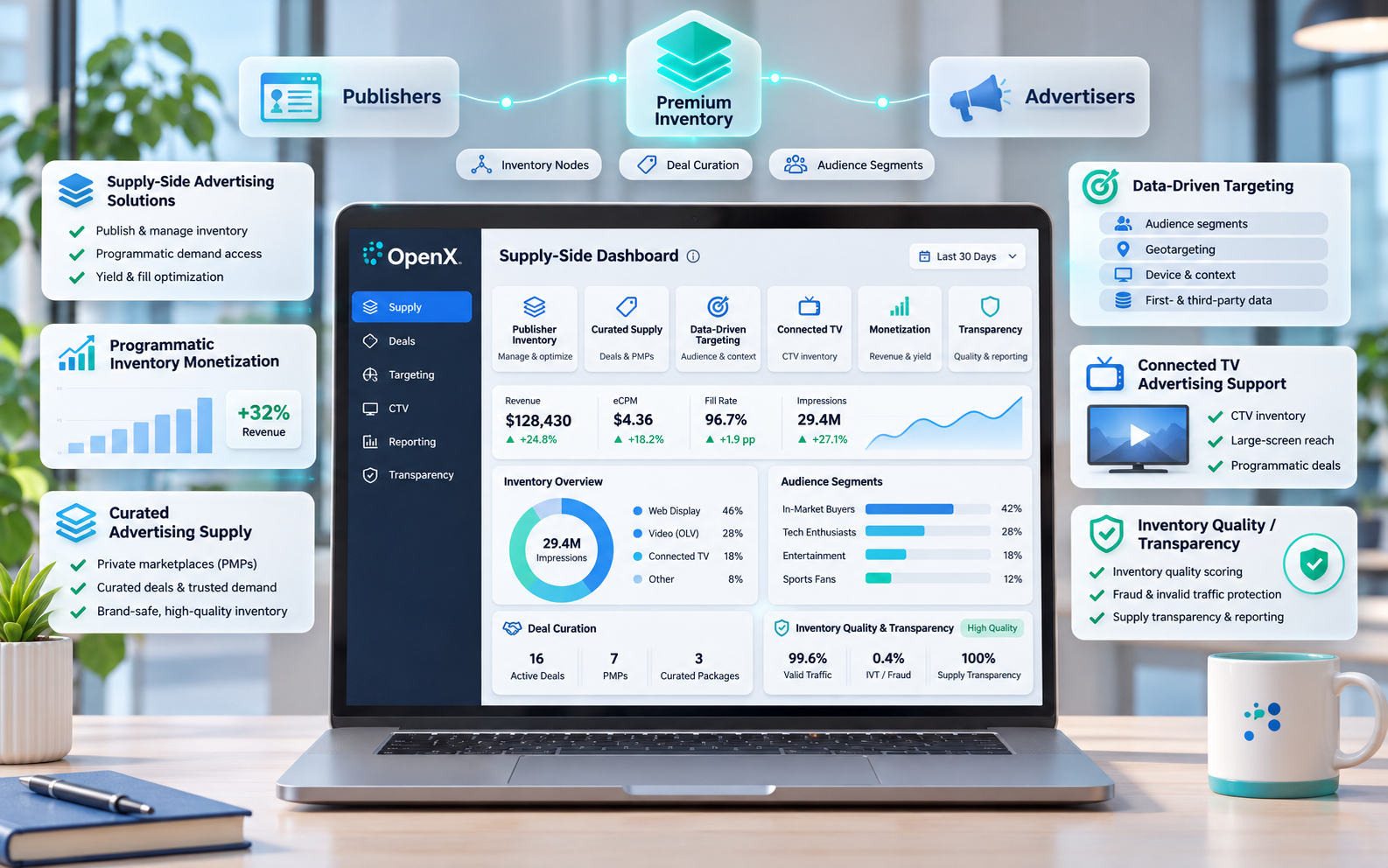
OpenX is an independent programmatic advertising technology company focused on supply-side advertising infrastructure.
Its solutions connect publishers and advertisers while supporting inventory quality, targeting, and advertising optimization.
OpenX also offers capabilities related to supply-side targeting, curation, and connected TV advertising.
Key Features
• Supply-side advertising solutions
• Programmatic inventory monetization
• Curated advertising supply
• Data-driven targeting
• Connected TV advertising support
• Inventory quality and transparency tools
Why OpenX Stands Out
OpenX emphasizes the value of improving advertising decisions closer to the supply side.
This approach can help publishers package inventory and allow advertisers to work with more relevant advertising opportunities.
Its investment in curation and connected TV also reflects the growing importance of premium inventory and supply-chain efficiency.
Best for: Digital publishers, programmatic media buyers, and advertisers interested in curated supply strategies.
Considerations: Evaluate available supply, addressability, platform integrations, and campaign performance relative to other programmatic buying routes.
13. Teads — Best for Premium Open-Internet Advertising
Website: https://www.teads.com/
Teads is an omnichannel advertising platform focused on reaching audiences across premium digital media.
The company combines advertising solutions for brand awareness and performance-oriented campaigns.
An important industry development occurred in 2025 when Outbrain acquired Teads. The combined company subsequently adopted the Teads name.
As a result, Teads and legacy Outbrain should not be treated as two separate companies in a current list.
Key Features
• Omnichannel advertising
• Premium publisher relationships
• Video and display advertising
• Contextual advertising capabilities
• Creative advertising solutions
• Brand and performance measurement
Why Teads Stands Out
Teads focuses on connecting advertisers with premium editorial and other open-internet environments.
Its platform brings together media access, creative formats, audience relevance, and campaign measurement.
The company's combined capabilities are designed to support advertisers across multiple stages of the marketing funnel.
Best for: Global brands, media agencies, and businesses investing in premium open-internet advertising.
Considerations: Buyers should assess inventory availability, audience reach, creative requirements, and measurement methodologies in their target markets.
14. DoubleVerify — Best for Advertising Verification and Brand Protection
Website: https://doubleverify.com/
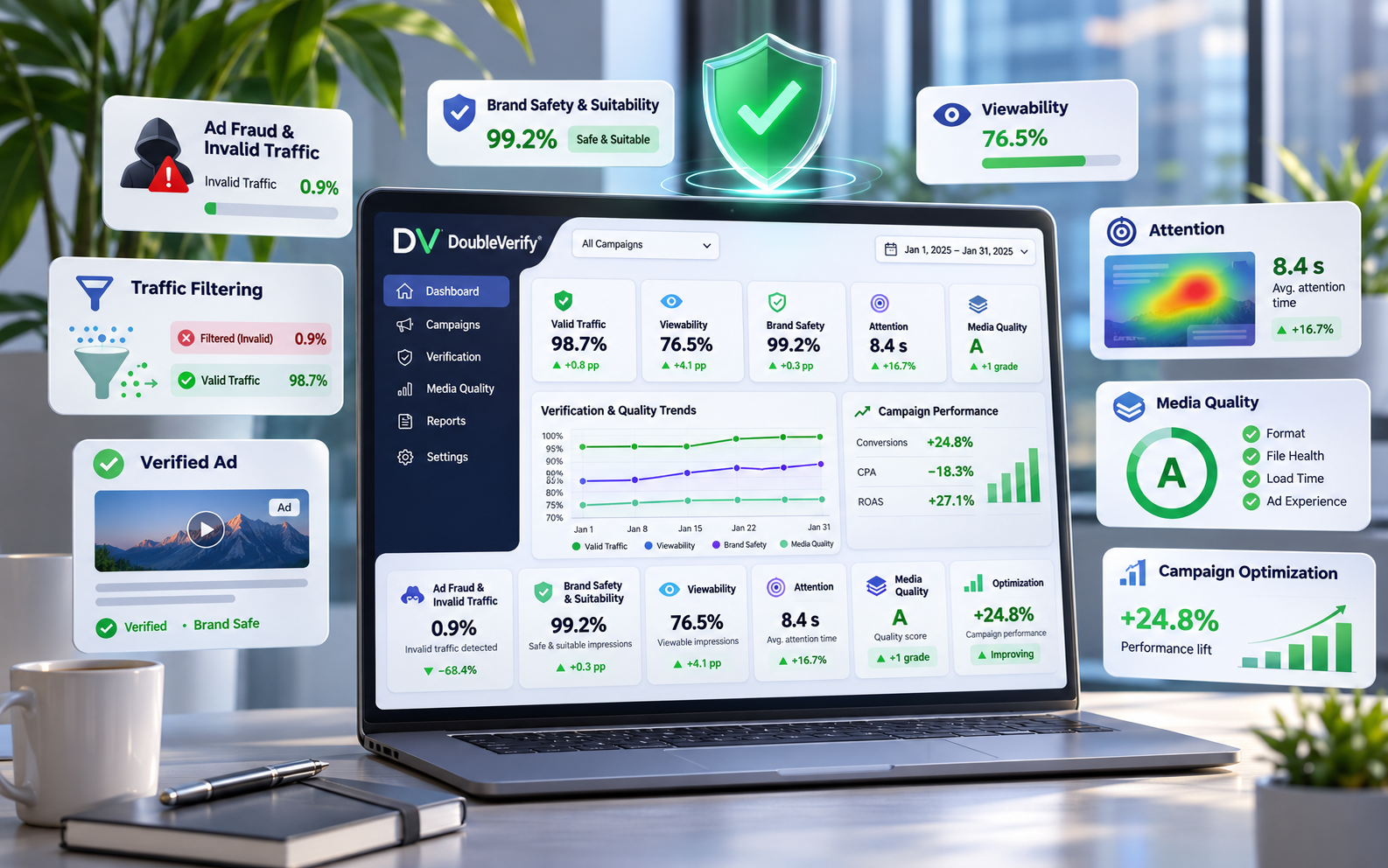
DoubleVerify is an advertising measurement and verification technology company that helps brands evaluate the quality and effectiveness of digital advertising.
Its solutions cover areas such as invalid traffic detection, viewability, brand suitability, attention, and media optimization.
Unlike a DSP, DoubleVerify primarily provides measurement and quality-control technology rather than operating as a general-purpose media-buying platform.
Key Features
• Ad fraud and invalid traffic detection
• Brand safety and suitability measurement
• Advertising viewability verification
• Attention measurement
• Media quality analytics
• Campaign performance optimization
Why DoubleVerify Stands Out
Digital advertising performance depends on more than impressions and clicks.
Advertisers also need to understand whether their ads appeared in appropriate environments, whether impressions were legitimate, and whether campaigns reached their intended audiences.
DoubleVerify provides independent measurement capabilities to support these decisions.
Best for: Enterprise advertisers, agencies, and brands with substantial digital advertising investments.
Considerations: Verification does not replace conversion tracking or incrementality measurement. Organizations should evaluate methodology, supported inventory, and implementation requirements.
15. Integral Ad Science — Best for Media Quality and Ad Fraud Prevention
Website: https://integralads.com/
Integral Ad Science (IAS) is a global advertising verification and media quality platform.
The company helps advertisers evaluate digital advertising placements, improve media quality, and reduce exposure to invalid or unsuitable inventory.
IAS provides solutions for brand suitability, viewability, ad fraud detection, attention, and campaign optimization.
In December 2025, IAS completed its acquisition by private equity firm Novacap and became a privately held company.
Key Features
• Advertising verification
• Fraud and invalid traffic detection
• Brand suitability controls
• Viewability measurement
• Contextual intelligence
• Media quality optimization
Why Integral Ad Science Stands Out
IAS emphasizes the importance of advertising quality as a component of marketing performance.
Its measurement tools help advertisers evaluate where their campaigns appear and whether those placements meet defined quality standards.
This can be particularly important for brands advertising across numerous websites, applications, and media environments.
Best for: Large advertisers, media agencies, publishers, and businesses prioritizing advertising transparency.
Considerations: Media quality measurement should be combined with business outcome metrics to assess actual campaign effectiveness.
16. LiveRamp — Best for Identity Resolution and Data Collaboration
Website: https://liveramp.com/
LiveRamp is an advertising data technology platform focused on identity resolution, data connectivity, and collaboration.
Its capabilities help organizations connect first-party customer information with advertising and measurement workflows.
In November 2026, Publicis Groupe completed its acquisition of LiveRamp. The platform is now part of Publicis' broader data and AI capabilities.
Key Features
• Identity resolution
• First-party data activation
• Data collaboration
• Privacy-conscious audience connectivity
• Advertising measurement support
• Data integration across marketing platforms
Why LiveRamp Stands Out
Advertising increasingly depends on the ability to work with first-party information responsibly.
LiveRamp provides infrastructure for connecting customer data with advertising platforms, publishers, and measurement partners.
Its technology can support organizations seeking more coordinated customer engagement across different advertising channels.
Best for: Enterprises, large advertisers, retailers, and organizations with complex first-party data requirements.
Considerations: Implementation should include careful reviews of consent, data governance, regional privacy requirements, security controls, and integration architecture.
Which Are the Biggest Ad Tech Companies in the World?
The biggest ad tech companies are not necessarily the same as the best advertising technology providers for every use case.
Company size can be evaluated through several measures:
• Annual advertising revenue
• Advertising transaction volume
• Global audience reach
• Publisher or advertiser relationships
• Market capitalization
• Media inventory coverage
Largest Advertising Ecosystems by Revenue
Google, Meta, and Amazon operate some of the world's largest digital advertising ecosystems.
Their reported 2025 advertising revenues illustrate the scale of these businesses.
| Company | 2025 Advertising Revenue | Principal Advertising Ecosystem |
|---|---|---|
Google (Alphabet) | $294.7 billion | Search, YouTube, Google Network |
Meta | $196.2 billion | Facebook, Instagram, and related applications |
Amazon | $68.6 billion | Retail advertising, sponsored ads, display, video |
Figures are rounded from company financial filings for the year ended December 31, 2025. Reporting definitions differ, and advertising revenue is not equivalent to standalone adtech software revenue.
These figures show why Google, Meta, and Amazon are frequently discussed among the largest advertising technology businesses.
However, they primarily operate substantial advertising ecosystems built around their own consumer products and services.
Largest Independent AdTech Companies
When evaluating independent adtech companies, the competitive landscape looks different.
Examples of prominent independent platforms include:
• The Trade Desk: An independent programmatic media-buying platform.
• Magnite: A major independent sell-side advertising business.
• PubMatic: Programmatic advertising infrastructure for publishers and buyers.
• Criteo: Commerce media and retail advertising technology.
• AppLovin: AI-powered performance advertising.
• Index Exchange: Independent programmatic exchange infrastructure.
These companies should not automatically be ranked by the same financial metric because their business models, revenue recognition, and technology functions differ.
For example, advertising revenue generated by a large media platform is not directly comparable with platform fees or net revenue recognized by an adtech intermediary.
The better approach is to compare companies within the same category and then assess their business models, operating scale, and suitability.
Major Types of Advertising Tech Companies
Understanding the main categories of advertising technology is essential when comparing providers.
Demand-Side Platforms (DSPs)
DSPs help advertisers purchase advertising placements programmatically.
They automate media-buying decisions based on campaign objectives, targeting configurations, available inventory, and bidding logic.
Examples include The Trade Desk and the programmatic buying capabilities available through Google and Amazon.
Best suited for: Advertisers and agencies buying media at scale.
Supply-Side Platforms (SSPs)
SSPs help publishers manage and monetize advertising inventory.
They connect available ad impressions with advertising demand and support decisions about pricing, inventory access, and yield.
Magnite, PubMatic, Index Exchange, and OpenX are examples of companies with substantial supply-side capabilities.
Best suited for: Publishers, streaming businesses, and application owners.
Retail Media Platforms
Retail media platforms help retailers and marketplaces generate advertising revenue from their digital environments and customer shopping data.
Advertisers use these platforms to reach shoppers in commercially relevant contexts.
Amazon Ads, Criteo, and Moloco Commerce Media are important examples.
Best suited for: Retailers, marketplaces, and consumer brands.
Ad Verification and Measurement Platforms
Verification companies help evaluate the quality of advertising inventory and campaign delivery.
Their technologies can detect invalid traffic, measure viewability, and assess brand suitability.
DoubleVerify and Integral Ad Science specialize in these functions.
Best suited for: Advertisers and agencies seeking independent advertising quality measurement.
Data and Identity Technology
Data collaboration and identity platforms help organizations connect audience information across advertising systems while implementing appropriate privacy and governance controls.
LiveRamp is an example of a platform operating in this category.
Best suited for: Enterprises with significant customer data and complex marketing infrastructure.
How to Choose the Best Ad Tech Company for Your Business
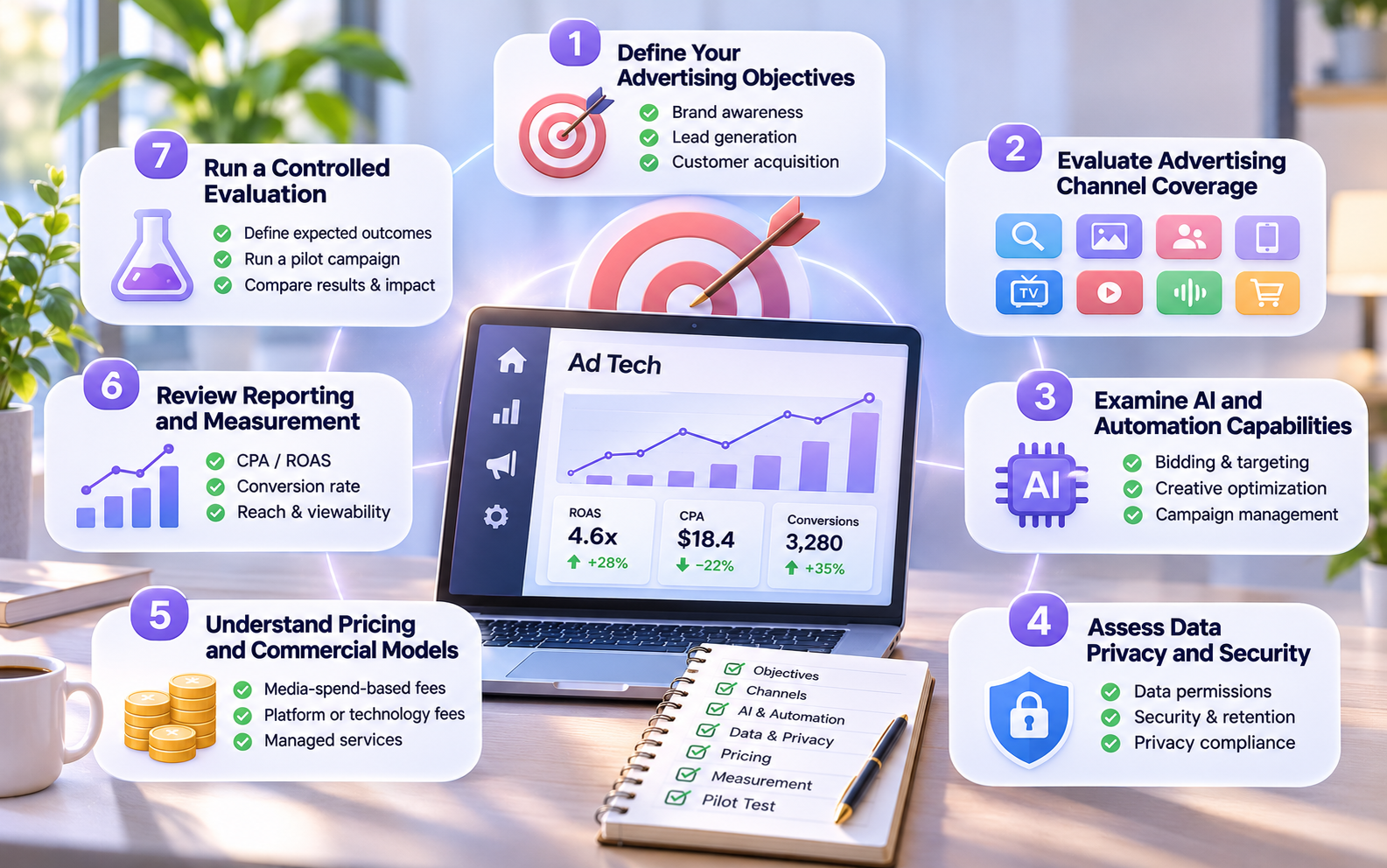
Selecting the best ad tech company requires evaluating business objectives, technical requirements, and the advertising channels most relevant to your audience.
1. Define Your Advertising Objectives
Start by determining what the business needs to achieve.
Common objectives include:
• Increasing brand awareness
• Generating qualified leads
• Acquiring new customers
• Improving return on ad spend
• Monetizing advertising inventory
• Expanding connected TV reach
• Improving measurement and reporting
A business focused on acquiring ecommerce customers may need different technology from a publisher trying to increase advertising yield.
2. Evaluate Advertising Channel Coverage
Different platforms specialize in different environments.
Consider whether the provider supports:
• Search advertising
• Display advertising
• Social media advertising
• Mobile applications
• Connected TV
• Online video
• Digital audio
• Retail media
• Digital out-of-home
Businesses running multichannel strategies should also evaluate how well performance data can be consolidated across these environments.
3. Examine AI and Automation Capabilities
AI has become an important component of modern advertising technology.
Leading platforms use machine learning to support bidding, audience selection, creative optimization, and campaign management.
However, AI capabilities should be evaluated through measurable results.
Ask whether a platform improves acquisition costs, advertising efficiency, conversion outcomes, or other business metrics that matter to your organization.
4. Assess Data Privacy and Security
Adtech companies frequently process advertising signals, audience information, and campaign performance data.
Businesses should evaluate how providers manage data permissions, security, retention, consent, and applicable privacy requirements.
This is especially important when activating first-party customer information or transferring data across multiple systems.
5. Understand Pricing and Commercial Models
Advertising technology providers may use different commercial arrangements.
Common models include:
• Media-spend-based fees
• Platform or technology fees
• Managed-service arrangements
• Usage-based pricing
• Revenue-sharing agreements
• Custom enterprise contracts
Advertisers should request transparent information about platform fees, media costs, data charges, measurement fees, and other applicable expenses.
Publishers should understand revenue-sharing terms, payment arrangements, and reporting capabilities.
6. Review Reporting and Measurement
Campaign dashboards alone do not guarantee reliable measurement.
Businesses should consider whether a platform supports the metrics relevant to their objectives.
For performance advertisers, useful measurements may include:
• Cost per acquisition (CPA)
• Return on ad spend (ROAS)
• Customer lifetime value (LTV)
• Conversion rate
• Incremental conversions
For publishers, relevant metrics may include effective CPM, fill rate, net advertising revenue, and yield.
For brand campaigns, reach, frequency, viewability, and brand-lift measurement may be more appropriate.
7. Run a Controlled Evaluation
Before making a long-term commitment, establish a structured evaluation process.
Define the expected outcomes, available budget, operating requirements, and comparison metrics.
Where feasible, run a controlled pilot using consistent creative quality, audience definitions, and measurement windows.
The purpose is to identify whether the technology delivers incremental business value rather than relying solely on platform-reported performance.
Key AdTech Industry Trends in 2026
The advertising technology industry continues to evolve as digital media consumption, automation, and measurement expectations change.
Several developments are especially important for advertisers and publishers.
1. AI-Powered Advertising Automation
AI is moving beyond basic bid adjustments into broader advertising workflows.
Modern platforms increasingly incorporate machine learning into campaign planning, audience selection, creative development, and optimization.
These technologies can reduce repetitive work and help teams interpret large volumes of advertising signals.
However, campaign effectiveness still depends on reliable conversion data, appropriate objectives, and ongoing performance evaluation.
2. Growth of Connected TV Advertising
Connected TV is changing how advertisers reach television audiences.
Rather than relying exclusively on traditional television placements, advertisers can increasingly use digital advertising tools to purchase streaming inventory.
This creates opportunities for audience targeting, campaign coordination, and measurement across devices.
According to the IAB's 2026 Digital Video Advertising Report, U.S. digital video advertising expenditure was projected to exceed $80 billion in 2026.
Companies such as The Trade Desk, Magnite, and Amazon Ads participate in different parts of this evolving ecosystem.
3. Expansion of Retail and Commerce Media
Retailers and digital marketplaces are increasingly developing advertising businesses around their customer relationships and shopping environments.
Retail media enables brands to connect advertising with commerce-related signals and potentially measure sales outcomes more directly.
Companies such as Amazon Ads, Criteo, and Moloco provide technologies supporting this model.
As retail media networks expand, advertisers will increasingly need consistent measurement and clear reporting across different retailers.
4. Greater Focus on First-Party Data
First-party customer information remains important for advertising targeting, personalization, and measurement.
Organizations are investing in better data governance, identity solutions, and privacy-conscious collaboration.
The goal is to use customer information responsibly while reducing unnecessary reliance on fragmented external data sources.
Data platforms and advertising infrastructure providers are adapting to these requirements.
5. Programmatic Supply-Path Optimization
Advertisers increasingly want visibility into how advertising budgets move through the programmatic ecosystem.
Supply-path optimization focuses on improving efficiency by reviewing the intermediaries and transaction routes involved in media buying.
Important considerations include transparency, inventory quality, platform fees, and duplicated supply access.
This creates opportunities for SSPs, ad exchanges, and infrastructure providers that offer clear and efficient transaction paths.
6. Independent Measurement and Advertising Quality
As advertising campaigns expand across different media environments, consistent measurement becomes more challenging.
Advertisers need to distinguish between reported impressions, valid exposure, engagement, and actual business outcomes.
Verification platforms play an important role in measuring media quality, while attribution and incrementality methods help evaluate business impact.
Combining these approaches provides a more complete view of campaign performance.
Frequently Asked Questions About AdTech Companies
What is an adtech company?
An adtech company develops technology that supports digital advertising activities such as media buying, ad serving, publisher monetization, audience targeting, optimization, and measurement.
Examples include Google, The Trade Desk, Magnite, PubMatic, and Criteo.
What are the top adtech companies in the world?
Some of the top adtech companies in the world include Google, Meta, Amazon Ads, The Trade Desk, Magnite, PubMatic, Criteo, AppLovin, StackAdapt, and Moloco.
Other important specialists include Index Exchange, OpenX, Teads, DoubleVerify, Integral Ad Science, and LiveRamp.
The most relevant provider depends on whether a business needs advertising reach, programmatic buying, publisher monetization, data connectivity, or measurement.
Which are the biggest ad tech companies?
Google, Meta, and Amazon operate some of the largest digital advertising businesses by reported advertising revenue.
Among specialist adtech providers, The Trade Desk, AppLovin, Magnite, PubMatic, and Criteo are prominent examples.
Comparisons should distinguish advertising revenue from advertising technology platform revenue.
What is the difference between adtech and martech?
Adtech focuses primarily on advertising delivery, media buying, inventory monetization, and campaign measurement.
Marketing technology, or martech, includes tools such as CRM platforms, email marketing software, marketing automation, and customer data management.
The categories increasingly overlap as businesses integrate advertising with broader customer engagement strategies.
What is the difference between a DSP and an SSP?
A DSP helps advertisers buy advertising inventory programmatically.
An SSP helps publishers offer, manage, and monetize available advertising inventory.
Both play important roles in programmatic advertising, but they serve different primary customer groups.
Which adtech companies are best for ecommerce?
Google, Meta, Amazon Ads, Criteo, and AppLovin can be relevant for ecommerce advertising, depending on campaign objectives and audience characteristics.
Businesses focused on operating their own retail media networks may also consider technology from Criteo or Moloco.
Are adtech companies using artificial intelligence?
Yes. Many advertising technology companies use machine learning or other AI techniques to support bidding, forecasting, targeting, campaign optimization, and measurement.
However, the effectiveness and level of automation vary significantly between providers.
How do adtech companies make money?
Adtech companies use different revenue models depending on their role in the ecosystem.
Some earn fees from media buying, advertising transactions, software usage, or managed services.
Others earn revenue through advertising sales, publisher revenue-sharing arrangements, data services, or enterprise technology contracts.
How should businesses compare advertising technology providers?
Businesses should evaluate technology providers based on campaign objectives, supported channels, integration requirements, pricing transparency, data governance, measurement quality, and demonstrated business outcomes.
A structured pilot can provide more useful evidence than comparing platform marketing claims alone.
Final Thoughts
The global advertising technology landscape includes companies with very different capabilities, business models, and areas of specialization.
Google, Meta, and Amazon operate enormous advertising ecosystems, while independent platforms such as The Trade Desk, Magnite, PubMatic, and Criteo support important parts of the wider advertising market.
Other advertising tech companies, including AppLovin, StackAdapt, and Moloco, focus on performance optimization and AI-driven advertising. Meanwhile, DoubleVerify, Integral Ad Science, and LiveRamp provide specialized measurement and data infrastructure.
Ultimately, the best ad tech companies are those whose technology, inventory access, commercial model, and measurement capabilities align with an organization's specific objectives.
Rather than selecting a provider based on size or industry visibility alone, businesses should compare relevant solutions, verify technical compatibility, and evaluate real campaign outcomes.
As advertising becomes more automated and data-driven, companies that combine effective technology with transparent measurement and responsible data practices will remain important to the future of digital marketing.
Related Posts
- Top Advertising Agencies in 2027: Best Global Firms & How to Choose
- How Mobile Apps Are Revolutionizing the Real Estate Industry
- How Data Annotation for AI in Energy Improves Renewable Energy Monitoring
- How-To guide: Set up domain and hosting for your Magento 2 store
- How to Match Your Phone Case to Your iPhone Color
- The Best Medical Virtual Receptionists and Answering Services (2027 Guide)