


Learn how to choose the right iOS app development company by evaluating portfolios, developer expertise, pricing, client reviews, and post-launch support.

The simplest thing a business can do these days is launch an iOS app. How do you choose the development company to put it together? That decision has the potential to make your product stand out or waste money on a failed campaign.
The competition is intense, with hundreds of thousands of apps currently available within the App Store and hundreds more being released every month. It’s important to get your app from the start. For this reason, choosing an adequate iOS app development company requires careful attention as opposed to a quick Google search and a quick quote.
This blog explains what to look for, what questions to ask, and how professionals clear up the most frequent (and costly) mistakes when you hire iOS app developers.
Start With a Clear Idea of What You Want

Clearly define your preferences before you even start looking for an iOS app development company. What kind of app are you cultivating - marketplace, enterprise tool, dealing with a consumer application, or something else? Do you need hardware features like digital cameras or GPS, price gates, or interfaces with third-party offers?
Once you have a clear indication of your scope, you will be better able to determine whether you have the necessary experience in the company for a particular type of work. A financial product may not be an exact fit for an organization that specializes in healthcare applications, and vice versa.
Put your launch plan, target market, important features, and affordable budget variations in writing. Having these basics in place will save you hours at some stage of the testing process, even if you don't currently want a complete product specification.
Take a Close Look At Their Portfolio
Every iOS application development company will declare that there are quite a few revelations. You can look at the portfolio and decide whether it is true. Don’t just look at screenshots. Install one of their published apps for your iPhone and use it as if you were a legitimate person.
Is the experience seamless? Does animation feel natural? Does the UI comply with Apple's Human Interface Guidelines? Are there intrusive bugs or slow-loading images? You can examine these details more closely than any sales deck.
Be aware of the areas of experience they have had and the complexity of the applications they have developed. Look for early work that addresses problems with real-time functionality, AI integration, or complex background logic without delay.
Portfolio Assessment Checklist
• Apps now available on the App Store (no longer obviously mockups)
• Work in your field or a related field
• Apps showing native iOS features and emotions
• Evidence for long-term projects instead of the most efficient quick builds
• Case Studies with Real Results, Downloads, Opinions, and User Comments
Verify the Team You're Working With
The difference between the person who pitches the product and the person who actually builds it is something that many companies overlook. Some companies have remarkable sales teams, but they then delegate your work to offshore teams or junior developers without supervision. Ask everything at once: Who can handle my project daily?
When you hire iOS app developers through the company, be aware of their tenure, experience, the efforts involved, and ask to be satisfied with the lead developer or the development team itself before signing anything in a communication style.
Additionally, you can find out if they are familiar with the latest iOS integrations. By 2026, advanced apps should support iOS 17 and 18 functionality and be built with Swift and SwiftUI in mind. The warning sign is a development team that keeps using older processes or ignores Apple’s latest APIs.
Analyze Their Development Process
Writing code is just one aspect of detailed iOS development; Each is how the crew prepares, thinks, experiments, and communicates with the progress of the project. From discovery to deployment, a good iOS application developmentcompany should have a clear, transparent organization. The business is missing a technique if it is not able to articulate it away.
Find out if they outsource Agile sprints and how they can manage those efforts. How often do you get updates? What JIRA, Slack, Notion, and other technologies do they use for project management and communication? How do they handle requirements or extensive adjustments within the focus of the project?
Another thing worth discovering is the quality assurance. Checking for iOS is not smooth; You have to consider many iPhone models, iOS versions, screen sizes, and real-world usage styles. A team that ignores quality assurance will almost constantly produce a faulty product.
Understand the Pricing Model Before You Commit
Cost is a huge factor; however, the lowest high price option is rarely the best value in the long run. Hiring iOS app developers is involved beyond just paying for code. You decide to buy expertise, creativity, problem-solving skills, and someone who allows you to navigate Apple’s often rigid App Store review system.
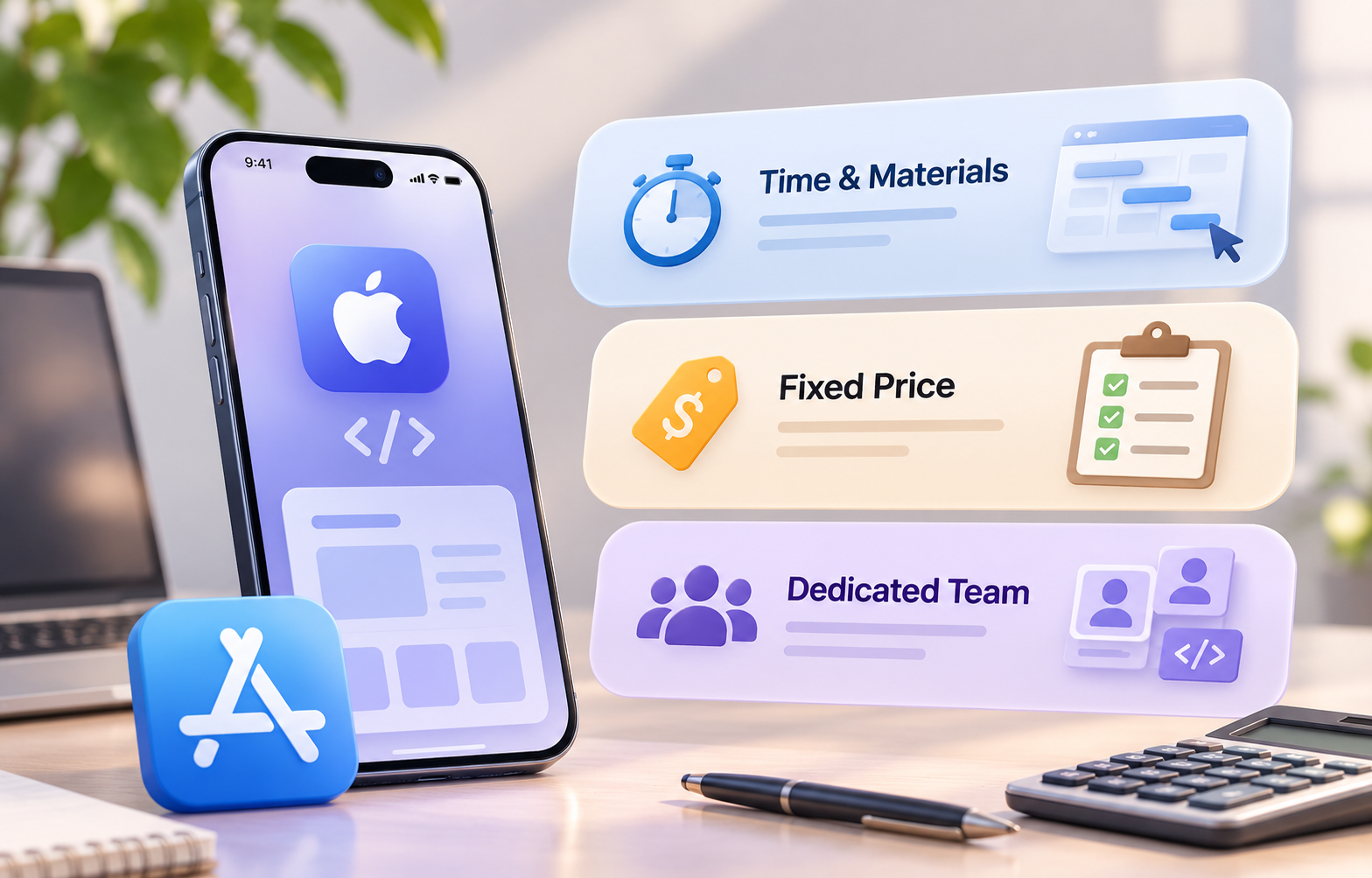
In general, there are three pricing models to be aware of: time-and-material billing (more flexible, better for changing scopes), fixed-price contracts (excellent for well-defined projects with specific requirements), and dedicated team models (great for continuing product development). do it; setting up release support, design, testing, and debug management all need to be considered.
A Word About Post-Launch Assistance:
The app store evolves frequently. Apps should be updated so that you can constantly stay relevant, useful, and worthy of the App Store. Apple provides major iOS updates every September. Always be aware of how good protection and instructions are included when your app is launched and how much it will cost if something goes wrong.
Read Reviews & Talk to Past Clients
Checking websites like Clutch, GoodFirms, and Google for independent reviews is helpful, but don’t stop there. Ask for referrals without delay from the business, then follow up with customers. A brief 10-minute smartphone interview with a former client can provide insights that no appraiser may want.
Ask past clients: Does each agency on the team communicate well? Was the project completed on schedule and under budget? Have there been any surprises? Would they renew them? These discussions give you real, first-hand expertise on what it's like to work for that organization.
Consider Cultural Fit & Long-Term Partnership Potential
Developing an iOS app is usually not a one-time job. Based on individual comments, the majority of hit apps go through multiple iterations, feature fixes, and configuration changes. In two or three years, the iOS app development company you choose could be your colleague after all.
Therefore, cultural compatibility is more important than most people realize. Do they ask questions about your customers and your company’s goals? When something doesn’t make sense, do they creatively clean up or really get the whole lot? A development partner is more valuable if they are dedicated to fulfilling your product instead of just fulfilling the settlement.
Final Thoughts
Many companies claim to be experts in iOS app development. The secret is to look past the obvious, observe real work, interact with real people, and ask questions that honestly matter to your performance.
Taking the time to choose youriOS app development company carefully often pays off more, whether you're a startup growing your first product or an established company looking to grow mobile.
Moreover, you give your app the best chance of thriving in a highly competitive market when you hire iOS appdevelopers who undoubtedly take into account Apple’s environment, your customers, and your goals.
Do your research. Have faith in your gut. Furthermore, you should not make decisions on the spot in order to determine the future of your product.
Related Posts
- How to Choose the Right iOS App Development Company
- AI MVP Development for Enterprises: A Guide Before Full-Scale Launch
- Best Email Marketing Agencies for Established Fashion and Apparel Brands
- Product Video for a Magento Catalogue From One Still: Nine Tests With Seedream 5.0 Pro and Veo 3.1 on a Table Lamp
- How Digital Booking Systems Are Modernizing Wedding Transportation
- AI in Logistics: Practical Ways to Improve Supply Chain Efficiency