



Discover the 5 latest e-commerce trends shaping online shopping in 2026, from AI and AR/VR to social commerce, quick commerce, and store builders.
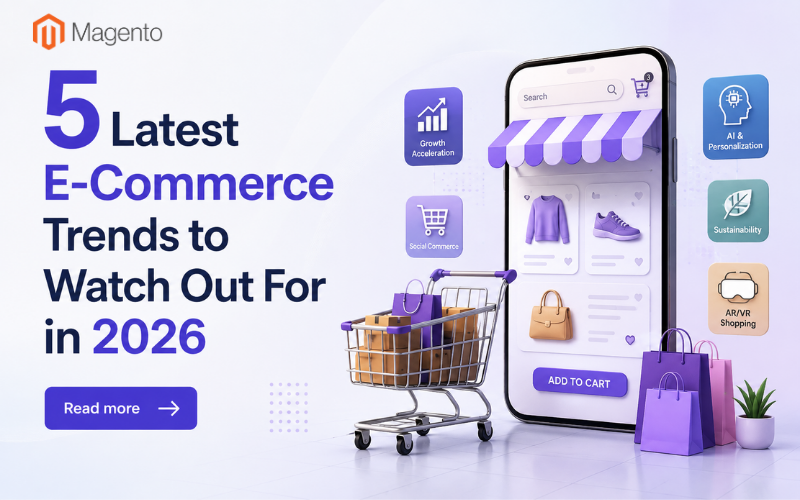
Humans always connect with technology in interesting ways. For instance, a smart speaker should ideally play music, but it can also order groceries, make phone calls, or even control other smart gadgets.
Similarly, technology has transformed how we discover, interact with, and purchase products online. Personalized recommendations on e-commerce platforms fuel consumers’ instant gratification, which significantly impacts their shopping behaviors.
Additionally, the growing influence of artificial intelligence (AI), machine learning (ML), and quick commerce offers a smooth experience throughout the customer journey.
Anyway, such e-commerce trends impact consumers and retailers alike. Below, I will explain how ever-evolving technology works as a driving force behind major e-commerce trends.
Let’s start:
E-Commerce Trends to Keep an Eye On
The trend of cross-border sales in e-commerce makes it a highly dynamic industry. For instance, the idea of AI-integrated e-commerce stores in the U.S. is quickly being adopted in Europe.
Additionally, consumers only require an electronic device, such as a laptop, smartphone, or tablet, connected to the internet, to shop from anywhere. With high-speed connections like WOW! Internet, consumers can browse massive catalogs, compare products, place orders, and make online payments.
Anyway, while such ease of use accelerates industry growth, which is expected to reach $8 trillion in 2027, it becomes difficult to follow every change in this vibrant sector.
That said, below are some highly impactful e-commerce trends reshaping how we shop online today.
1. Drag-and-Drop Ecommerce Store Builders
Drag-and-drop builders are ideal for retailers who want to sell products without getting involved in the technical side of creating an online store. Such store builders empower non-technical retailers to create a full-fledged store without prior coding knowledge.
From pre-built templates to customizable options, retailers can accurately create an online store that matches their product line and brand image.
Below are a few more ways retailers can benefit from drag-and-drop builders:
• Visual Editors – Retailers can write, edit, or remove text, resize or replace images, or change themes without dealing with the backend code.
• Elements and Modules – Text boxes, add-to-cart or other call-to-action (CTA) buttons, and product carousels can be added or removed without any coding knowledge.
• Ecommerce Tools – Platforms offer tools such as customer-relationship management (CRM) tools or inventory management systems, checkout, and payment methods, which can be integrated into your online store.
That being said, drag-and-drop store builders require a reliable connection to operate smoothly. It’s because any front-end change triggers a code change at the backend of the store, and to update it in real-time, a strong internet connection is recommended.
I would suggest calling WOW! customer service to inquire about fiber internet plans. Symmetrical upload and download speeds can effectively support any store builder and help root out connectivity issues you might encounter in the process.
2. Artificial Intelligence and Machine Learning
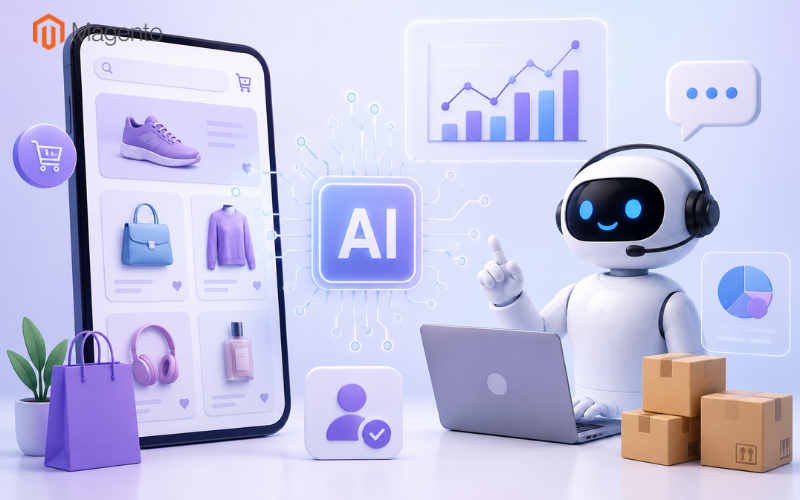
According to a report, 49% of Americans are influenced by AI recommendations. AI and ML tools have become smarter over time. They can infer and understand what consumers are looking for, even when they don’t clearly explain the desired products.
From comparing products to analyzing their prices on different e-commerce platforms, consumers can leverage AI and ML to make informed decisions.
AI and ML are equally useful for retailers. From collecting consumers’ data to tracking their online behaviors, retailers can offer a more personalized shopping experience.
Below are more ways AI and ML help consumers and retailers alike:
• Retailers can deploy AI chatbots to provide round-the-clock customer support.
• AI and ML tools can forecast sales during on- and off-peak seasons to help retailers manage inventory.
• AI and ML tools can track users’ online activities to make personalized recommendations.
3. Virtual Reality and Augmented Reality
Since both technologies, AR and VR, focus on providing an immersive experience to consumers, they’re effectively blurring the lines between e-commerce and physical shopping.
AR and VR include 360 product views, tutorials, and demos to help consumers understand how a product works. This feature is particularly useful for products that require prior technical knowledge or pose a steep learning curve.
Brands using AR and VR offer “try-before-you-buy”, a captivating digital experience that boosts consumers’ confidence in a brand’s products.
The following major brands actively use AR and VR in their online stores:
• Warby Parker
• Wayfair
• IKEA
• Sephora
• Nike
The following table explains how AR and VR help provide an immersive shopping experience to consumers:
Virtual Reality | Augmented Reality |
VR can create a fully immersive 3D environment. | AR includes digital elements such as 3D models, animations, product information, and interactive videos. |
Consumers can walk through the shop, pick, and try items. | Consumers require AR-supported devices or glasses to enjoy a seamless experience. |
With VR, retailers can accurately replicate the physical environment into a digital experience. | Since AR simply enhances consumers’ surroundings, it can be used on the go. |
4. Social Commerce
Social commerce is a type of e-commerce and primarily focuses on selling products via social media platforms, such as:
• WhatsApp
• Instagram
• Facebook
• TikTok
• Pinterest
Several other social media platforms allow retailers to create online stores, add products, images, descriptions, and directly sell to the platform’s audience.
For consumers, social commerce simplifies their shopping experience in the following ways:
• Consumers can visit online stores and explore products without leaving the platform.
• Social commerce reduces the friction between consumers and retailers by shortening their buying journey.
• Consumers can read reviews and join groups or communities to explore more about a brand’s products and the quality offered.
On the other hand, retailers can leverage influencers' massive following to promote their brands. Additionally, user-generated content (UGC) can work as an online replacement for word-of-mouth marketing for retailers.
5. Quick Commerce
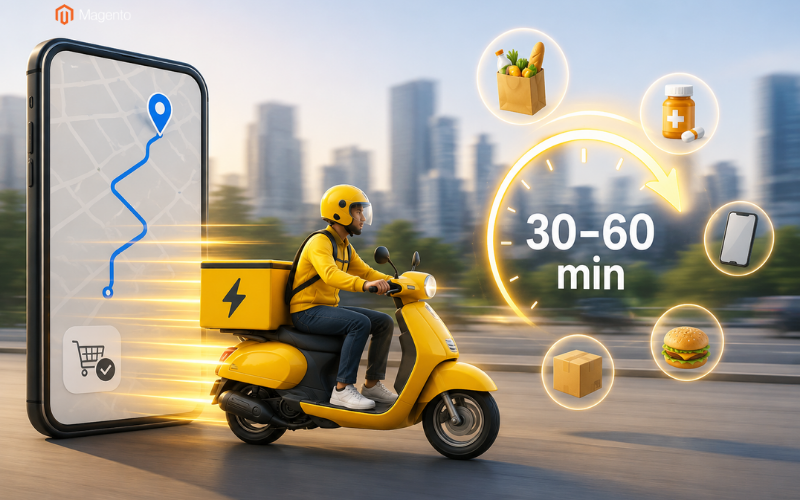
Quick commerce is another type of e-commerce that typically delivers goods and products in 30 to 60 minutes. The trend of quick commerce is rising in bustling markets, where consumers rarely have the time for groceries or to shop for other essentials such as medicines.
The following reasons make quick commerce trendier and more attractive:
• Instant Gratification – Consumers can order food, medicines, sanitary items, electronics, and other products within an hour.
• Increased Consumer Satisfaction – Receiving essential items within an hour significantly increases customer satisfaction and retention.
• Higher Conversion Rates – Since most consumers order essential items, retailers can experience low cart abandonment rates and ultimately, higher conversion rates.
The Future of E-Commerce: What’s Next?
E-commerce has several unmatched benefits and is here to stay. However, with all the recent technological advancements, the e-commerce industry might not stay the same. But it will change for good, for sure.
Owing to AI and ML benefits for e-commerce stores, we might see a higher adoption rate among small to mid-sized retailers. Additionally, more multinational brands might enable AR and VR technologies in their online stores to offer a more immersive experience to customers.
Frequently Asked Questions
What is the key difference between e-commerce and quick commerce?
The time to deliver goods and products is the key difference between e-commerce and quick commerce. While an e-commerce platform can take days or weeks to deliver goods, quick commerce apps can do the same within an hour.
What are the best quick commerce applications in the U.S?
DoorDash, Instacart, and Uber Eats are some of the best quick commerce applications in the U.S.
What are the top drag-and-drop store-building tools?
Shopify, Wix, and Squarespace are some of the top drag-and-drop store-building tools and offer flexibility to customize stores’ themes, templates, colors, and designs.
Related Posts
- What an AI Performance Agent Does With Your Shopify Ad Account
- 5 Latest E-Commerce Trends to Watch Out For in 2026
- How Retail Automation Is Transforming Magento Stores Through Smarter Inventory and Order Management
- Wearable Technology and the Future of E-Commerce
- Migrating to Shopify? Here's How to Protect Your Search Rankings
- How to Hire and Manage a Remote Development Team for Your Magento Store