



Discover the complete Uber Clone App development roadmap, from validating your business idea and defining essential features to choosing the right technology stack and preparing for launch. Learn how to build, test, market, and scale a reliable ride-hailing platform for long-term growth.
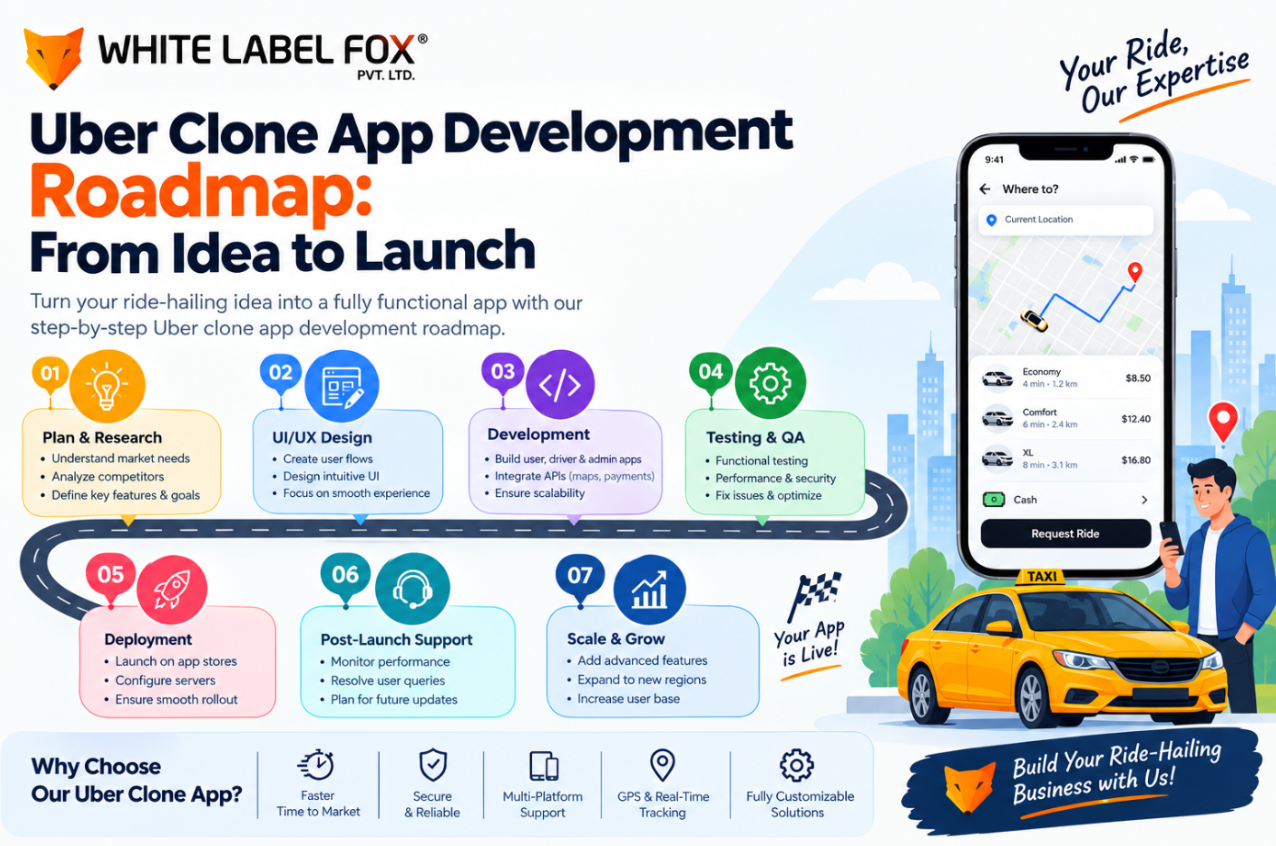
The ride-hailing industry continues to evolve as more people rely on digital platforms for fast, convenient, and reliable transportation. For entrepreneurs and businesses looking to enter this market, developing a taxi booking platform from scratch can be expensive and time-consuming. That's why many choose an Uber Clone App as a faster and more cost-effective solution.
However, building a successful ride-hailing platform involves much more than selecting a ready-made script. It requires strategic planning, choosing the right technology, implementing essential features, and preparing for long-term growth.
This guide walks you through the complete Uber Clone App development roadmap, covering every stage from validating your business idea to launching a scalable ride-hailing platform. Partnering with the right app development company can also simplify the development process and help you create a feature-rich solution.
Key Takeaways
• Define your business model before starting development.
• Include essential features for passengers, drivers, and administrators.
• Choose a scalable technology stack for future growth.
• Prioritize user experience and application security.
• Test thoroughly before launching the platform.
• Use SEO, ASO, and referral programs to grow your user base.
• Continuously update your app based on customer feedback.
What Is an Uber Clone App?
An Uber Clone App is a customizable ride-hailing solution. It helps businesses launch taxi booking services with features similar to leading transportation platforms. For businesses looking to simplify taxi booking app development, it offers a ready-to-customize foundation that can be tailored to specific branding, target audiences, and operational requirements, reducing both development time and complexity.
A typical solution includes three core modules:
Passenger App
Driver App
Admin Dashboard
This approach reduces development time while allowing businesses to focus on customer acquisition and service quality.
Step 1: Validate Your Business Idea
Before starting development, it's important to confirm that your business concept aligns with market demand.
Key areas to evaluate:
• Target audience
• Local transportation demand
• Competitor analysis
• Revenue opportunities
• Legal and regulatory requirements
These factors help define a clear roadmap. They also reduce the risk of costly changes later in the project.
Step 2: Define Your Business Model
Different ride-hailing businesses have different operational requirements. Selecting the right business model early helps shape the overall application.
Business Model | Best For |
City transportation | |
Bike Taxi | Short-distance rides |
Airport Transfers | Travelers |
Corporate Transportation | Business clients |
Car Rental | Hourly or daily rentals |
Luxury Ride Services | Premium customers |
Choosing the right model also influences pricing, features, and marketing strategies.
Step 3: Plan the Essential Features of Your Uber Clone App
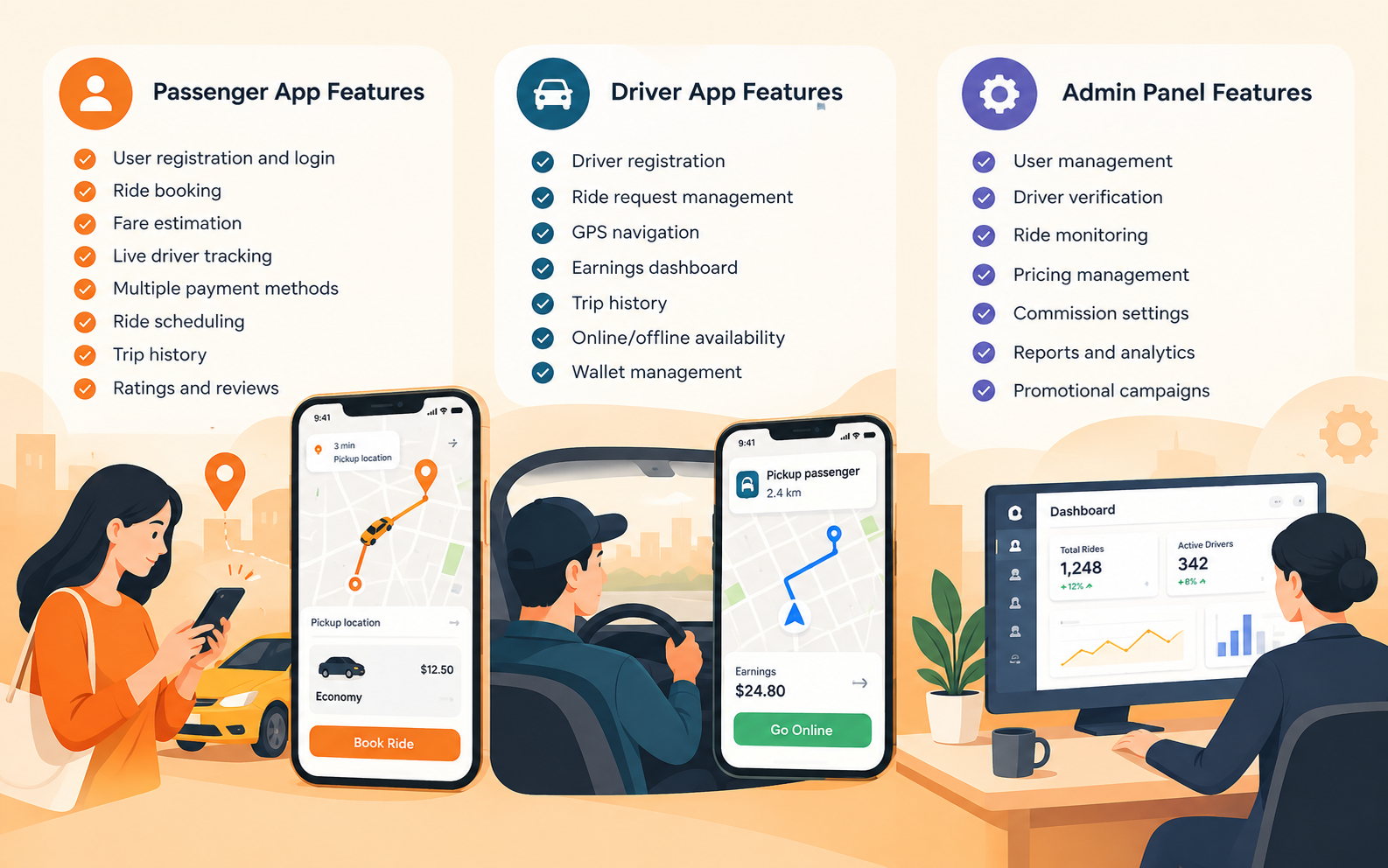
A successful Uber Clone App should provide a seamless experience. This applies to passengers, drivers, and administrators.
Passenger App Features
• User registration and login
• Ride booking
• Fare estimation
• Live driver tracking
• Multiple payment methods
• Ride scheduling
• Trip history
• Ratings and reviews
Driver App Features
• Driver registration
• Ride request management
• GPS navigation
• Earnings dashboard
• Trip history
• Online/offline availability
• Wallet management
Admin Panel Features
• User management
• Driver verification
• Ride monitoring
• Pricing management
• Commission settings
• Reports and analytics
• Promotional campaigns
Prioritizing these features ensures a reliable and user-friendly platform from day one.
Step 4: Choose the Right Technology Stack
The technology stack determines the application's performance, scalability, and future flexibility.
Component | Recommended Technology |
Mobile App | Flutter or React Native |
Backend | Node.js |
Database | PostgreSQL or MongoDB |
Cloud Hosting | AWS or Google Cloud |
Maps | Google Maps API |
Notifications | Firebase Cloud Messaging |
Payments | Stripe, Razorpay, PayPal |
Modern technologies make the application easier to scale. They also support future business growth.
Step 5: Design an Intuitive User Experience
A simple and intuitive interface plays a major role in customer satisfaction.
Focus on:
• Easy registration process
• Simple ride booking flow
• Clear navigation
• Fast loading screens
• Responsive design
• Accessible interface
A well-designed Uber Like App encourages repeat usage and improves customer retention.
Step 6: Develop and Test the Platform
Development should follow an organized process. Testing should take place throughout the development cycle.
Typical development stages include:
• UI implementation
• Backend development
• API integrations
• GPS integration
• Payment gateway integration
• Push notification setup
• Quality assurance testing
• Performance optimization
Testing should include:
• Functional testing
• Security testing
• Performance testing
• Device compatibility testing
• User acceptance testing
Launching without proper testing can negatively impact user trust and business reputation.
Step 7: Prepare for Launch
Before publishing your application, ensure every operational component is ready.
Launch Checklist
• App Store and Google Play submission
• Driver onboarding
• Customer support setup
• Marketing campaigns
• Analytics implementation
• Data backup strategy
• Privacy policy and legal documents
A structured launch plan helps create a positive first impression among users.
Step 8: Market and Grow Your Uber Clone App
Launching the app is only the beginning. Consistent marketing and optimization are essential for long-term success.
Effective growth strategies include:
• Search Engine Optimization (SEO)
• App Store Optimization (ASO)
• Referral programs
• Social media marketing
• Paid advertising
• Local business partnerships
• Customer loyalty programs
Collecting user feedback and releasing regular updates helps maintain engagement and improve customer satisfaction.
Common Challenges in Uber Clone App Development
Developing a ride-hailing platform comes with several challenges.
Some common obstacles include:
• Managing real-time location updates
• Ensuring payment security
• Maintaining application performance
• Balancing rider and driver demand
• Complying with local regulations
• Scaling infrastructure as the business grows
Addressing these challenges early can help avoid operational issues after launch.
Best Practices for a Successful Uber Clone App
Following proven development practices improves the chances of building a reliable and scalable platform.
Best Practices
• Start with a minimum viable product (MVP)
• Focus on user experience
• Implement strong security measures
• Use scalable cloud infrastructure
• Monitor performance continuously
• Offer multiple payment options
• Update the app regularly
• Gather and act on customer feedback
These practices help businesses stay competitive in the fast-moving ride-hailing industry.
Conclusion
Developing an Uber Clone App is more than creating a taxi booking application, it's about building a scalable digital platform that delivers convenience for passengers, efficiency for drivers, and control for business owners.
By following a structured development roadmap, from validating your business idea to launching and continuously improving your platform, you can reduce development risks and accelerate your time to market. Whether you're building a local taxi service or expanding into multiple cities, investing in a well-planned Uber Clone App development strategy provides a solid foundation for sustainable business growth.
FAQs
1. What is an Uber Clone App?
An Uber Clone App is a customizable ride-hailing solution that enables businesses to launch taxi booking services with features similar to popular transportation platforms while allowing branding and feature customization.
2. How long does Uber Clone App development take?
The timeline depends on the level of customization, required features, third-party integrations, and testing. Ready-made solutions can significantly reduce development time compared to building from scratch.
3. What are the essential modules in an Uber Clone App?
Most solutions include a passenger app, driver app, and an admin dashboard. These modules work together to manage ride bookings, driver operations, payments, and overall platform administration.
4. Which technologies are commonly used for Uber Clone App development?
Modern solutions typically use technologies such as Flutter or React Native for mobile development, Node.js for the backend, cloud platforms like AWS, Google Maps for navigation, and secure payment gateways for transactions.
5. How can I make my Uber Clone App successful?
Success depends on understanding your target market, providing a seamless user experience, ensuring reliable performance, offering secure payment options, and continuously improving the platform based on user feedback and market trends.
Related Posts
- Running Age Checks on a Magento Store After Launch
- Adobe Commerce Website Development: Building a Connected B2B Purchasing Workflow
- Why Ongoing Magento Maintenance Matters for Growing eCommerce Stores
- Ecommerce SaaS vs Custom Ecommerce Software: Which Model Fits Enterprise Retail?
- Integrating Mini-Games into Magento 2 Mobile Apps to Boost Retention
- Why Your App Needs a Content Backend: Pairing Mobile App Development Services With a Headless CMS