


Learn how mini-games can boost Magento 2 mobile apps retention, increase engagement, support loyalty, and encourage repeat purchases with practical integration tips.
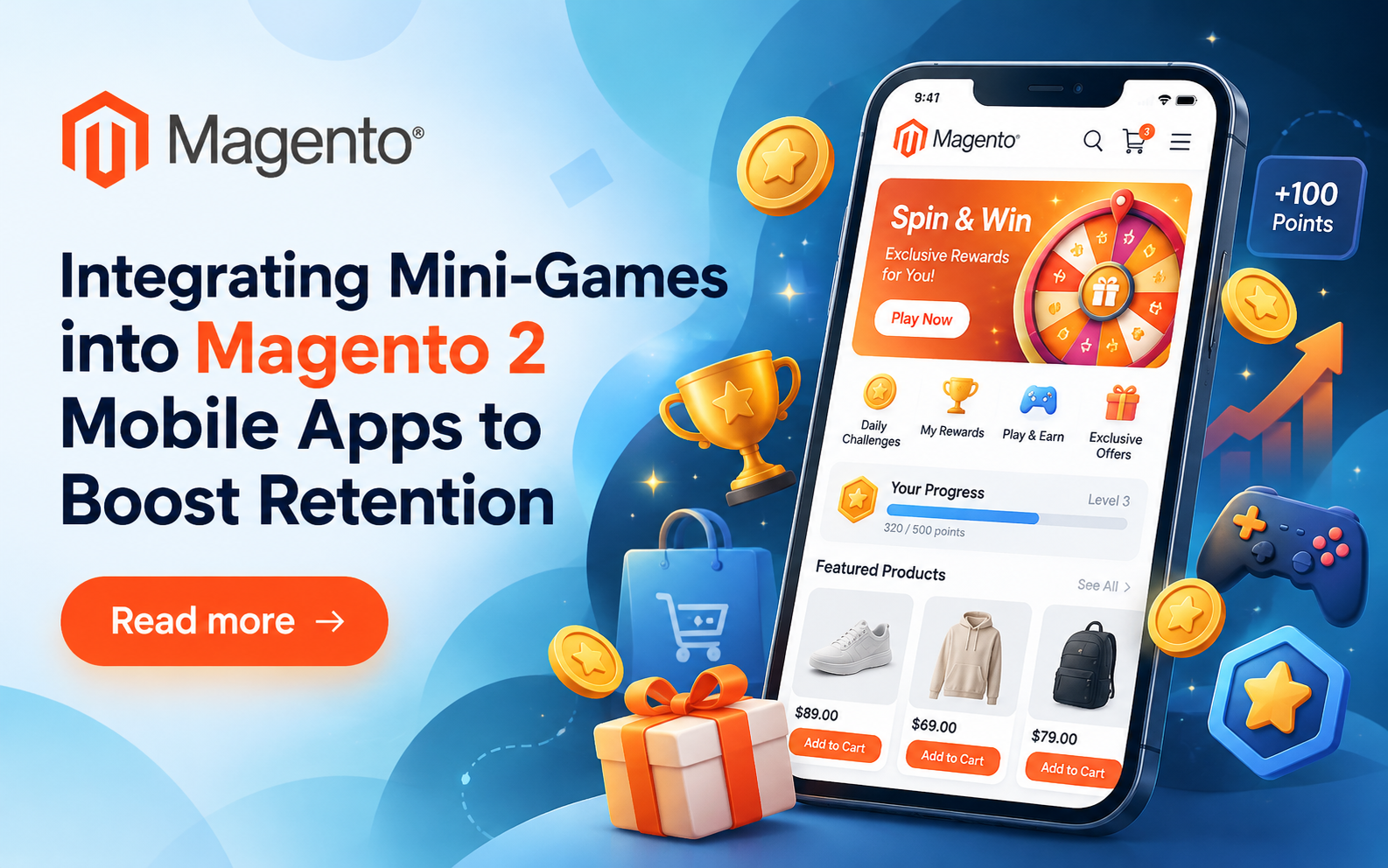
Magento 2 mobile apps often face a major challenge: customer retention. Shoppers download the app, visit once or twice, and then leave. This is one of the most common and costly problems for Magento 2 mobile stores.
Offering bigger discounts or sending more push notifications isn't always enough. That's why many eCommerce brands are introducing mini-games. These interactive experiences encourage customers to return and engage with the app more often.
When combined with loyalty points, coupons, product discovery, and personalized offers, mini-games can do more than entertain shoppers. They can help Magento 2 mobile apps increase engagement, encourage repeat visits, and strengthen customer loyalty.
In this article, you'll discover why mini-games improve retention and which formats work best. You'll also learn how to integrate mini-games into Magento 2 mobile apps or PWAs to create a more engaging shopping experience.
Why Retention Is Magento 2's Biggest Mobile Challenge
Magento 2 powers some of the most feature-rich storefronts in eCommerce. But a powerful backend doesn't guarantee an engaging mobile experience.
Common retention killers include:
• Generic browsing flows with no reason to return
• Notification fatigue from repetitive promotional messages
• Lack of emotional engagement beyond "buy now"
• No reward loop between visits
• Limited personalization after the first purchase
• Few interactive experiences outside product browsing
Mini-games solve the problem by providing a reason for users to access the app that has nothing to do with purchases but that may result in a sale.
Why Mini-Games Actually Work for Retention

Mini-games are successful as they transform routine app activities into rewarding activities. With game mechanics associated with valuable rewards and app purchases, the use of mini-games can inspire customers to visit the app more often.
The Psychology Behind Play
Gamification appeals to the user's intrinsic motivation: achievement, novelty, competitiveness, and rewards. Intrinsic motivators work better than transactional motivators alone.
It is a short and rewarding interaction that provides instant results: users make a choice, perform an action, get feedback and possibly unlock some value.
It Turns Passive Browsing into Active Engagement
Rather than scrolling through the product feed, users are:
• Making decisions
• Waiting for the result
• Returning to the app to see their progress (streaks, daily spins, rewards)
That shift from passive to active is what drives repeat sessions.
How Mini-Games Can Support Different Retention Goals
Not all merchants have the same retention problems. Some merchants will want more repeat visits, whereas some would like their customers to be more engaged with loyalty programs and discover new products.
Mini-games can be built around certain objectives.
• Increasing repeat visits: Daily check-ins, streaks or rotating challenges
• Increasing product discovery: Quiz, matching or treasure hunt type games
• Increasing loyalty engagement: Game scores can be rewarded with loyalty points and tied to tiered progression
• Abandoned cart recovery: Offer a game that will give a special reward after the customer comes back to the app
• New product promotion: Games based on newly launched product collections
Best Mini-Game Formats for eCommerce Apps
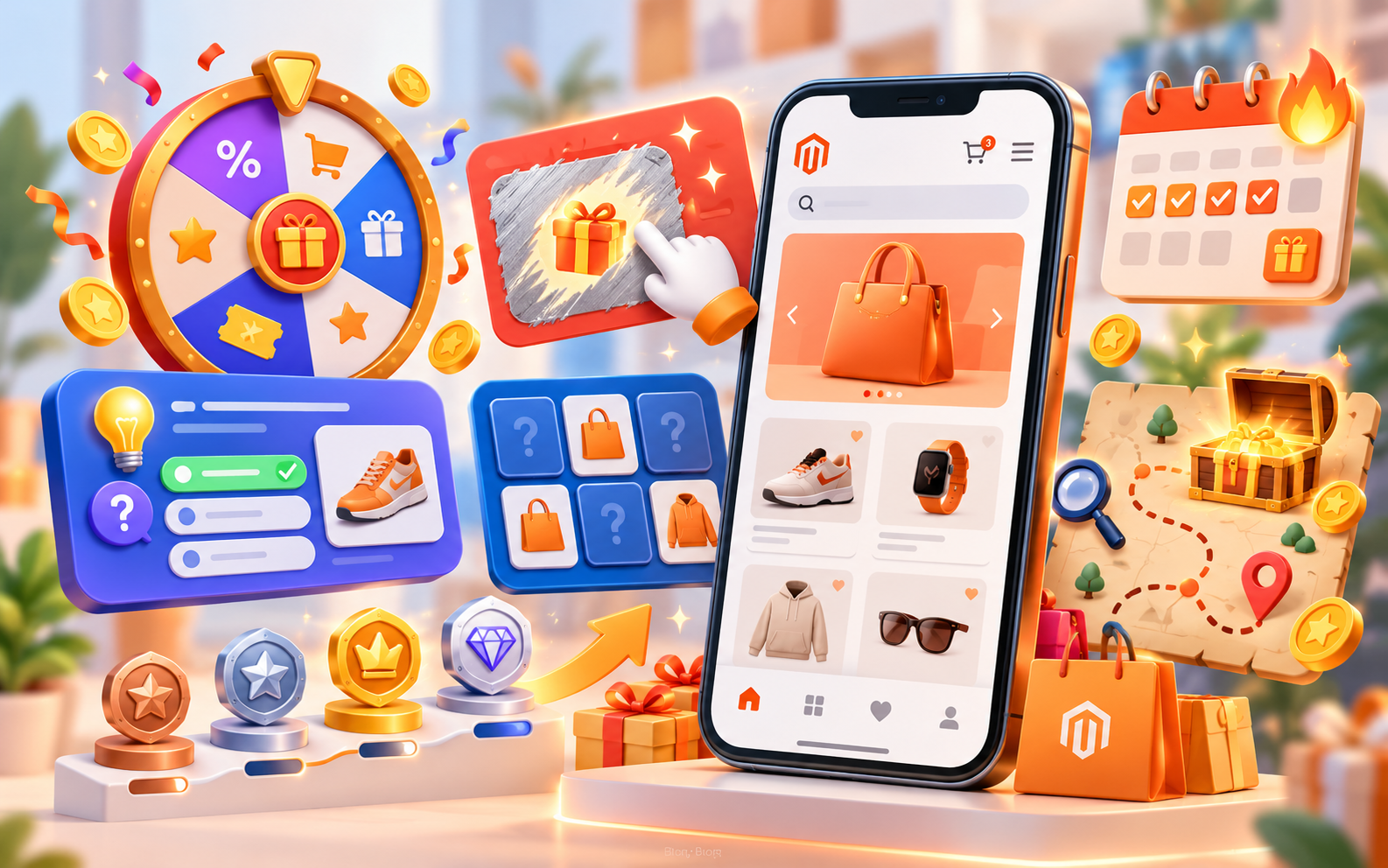
Not all game formats are suitable for each app. Below are the formats that work well in retail and eCommerce apps:
• Spin the wheel: Instant gratification experience; perfect for first app open and abandoned cart recovery
• Scratch cards: High-reward, low-effort experience; perfect for post-purchase
• Daily check-in streaks: Build up a habit loop based on frequency of login
• Quiz-based product finders: "What skincare routine suits you best?" type games which serve as recommendation engines
• Memory match/matching games: Discover discount codes or new product arrivals through a game
• Treasure hunt/scavenger hunt: Take users across different sections of the app to "discover" the hidden deal
• Tiered loyalty games: Mini-challenges for loyalty point rewards
Business Benefits of Adding Mini-Games
If mini-games are integrated with the entire shopping process, their impact is not limited to increasing app usage. Mini-games may be used by merchants to foster loyalty, product discovery, data collection, repeat purchase and brand engagement.
| Benefit | Impact on the Business |
|---|---|
Higher app open rate | Users return for daily/weekly game mechanics, not just sales |
Lower cart abandonment | Game-based discount unlocks nudge hesitant buyers |
Increased session time | Longer sessions expose users to more products |
Stronger brand recall | Playful experiences are more memorable than static banners |
First-party data capture | Quiz-style games collect preference data for personalization |
Organic sharing | Fun, rewarding experiences get shared more than product pages |
How to Integrate Mini-Games into a Magento 2 Mobile App
To implement successful gamification, there must be not only a game on the application interface but also integration with the Magento 2 commerce platform for proper work of actions and rewards and coupons.
Integration of mini-games step by step
• First, define the objective of customer retention. cart abandonment, low customer revisit, poor engagement with loyalty programs. The choice of the goal defines the choice of a game mechanic.
• Select a game mechanic according to the nature of your product category and shoppers' behavior. impulse buy works better with spin wheel games, while considered purchases can be better targeted with quizzes.
• Develop the logic of rewards. discount codes, loyalty points, exclusive access, and free shipping unlocks.
• Integrate with the Magento 2 back-end via REST/GraphQL API to make rewards synced with cart rules and coupon creation and customers' account management.
• Extend or build mobile layers, which is usually made via Magento 2 PWA Studio or native/hybrid app shell.
• Test how fair and frequent the rewards are to make games feel generous enough without reducing your margin.
• Monitor engagement metrics completion rate, reward rate and customer return visits related to game play.
Technical Considerations
• PWA compared to native application: PWAs are quicker to refresh and simpler to manage gamification mechanics, while native apps have better performance of animation of game mechanics.
• API-first approach: Gamification results need to create actual Magento 2 events like cart rule or customer group change, coupon issuing, rather than being just a separate frontend trickery.
• Performance budget: Mini games need to load quickly and stay lightweight. Slow game may generate more resistance than engagement.
• Extension vs Custom development: Easy mechanics (roulette, scratch card) can sometimes be implemented using existing Magento 2 extensions. Complicated branded mini-games typically require custom solution.
In case companies desire differentiating game mechanics beyond the standard wheel, partnering with a Game Development Company will enable them to have games that will fit their brands in terms of animations, rewards balancing, and game logic.
Build vs. Buy: Choosing the Right Approach
| Approach | Best For | Trade-off |
|---|---|---|
Off-the-shelf extension | Quick launch, limited budget | Less customization, generic feel |
In-house development | Teams with existing mobile dev resources | Slower timeline, higher internal cost |
Specialized agency partnership | Brands wanting a fully custom, high-performing game layer integrated with Magento 2 | Higher upfront investment, best long-term ROI |
For the companies that are looking for an extensive mobile revamp, working with a custom mobile app development agency might be a much more suitable solution than implementing the gamification aspect only when it is already too late and all other aspects have been developed separately.
Best Practices Checklist
Before launching mini-games in your Magento 2 mobile app, confirm:
☑️ The game ties to a clear retention or revenue metric
☑️ Rewards are mapped to real Magento 2 cart rules or loyalty logic
☑️ Game frequency won't cannibalize full-price sales
☑️ Load time stays under 2-3 seconds on average mobile connections
☑️ Analytics are in place to track completion and redemption rates
☑️ The game experience matches brand tone and visual identity
☑️ There's a fallback experience for users who decline to play
Common Mistakes to Avoid
• Treats the Game as Decoration
Without a connection to significant backend logic, the game can cause only short-term engagement without improving either retention or monetization.
• Makes Rewards Too Easy to Obtain and Too Hard to Earn
Both options will negatively impact the experience. Rewards that are easy to earn are usually devalued and reduce margins. Those that are hard to earn might demotivate players.
• Neglects Game’s Performance
A slow game kills any chance of achieving retention. Optimize all visual and scripting assets before launch.
• Doesn’t Test the Mechanics in AB Tests
The game mechanics need to be tested just as any other conversion element. Find out which reward value works better for various user groups and how often the game needs to be launched.
• Launches Without Planning How to Keep It Fresh
Even the best mini-games lose novelty after a while. Seasonal updates, rewards, challenges, and fresh content can make your game unique without having to develop another one.
• Makes the Game Interruptive
The game is not supposed to interrupt users when they search, browse, or try to make a purchase. If users cannot quickly skip the game, it will become irritating.
Final Thoughts
Mini-games aren’t just an add-on element to Magento 2 apps for iOS and Android; implemented right, they have the potential to turn into a whole retention layer integrated with the backend logic and loyalty programs as well as product and buying behavior.
Businesses that use gamification as a strategy, rather than just something to try out, usually get the most out of it, increased frequency of opening and using the app, and greater emotional bond with the brand.
And then comes the choice between a simple extension-based mini-game and a custom one integrated with the larger mobile strategy.
Related Posts
- Running Age Checks on a Magento Store After Launch
- Adobe Commerce Website Development: Building a Connected B2B Purchasing Workflow
- Why Ongoing Magento Maintenance Matters for Growing eCommerce Stores
- Ecommerce SaaS vs Custom Ecommerce Software: Which Model Fits Enterprise Retail?
- Integrating Mini-Games into Magento 2 Mobile Apps to Boost Retention
- Why Your App Needs a Content Backend: Pairing Mobile App Development Services With a Headless CMS