



Compare ecommerce SaaS vs custom ecommerce software to understand costs, scalability, flexibility, integrations, and which model best fits enterprise retail.
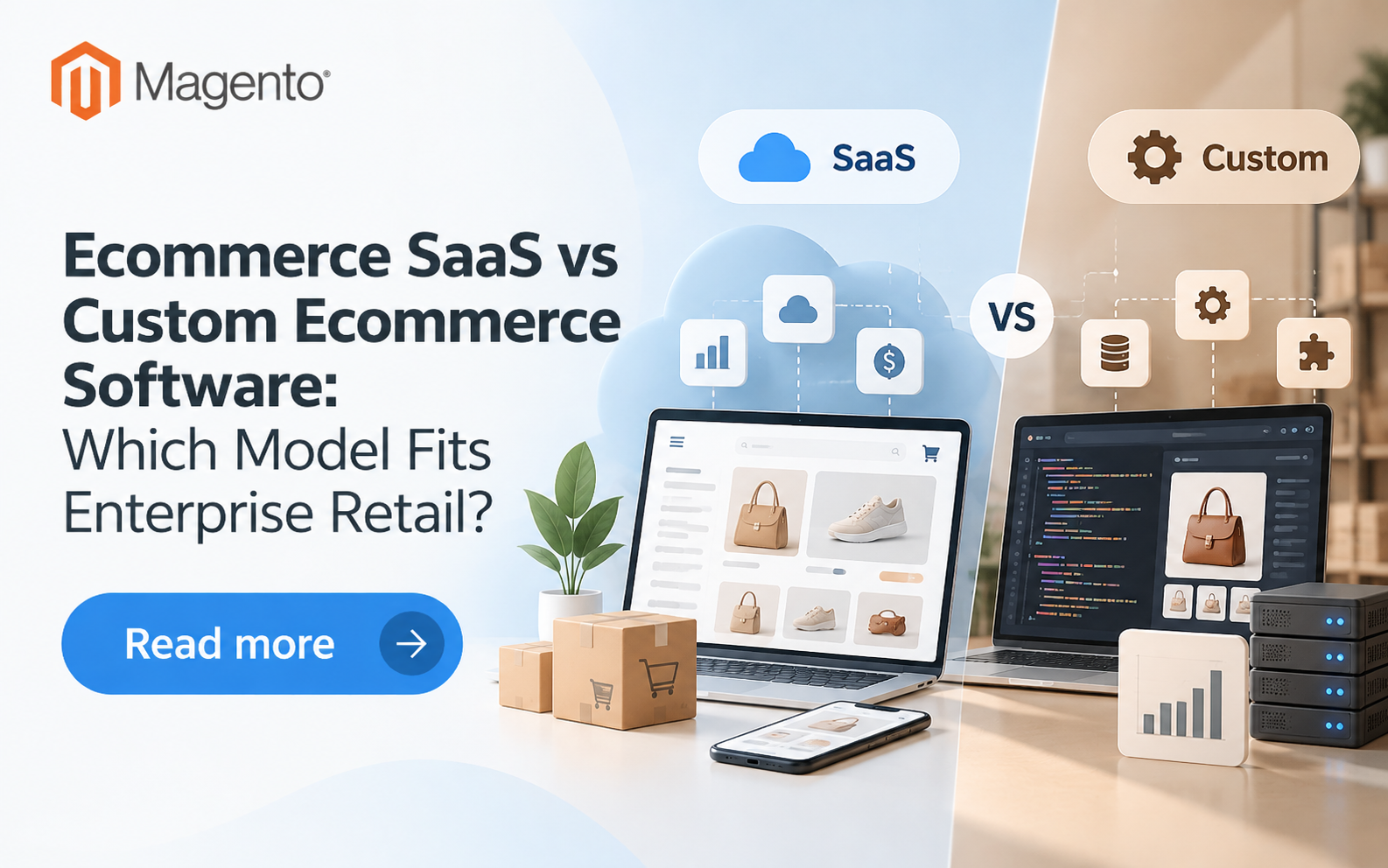
Ecommerce SaaS vs Custom Ecommerce Software is a key decision for enterprise retailers as their businesses grow and technology needs become more complex.
An ecommerce platform can work perfectly well for years and then slowly become difficult to live with. A new warehouse gets added. Pricing rules change. Another brand joins the business. An old ERP still needs to stay. Before long, teams are spending more time finding ways around the platform than they expected.
That is often when the SaaS versus custom discussion starts. SaaS takes care of much of the platform work and gives retailers a ready-made base to build on. Custom ecommerce software development services take a different route, giving the business more say over how things are built and connected, but also leaving it with more to look after.
Neither choice suits every retailer. What matters is how the business sells, what its existing systems look like, and where the current setup is getting in the way. Those are the points worth looking at before deciding which route makes sense for enterprise retail.
What Is the Difference Between SaaS and Custom Ecommerce?
With SaaS ecommerce, much of the platform is already built. The provider looks after the core software, hosting, updates, and much of the technical upkeep. Retailers configure the platform, add integrations, and make changes within the options the product gives them.
Custom ecommerce starts from a different place. More of the software is built around the retailer’s own requirements. That might include an unusual checkout process, pricing logic, integrations with older systems, or features that would be difficult to fit into a standard platform.
The difference becomes clearer when something needs to change. With SaaS, the retailer works within the platform and its APIs. With custom software, there is more room to change how things work, although someone also has to build, test, and maintain those changes.
Where SaaS Ecommerce Works Well
SaaS is a sensible choice when a retailer can do most of what it needs without changing the platform itself. The basics are already there, including catalog management, checkout, payments, and order handling. The provider also takes care of hosting and platform updates, which means the retailer has less core software to maintain.
This can be useful when speed matters. A retailer launching another brand or entering a new market may not want to build a commerce platform before it can start selling. If the new store follows familiar pricing, checkout, and fulfillment processes, an established SaaS platform can shorten the amount of work needed to get it running.
There is also less infrastructure for the retailer to manage directly. That does not remove development work altogether, especially in a large retail environment, but it lets internal teams spend less time looking after the commerce platform itself.
Where SaaS Starts to Feel Restrictive
A SaaS platform can do a lot, but every platform has rules about how certain things work. Retailers usually notice those rules when their own processes do not quite match them. Pricing is a good example. One retailer might sell the same item at different prices depending on the customer, location, contract, or channel. Making all of those rules work inside a fixed platform can get messy.
Checkout and fulfillment can bring similar problems. An enterprise retailer might have orders that need approval before payment, products shipped from several locations, or an ERP that has been running for years and cannot simply be replaced. Apps and APIs may fill some of the gaps, but each addition is another piece the team has to look after.
This is where SaaS can start creating work instead of removing it. If a simple business change regularly means another plugin, integration, or workaround, the platform may no longer fit the operation as comfortably as it once did.
When Custom Ecommerce Starts to Make Sense
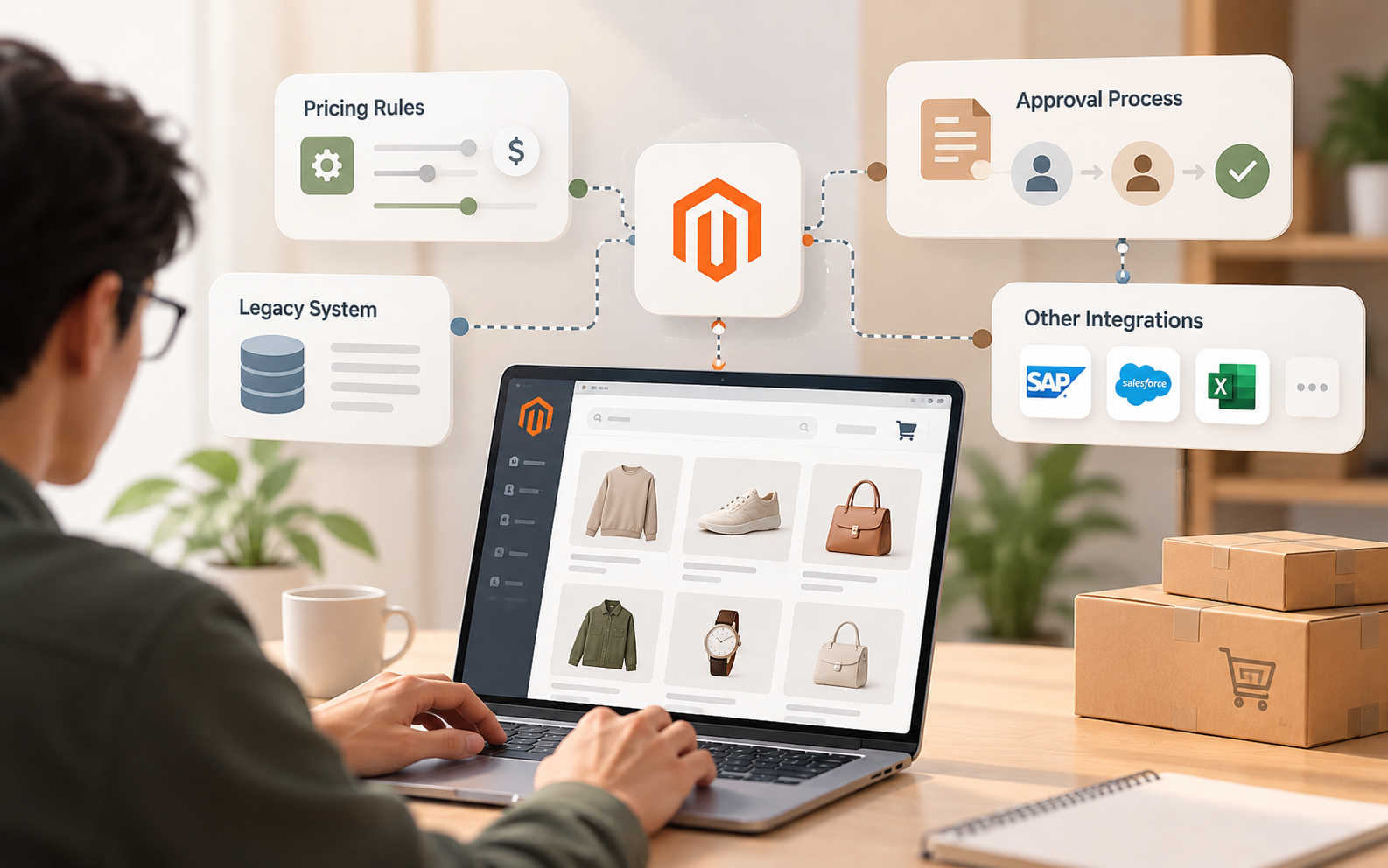
The case for custom software often starts with something very specific. Maybe the retailer has an unusual way of calculating prices. Perhaps orders have to pass through an internal approval process, or the store needs information from an older system that does not connect cleanly with the ecommerce platform.
One exception is usually manageable. The problem comes when these exceptions keep piling up. Developers spend more time working around platform rules, and even a small change can touch several apps or integrations. In that situation, building part of the ecommerce system around the retailer's own process may be easier to manage.
There is a cost to doing that. Someone has to build the software, test it when things change, fix problems, and keep it running. That work makes sense when it removes a problem the business keeps dealing with, not simply because custom ecommerce software development services give the team more options.
SaaS vs. Custom Ecommerce: What Enterprise Retailers Should Compare
The decision looks different once the store is part of a larger retail operation. Launch time matters, but so do the systems that need to connect with it, the changes teams expect to make, and the amount of software they are prepared to maintain.
Area | SaaS Ecommerce | Custom Ecommerce |
Getting started | Usually quicker | More development before launch |
Upfront cost | Generally lower | Generally higher |
Platform maintenance | Mostly handled by the provider | Managed by the retailer or development partner |
Business-specific workflows | Depends on platform options | Can be built around the process |
Integrations | Uses available APIs and apps | More control over how systems connect |
Infrastructure | Provider manages the core platform | Retailer has more responsibility |
Product roadmap | Provider sets the core roadmap | Business has more say over priorities |
Cost deserves a closer look than the initial build price. With SaaS, expenses can grow through subscriptions, apps, transaction charges, integration work, and higher usage. Custom software costs more to build and still needs a team to maintain it.
The useful comparison is what each option will require over several years. A cheaper launch does not always mean a cheaper system to run, just as a larger upfront investment does not automatically make custom software the better choice.
You May Not Need to Choose One Model for Everything
The whole ecommerce setup does not have to follow the same model. A retailer might keep its main commerce functions on a SaaS platform and build certain parts separately. The storefront could be custom, for example, while checkout and other standard functions remain on the SaaS platform.
The same approach works behind the store. Existing PIM, OMS, ERP, or warehouse software can stay in place, with custom connections built where information needs to move between them. A retailer only has to build the parts where the standard platform is getting in the way.
This can also make future changes easier to handle. Instead of replacing the entire ecommerce setup when one area no longer works well, the retailer can change that part while leaving the rest alone. For a large retail business, that may be a more practical route than treating SaaS and custom software as an either-or decision.
Five Questions to Ask Before Choosing
Before settling on either model, it helps to look at where the ecommerce setup is already causing friction. A retailer that fits comfortably within a SaaS platform has a very different decision to make from one maintaining dozens of workarounds.
1. How different are our selling processes?
Look at pricing, checkout, promotions, fulfillment, and account management. If these mostly follow standard ecommerce processes, SaaS may cover them without much additional work.
2. What does the store need to connect with?
List the ERP, PIM, OMS, WMS, CRM, payment systems, and older applications that cannot simply be removed. Then check how each option would work with them.
3. Where are teams already using workarounds?
Too many apps, spreadsheets, manual handoffs, or custom middleware can be a sign that the current platform no longer fits parts of the operation.
4. What do we actually need control over?
Not every feature needs custom code. Identify the areas where changing the process or waiting for a platform provider would cause a real business problem.
5. What will we be paying for after launch?
Include subscriptions, apps, integrations, hosting, maintenance, development work, and internal engineering time. Looking beyond the first year gives a much clearer picture of what each option will cost.
Conclusion
There is no reason to build something from scratch if a SaaS platform already handles the job well. For many retailers, it covers most of what the store needs and takes a fair amount of technical upkeep off the internal team.
The decision gets harder when people are constantly finding ways around the platform. Maybe a pricing rule needs another app, an old system is difficult to connect, or a fulfillment process never quite fits. When those fixes keep adding up, custom development starts to become a more reasonable conversation.
Some retailers will end up using both. They may leave standard commerce functions where they are and build only the parts that have become difficult to manage. In the end, the platform matters less than whether teams can run the business without fighting the software every time something changes.
Related Posts
- Running Age Checks on a Magento Store After Launch
- Adobe Commerce Website Development: Building a Connected B2B Purchasing Workflow
- Why Ongoing Magento Maintenance Matters for Growing eCommerce Stores
- Ecommerce SaaS vs Custom Ecommerce Software: Which Model Fits Enterprise Retail?
- Integrating Mini-Games into Magento 2 Mobile Apps to Boost Retention
- Why Your App Needs a Content Backend: Pairing Mobile App Development Services With a Headless CMS