



Discover why successful Walmart sellers are adopting automated pricing tools to stay competitive, win more sales, and scale their business efficiently.
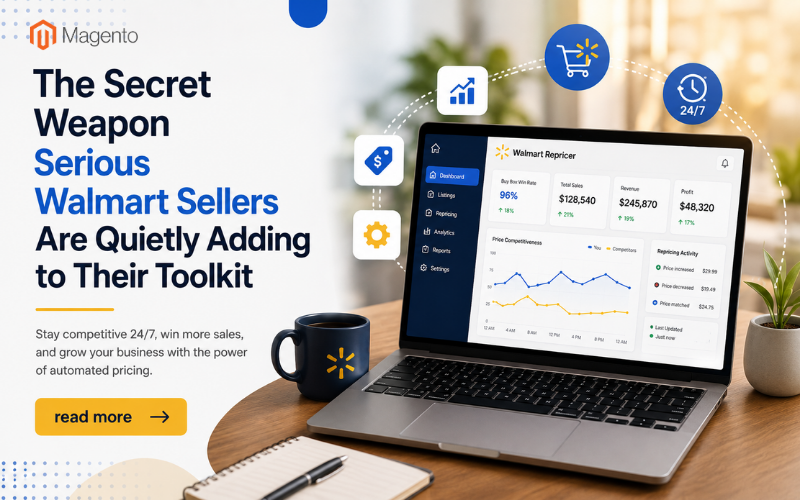
Every competitive marketplace has a divide. On one side are the sellers who rely on instinct, manual adjustments, and periodic check-ins to manage their pricing. On the other hand are the ones who have handed that responsibility to a system that never stops working. On Walmart's growing marketplace, that divide is becoming increasingly visible, and the sellers crossing to the right side are doing it with the same tool: automated pricing.
What Sets the Top Performers Apart
High-performing Walmart sellers tend to share a few common traits. They think in systems rather than tasks. They look for ways to avoid repetitive decisions so their attention can focus on higher-value work. And they are quick to adopt tools that give them a structural advantage over competitors who still rely on manual processes.
Automated pricing fits that profile perfectly. A Walmart repricer continuously monitors listings, responds to competitor changes in real time, and keeps prices positioned for maximum competitiveness without requiring the seller to intervene. It is the kind of tool that works hardest precisely when the seller is not watching.
The Quiet Advantage of Around-the-Clock Coverage
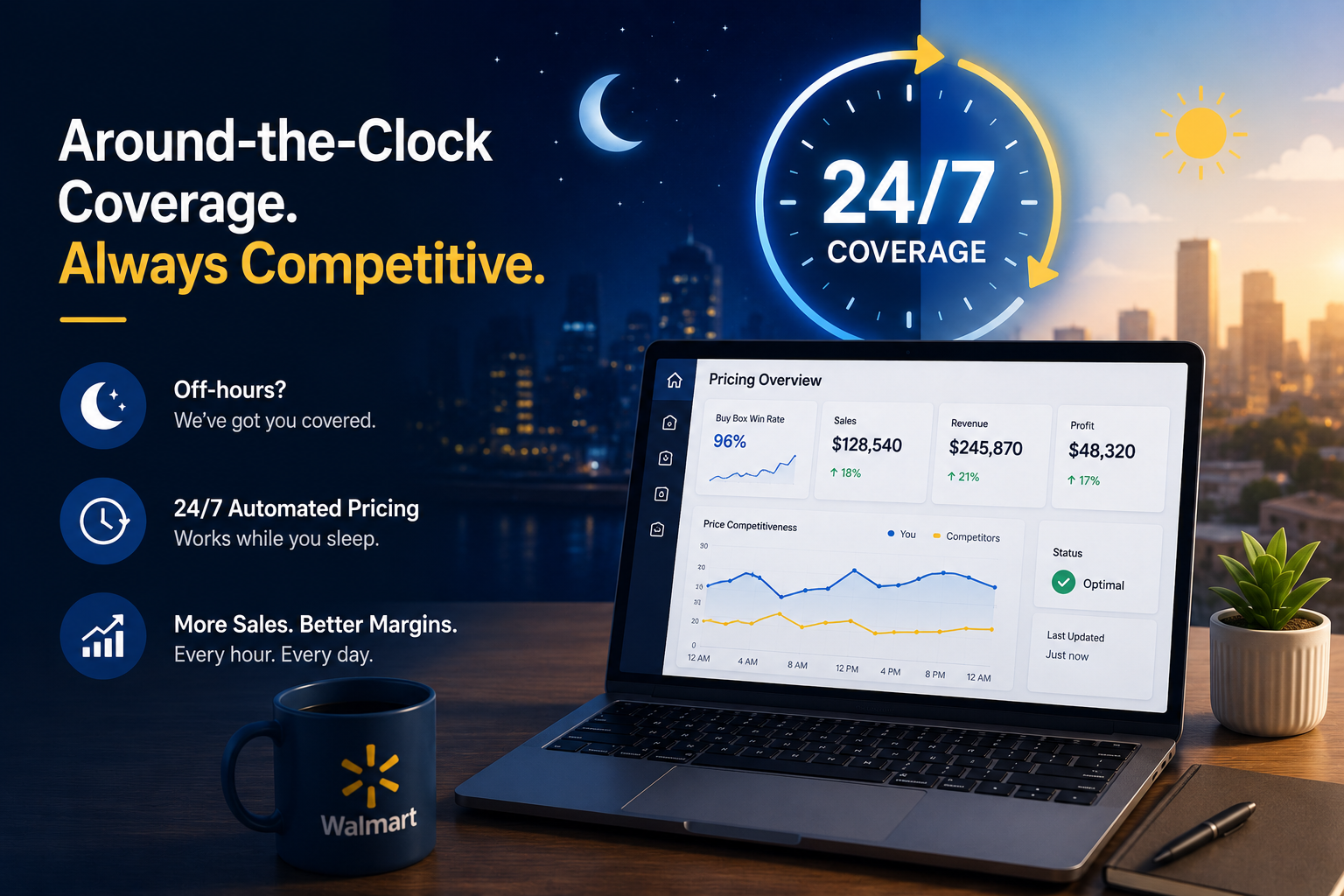
Walmart's marketplace is active at all hours. Shoppers browse late at night, early in the morning, and throughout the weekend. Competitor pricing shifts constantly, and the sellers who hold the most competitive positions during off-hours capture sales that manual sellers consistently miss.
This is the quiet advantage that automated pricing provides. It is not dramatic or flashy. It simply ensures that the listing is always well positioned, regardless of the time or whether the seller has recently logged in. Over the course of a week, that coverage adds up to meaningful differences in sales volume and margin.
Why More Sellers Are Making the Switch
The growth of Walmart's marketplace has simultaneously made it a more attractive and more competitive environment. More sellers mean more pricing activity, more frequent shifts in the competitive landscape, and a greater need for tools that can keep up.
Sellers who once managed their Walmart presence with occasional manual updates are finding that approach increasingly insufficient. The speed of the market has simply outpaced what a person checking prices a few times a day can handle effectively.
The Shift From Tactic to Strategy
What makes automated pricing more than just a convenience tool is what it enables beyond the immediate task. When pricing is handled systematically, the seller's time and attention are freed for decisions that genuinely require human judgment: sourcing, customer experience, catalogue expansion, and brand development.
The sellers quietly adding automated pricing to their toolkit are not just solving a pricing problem. They are making a strategic shift in how they operate their business. Pricing becomes a background function that runs reliably and continuously, while the seller focuses on everything that automation cannot replace. That shift is what separates a tactical operation from a genuinely scalable one, and it is exactly what the top performers on Walmart's marketplace have already figured out.
Related Posts
- A Community Health Center's Guide to Choosing Clinical Documentation Software on a Tight Budget
- The Secret Weapon Serious Walmart Sellers Are Quietly Adding to Their Toolkit
- Magento Email Deliverability: How It Boosts Revenue & Recovers More Sales
- 7 Best Video Processing and Editing APIs for Developers
- Best VPN for e-Commerce Businesses: Top Picks Compared
- Data-Backed Strategies to Increase Reach and Engagement Faster in Social Media