


Real world asset (RWA) tokenization is kinda changing how physical and financial assets are basically owned, traded and handled. The idea is that, by turning ownership rights into blockchain based digital tokens, companies can release liquidity faster, allow fractional ownership, and widen investment chances over global markets. You can see it across commercial real estate, private equity, commodities, and fine art, so yeah tokenization is reshaping the usual asset management playbook.
Meanwhile, as blockchain infrastructure is maturing and regulation rules start feeling clearer, the need for RWA Tokenization Platform Development is ramping up. Banks, investment groups, startups, and bigger enterprises are putting money into secure tokenization platforms, to digitize assets, and to build new income models from the whole process.
What Is RWA Tokenization?
Real-World Asset (RWA) tokenization is basically the act of turning ownership of a physical or financial asset into digital tokens that live on a blockchain. Each token mirrors a portion of the real underlying thing, so ownership can move around, more or less securely and transparently, without the usual friction.
Stuff that gets tokenized a lot, looks like this:
• Real estate
• Commercial property
• Precious metals
• Carbon credits
• Treasury bonds
• Private equity
• Artwork and collectibles
• Renewable energy assets
• Intellectual property
Compared with the old school ownership setups, blockchain tends to give faster settlements, records that are difficult to alter, and global access that doesn’t care much about borders.
Why RWA Tokenization Is Growing in 2026
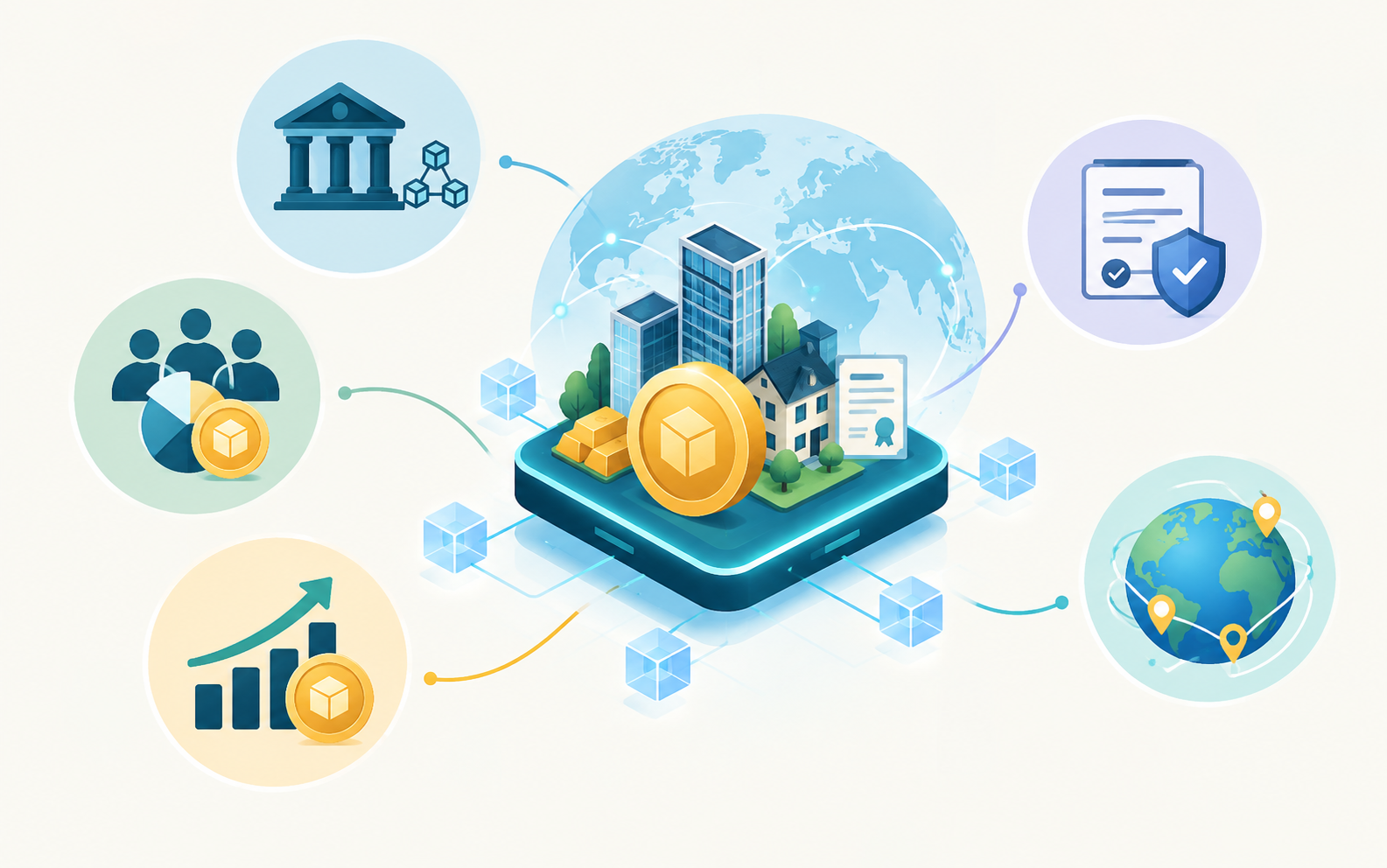
RWA tokenization is picking up speed this year, mostly because a few market currents keep showing up again and again, kind of like a pattern you can almost feel. It’s pushing enterprise adoption forward, and it’s not just a buzz thing. There are several driving forces behind it:
• Institutional blockchain adoption
Banks, investment firms, and asset managers are now weaving blockchain into capital markets, in order to make operations smoother and to shave off settlement times which can otherwise drag on.
• Fractional ownership
Tokenization helps with participation because investors can buy in smaller chunks, so more people can take a stake in high-value assets. Instead of one buyer doing the whole thing, lots of participants can jointly hold portions.
• Improved liquidity
Assets that used to be hard to sell like commercial real estate or certain infrastructure projects, are becoming more tradable. Digital marketplaces make that possible, and the whole process feels less stuck than before.
• Regulatory progress
More jurisdictions are putting out clearer rules for digital assets. That tends to raise institutional confidence, especially for tokenized securities, since uncertainty drops a bit.
• Global investment access
Blockchain also reduces geographical friction, so cross-border investing becomes more practical. It supports greater transparency, and it can move faster with fewer frictions than legacy routes.
Technologies Powering RWA Tokenization Platforms
Successful RWA tokenization platform development really does hinge on a solid technology stack that can handle security, scalability, and compliance, all kind of at once, not just one thing at a time.
Blockchain networks
Some of the more used blockchain platforms are:
• Ethereum
• Polygon
• Avalanche
• Solana
• Hyperledger Fabric
• Stellar
They give teams smart contract capabilities and a structured way for secure digital asset management, basically the core plumbing.
Smart contracts
These smart contracts help automate several business steps like:
• asset issuance
• ownership transfers
• dividend distribution
• investor verification
• compliance rules
• corporate actions
So automation cuts down on manual work and still keeps things more transparent, less friction, more auditability in practice.
Digital identity solutions
Most modern tokenization platforms also plug in KYC and AML checks so regulatory requirements are met and onboarding stays more secure, at least that’s the intent.
Secure digital wallets
Wallet integration lets investors store transfers, and handle tokenized assets in a controlled way. It also aims for institutional‑grade security, with policies and access controls that don’t feel lightweight.
API integrations
A lot of platforms rely on API connections with things like:
• payment gateways
• custody providers
• banking systems
• market data services
• compliance platforms
• secondary trading marketplaces
With those connections in place, the result is a more seamless digital investment ecosystem, kind of end to end, without too many awkward gaps in between.
Benefits of Asset Tokenization Development Services
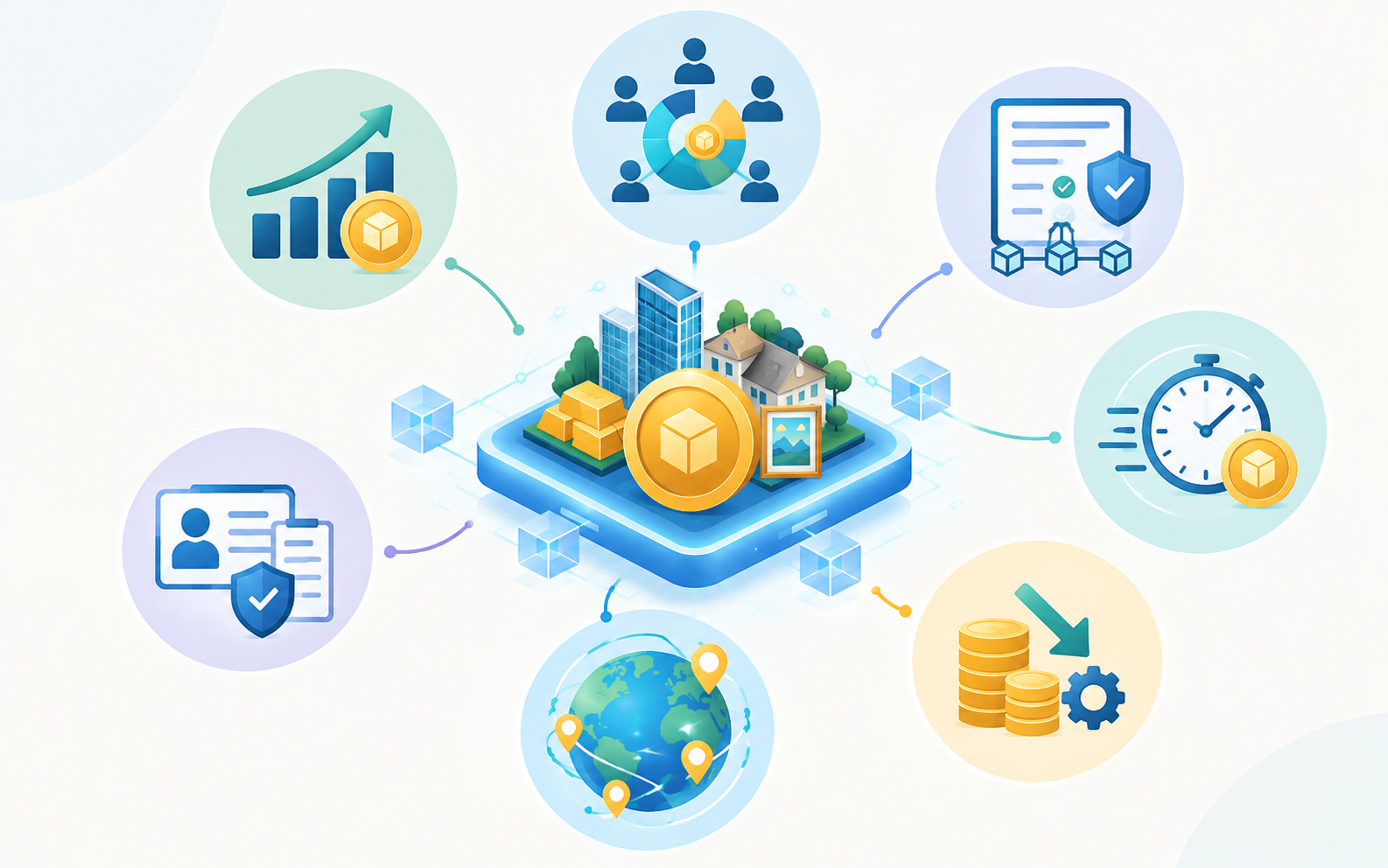
Organizations that invest in asset tokenization development services tend to collect a few competitive perks that are hard to ignore, kind of like you gain an edge without even really asking for it.
First, Liquidity tends to go up. Tokenized assets are often traded more efficiently than their traditional counterparts, so market access feels less locked down.
Next, you get fractional investment opportunities. Instead of needing a full stake, investors can buy smaller portions, which means premium assets become reachable for more people, not just the usual crowd.
Then there is enhanced transparency. Since blockchain keeps a log of every transaction, stored on an immutable ledger, fraud gets harder, and audits are usually smoother.
Also, transactions become faster. Digital asset transfers can settle in a much shorter time than conventional financial systems, so the whole flow feels less delayed, more responsive.
Operational costs also tend to shrink. With smart contract automation, a lot of administrative work is reduced, and many manual steps are simply removed.
Another big advantage is global investor reach. Businesses can pull in qualified investors from different jurisdictions, while cross border participation becomes easier to manage.
Finally, better compliance. When KYC, AML, and regulatory reporting are integrated, compliance management becomes more streamlined, less chaotic, more controllable.
Business Opportunities in RWA Tokenization
Tokenization is kinda creating new opportunities across several industries, and it happens quietly at first then all at once.
• Real Estate
Developers can tokenize commercial buildings, residential projects, and rental properties so they can bring in fractional investors, even the ones who don’t want a full stake
• Private Equity
Investment firms can digitize ownership interests, which boosts liquidity a bit, and it also makes fundraising feel simpler, less complicated
• Infrastructure
Renewable energy projects, transportation assets, and utilities can raise capital using tokenized investment models, so basically more avenues show up
• Commodity Markets
Gold, silver, oil, agricultural products and other commodities can be traded digitally with more efficiency, and it tends to streamline things
• Carbon Credit Markets
Tokenization supports transparency, traceability, and trading efficiency within environmental sustainability initiatives, and it helps people verify what’s going on
• Intellectual Property
Patents, copyrights, music royalties, and digital content rights can be tokenized to unlock new monetization approaches, it turns rights into something that can be managed differently
Estimated Cost of RWA Tokenization Platform Development
Development costs vary based on platform complexity, blockchain selection, compliance requirements, and feature set.
Platform Type | Estimated Cost |
Basic MVP | $30,000–$60,000 |
Mid-Level Platform | $60,000–$120,000 |
Enterprise Solution | $120,000–$300,000+ |
Major cost factors include:
• Smart contract development
• Blockchain integration
• Security implementation
• Wallet development
• Compliance modules
• Admin dashboard
• Secondary marketplace integration
• Ongoing maintenance
Choosing the Right Development Partner
Choosing the right technology partner is kinda critical for overall project success , like in a real way . When you look at the leading RWA Tokenization Platform Development companies , try to weigh things such as : solid blockchain experience that they can actually point to , plus tokenization projects that have already worked out , not only theory. Also check if they have the skills for smart contract development , and that they build with a security-first mindset , rather than “we will fix it later” .
Then also look for regulatory compliance know-how , because it matters more than people think. A transparent development approach is also important, so you can see how work moves , and what is happening step by step. Last but not least, ask about long-term maintenance and support, as well as a scalable architecture that can grow without constant rework.
A trusted development partner, in the end, helps lower technical uncertainty while speeding up product delivery.
Future Trends in RWA Tokenization
The tokenization ecosystem is expected to evolve pretty fast over the coming years, honestly. A few trends are already showing up, like AI powered compliance automation, tokenized treasury securities, and multi chain interoperability. You can also see decentralized identity integration, institutional digital asset custody, and real time settlement systems taking shape.
On top of that there are tokenized investment funds plus cross border asset marketplaces, where value moves around in a more direct way. All of these changes should keep bending the global financial markets as time goes on, and they’ll also expand investment accessibility for more people in practice.
Conclusion
Real world asset tokenization is turning into one of the more important leaps in digital finance. By mixing blockchain tech with traditional asset ownership, companies can boost liquidity a bit, trim day to day operating costs, make fractional investing possible, and connect with global investors, sooner than before.
As adoption speeds up in 2026, organizations that invest in RWA Tokenization Platform Development will likely be in a strong place to grab new chances across real estate , private equity , commodities, infrastructure, and also other asset types. Picking seasoned providers that deliver asset Tokenization Development services, then also checking out the best RWA Tokenization Platform Development companies in detail, can help ensure you get a platform that is secure, scalable, and compliant… and that keeps supporting long term business growth.
Related Posts
- What Developers Should Understand Before Moving an Ecommerce Store to the Cloud
- RWA Tokenization Platform Development Trends 2026: Technologies, Benefits, Costs & Business Opportunities
- What Essential Tools Do You Need for Road Trip Vlogging?
- How Do You Choose an Electronics Manufacturing Partner for Your First Product?
- What Documents Should You Request With Custom Electrical Components?
- What Should You Include in a Realistic Budget for a Custom Electronic Product?