



Learn why identity verification matters for e-commerce security, how risk-based checks reduce fraud, and how to protect customers without adding friction.
At each point in the client journey, online shops depend on trust. Account fraud, identity theft, and unapproved purchases are among the threats organizations face as online transactions expand.Strong verification processes can improve security without creating unnecessary friction for genuine customers.
Identity Verification vs Authentication: What Store Owners Should Know
In online transactions, two distinct but related functions exist: authentication and identity verification. With authentication, whether it's a password, passkey, or multi-factor authentication, we make sure that returning customers can access their current accounts. To take it a step further, identity verification confirms the individual is who they say they are. This can help online businesses like Magento when customers create an account, make a large purchase, change their payment information, or recover their account. When the risk warrants it, store owners should run more stringent checks. The AML compliance and fraud prevention tutorial by Landofcoder explains how identity checks and customer due diligence can make online transactions safer.
How Risk-Based Verification Reduces Checkout Friction
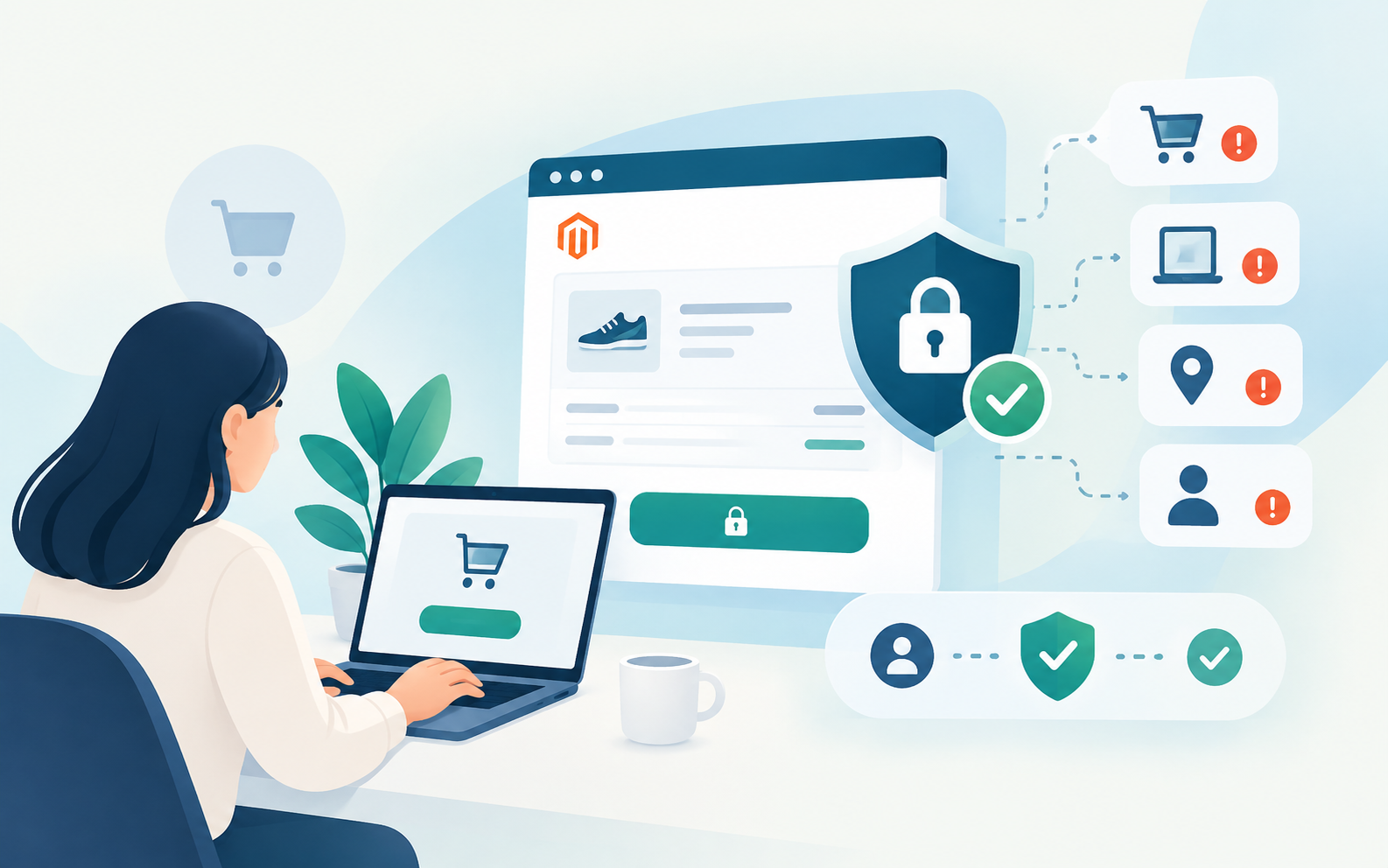
Checkout times and cart abandonment rates can both rise if all customers must go through the same verification process. When suspicious behavior arises, such as a large order, a new device, an unexpected location, or a change to a sensitive account, risk-based verification conducts extra checks. The result is stronger Magento shop security without sacrificing the speed or convenience of regular purchases.
Why E-Commerce Businesses Need Better Identity Checks
Online retailers frequently deal with clients they have never seen in person. As a result, it is harder to verify the identity of users making critical requests, placing orders, or registering accounts.
By helping companies validate user IDs at key stages of the customer journey, an identity verification solution can strengthen this process. We should not erect hurdles when none are required. The goal is to make things easier for real consumers while lowering the risk.
For high-value items, personal customer information, financial transactions, or accounts that fraudsters may target, Identity verification can be especially helpful.
Where Identity Verification Can Help
You don't need to verify every interaction. Where risk is higher, businesses can use it.
Account Registration
Misuse of promotions, fraudulent purchases, and similar activities can affect both retailers and customers when fake accounts are used.
Adding appropriate verification during registration makes it harder to create accounts with stolen or false information.
High-Risk Transactions
Each transaction can have a range of possible risks. Compared to an exceptionally costly transaction made from an unknown device or location, a low-value repeat purchase may need fewer checks.
When specific red flags arise, firms can implement additional checks through a risk-based verification process .
Account Recovery and Sensitive Changes
Account takeover risk increases when users change contact information, reset passwords, or update payment details.
Businesses can streamline account-holder identity verification by adding extra identity checks.
Security Should Not Damage the Customer Experience
Customers may get frustrated by too many procedures, even when strong security is vital. Inconvenient registration or checkout processes could cause customers to abandon a website.
That is why, when developing verification procedures, companies should balance fraud prevention and user experience.
Here are some practical steps to take:
• Doing more thorough inspections just when danger is greater
• Submitting brief, understandable directions
• Avoiding having to ask for the same data more than once
• Facilitating error-free verification on mobile platforms
• The necessity of providing further details is explained
When customers understand the goal of a security step, they are more likely to complete it.
Privacy Should Be Part of the Strategy
Confidential personal information is often required for identity verification. Consequently, companies should be cautious about what data they collect and how they store it.
Collecting more information than necessary can increase privacy and security risk.
Use Only the Information You Need
Collecting client data for the sake of collecting data is not an effective verification process; it should focus on the information needed for a specific purpose.
Organizations should also assess verification technologies against their broader data protection and privacy policies.
Transparency is important. Customers should know why their information is being checked and what will happen to it afterward.
Combine Verification With Other Security Measures
Identity verification works best as part of a broader e-commerce security strategy.
Retailers may also use:
• Secure authentication
• Fraud detection systems
• Transaction monitoring
• Device or account risk signals
• Clear internal security procedures
No single technology can prevent every type of fraud. Combining several layers of protection can make suspicious activity easier to detect while reducing unnecessary friction for ordinary customers.
Review the Process as the Store Grows
An e-commerce business's security needs may evolve as it grows.
At the outset, a small online store may serve a narrow demographic and process a very modest number of transactions each day. Growth can bring new markets, larger orders, more payment methods, and additional fraud risks.
As a result, companies need to assess their verification procedures routinely.
These measures include monitoring client abandonment of verification procedures, blocking genuine users, and emerging fraud behaviors.
E-commerce security shouldn't stay the same for years; it should adjust based on actual behavior.
FAQs
Does every online customer need identity verification?
No. Many companies reserve stronger verification for more dangerous activities or transactions.
Can identity verification reduce online fraud?
When used with other fraud protection strategies, it may help firms verify user identities and add an extra layer of security.
Can verification affect conversion rates?
Yes. Businesses should balance security needs with a straightforward consumer experience, since complicated processes can add friction.
Conclusion
When implemented with care and timing, identity verification can enhance online security. As part of a broader plan to safeguard clients, accounts, and transactions, e-commerce enterprises should use verification to balance privacy, ease of use, and fraud protection.
Related Posts
- Running Age Checks on a Magento Store After Launch
- Adobe Commerce Website Development: Building a Connected B2B Purchasing Workflow
- Why Ongoing Magento Maintenance Matters for Growing eCommerce Stores
- Ecommerce SaaS vs Custom Ecommerce Software: Which Model Fits Enterprise Retail?
- Integrating Mini-Games into Magento 2 Mobile Apps to Boost Retention
- Why Your App Needs a Content Backend: Pairing Mobile App Development Services With a Headless CMS