



Learn how to launch a peer recognition program your employees will actually use with practical tips, common mistakes to avoid, and best practices for engagement.

Picture the last time a coworker noticed something you did not your manager, not HR, just someone who actually saw you push through a rough deadline or step up when a project went sideways. That moment probably stuck with you longer than most formal performance reviews ever have. That's the quiet power behind a peer recognition program: everyday appreciation that keeps people motivated in between the big, official milestones.
The hard part isn't convincing leadership that peer recognition matters; most already believe that. The real challenge is building a peer recognition program that survives past week one instead of quietly fading into another forgotten HR initiative.
Key Takeaways• A peer recognition program works because it captures the everyday contributions that managers can't always see.• Recent data shows employees with strong peer connections feel significantly more appreciated and more likely to stay. • Programs succeed when they're simple to use, visible, inclusive, and modeled by leadership, not when they're launched once and forgotten. • Mixing social praise with occasional tangible rewards keeps recognition meaningful without making it transactional. • Ongoing measurement and small habitual rituals are what separate a peer recognition program that sticks from one that quietly disappears. |
What Is a Peer Recognition Program?
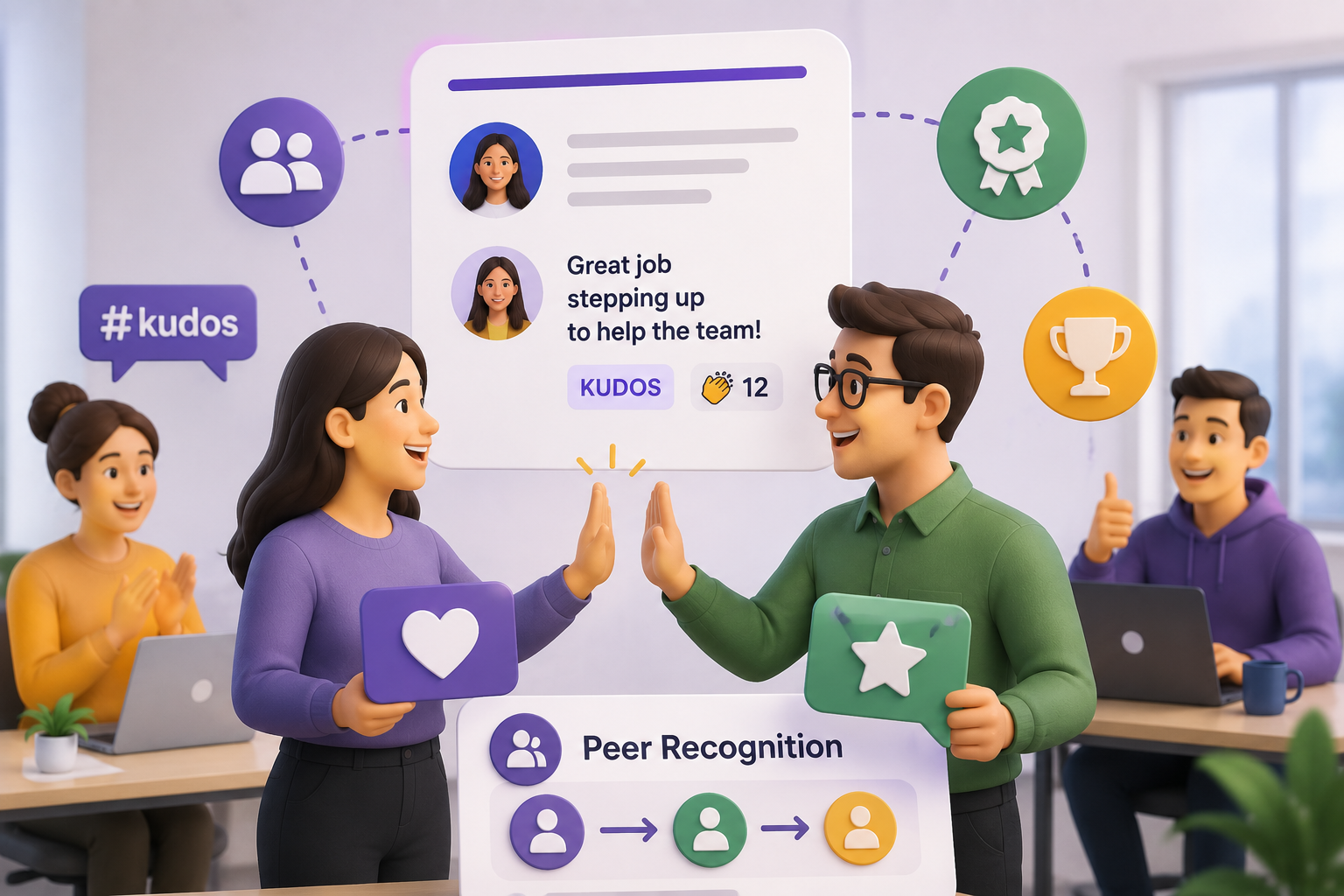
A peer recognition program is a structured way for employees to acknowledge each other's contributions, effort, and impact without waiting for a manager to notice first. It can be as simple as a Slack shoutout channel or as robust as a dedicated platform with points, badges, and a public recognition feed. What sets it apart from traditional recognition is the direction it flows: sideways, not just top-down.
Coworkers notice things managers often miss: the person who stayed late to help someone else hit a deadline, or the teammate who calmly talked a client off the ledge during a tense call. A program built around genuine, easy-to-use peer to peer recognition software makes it simple to capture those moments in real time, before they're forgotten.
Why a Peer Recognition Program Actually Moves the Needle
A peer recognition program helps create a workplace where appreciation becomes part of everyday work instead of an occasional event. When employees recognize each other's efforts, achievements, or support, it reinforces positive behaviors and encourages stronger collaboration across teams. Unlike top-down recognition, peer-to-peer appreciation comes from people who directly experience each other's contributions, making it feel more authentic and meaningful.
This consistent recognition boosts employee engagement, improves morale, and builds trust among coworkers. Employees who feel valued by their peers are often more motivated, productive, and committed to their organization. Over time, a well-designed peer recognition program strengthens company culture, increases retention, and creates an environment where employees are inspired to do their best work while supporting the success of their teammates.
7 Steps to Launch a Peer Recognition Program Your Team Will Use
Most peer recognition programs don't fail because employees don't care about appreciation. They fail because the program itself is clunky, inconsistent, or forgotten within a month. Here's how to avoid that.
1. Start small and low-friction
Don't launch with a 12-page policy document. Start with one simple mechanism: a dedicated channel, a shared board, or a lightweight tool that takes seconds to use. If giving recognition requires more effort than the task being recognized, people won't bother.
2. Define what "good" recognition looks like
Vague praise like "nice work" doesn't stick. Give employees a quick framework: specific, genuine, and tied to an actual behavior or outcome. "You caught that pricing error before it went to the client" lands harder than "great job today."
3. Make recognition visible
Public recognition does double duty: it makes the recipient feel seen, and it shows everyone else what great work looks like. A visible feed, a shared board, or a weekly team shoutout all work well, as long as recognition isn't happening in private DMs where nobody else benefits from seeing it.
4. Mix social and tangible rewards
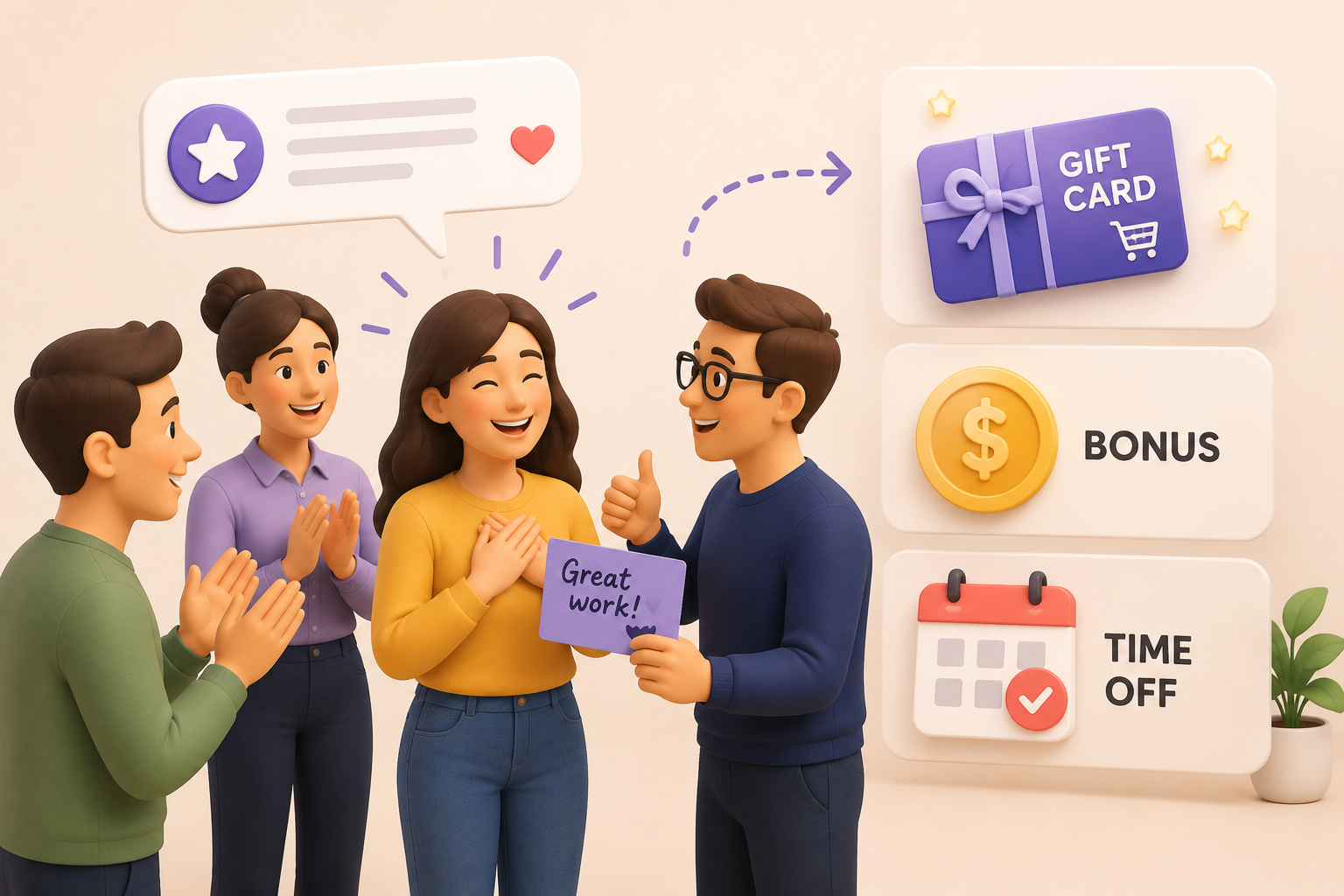
A heartfelt note goes a long way, but pairing social recognition with the occasional tangible reward gift cards, small bonuses, an extra half-day off reinforces the behavior without making recognition feel transactional.
5. Get leaders to go first
If executives and managers only recognize direct reports and skip recognizing peers themselves, employees notice the disconnect. Leaders modeling peer-to-peer appreciation gives the rest of the organization permission to do the same.
6. Design for inclusion, not just extroverts
Not every great contributor wants a spotlight moment. Build in options for private notes alongside public shoutouts, and make sure remote, hybrid, and frontline employees have just as easy a path to give and receive recognition as people sitting in a headquarters office.
7. Track participation and iterate
Keep an eye on who's giving and receiving recognition, how often, and whether certain teams or roles are being left out. Use that data to nudge quieter teams, adjust your approach, and prove the program's impact when it's time to justify the budget.
Common Peer Recognition Program Mistakes to Avoid
You launch a peer recognition program with good intentions, and a few months later, barely anyone uses it. Sound familiar? A few simple mistakes usually cause this.
• First, forcing recognition backfires. Telling employees "you must recognize someone this week" makes it feel like a chore, not a genuine thank-you. People stop caring once it feels fake.
• Second, leaving out frontline and remote workers is a common trap. If only desk-based employees can easily join in, the program ends up feeling exclusive instead of company-wide.
• Third, treating the launch as a one-time event is a mistake. Recognition needs to become a habit, not a campaign. Without leaders keeping it alive week after week, most programs quietly fade out within a few months.
Avoid these three traps, and your program has a real shot at lasting.
People Also Ask About Peer Recognition Programs
1. What is a peer recognition program?
It's a structured system that allows employees to recognize and appreciate each other's contributions directly, rather than relying solely on managers to notice and reward good work.
2. Why is a peer recognition program important?
It captures day-to-day contributions that managers often don't see, strengthens relationships between coworkers, and has a measurable impact on engagement, belonging, and retention.
3. How do you start a peer recognition program?
Start small with a simple, low-friction tool, define what meaningful recognition looks like, get leadership to participate early, and track adoption so you can adjust as you go.
4. What are examples of peer recognition?
Public shoutouts, digital kudos boards, points-based rewards, handwritten notes, and peer nominations for awards are all common examples of peer-to-peer recognition in action.
5. How do you measure the success of a peer recognition program?
Track participation rates, frequency of recognition, how evenly it's distributed across teams, and correlate recognition activity with engagement and retention metrics over time.
Don't Just Build a Program; Build a Habit
A peer recognition program isn't a box to check off during the onboarding season. It's an ongoing habit that, done well, turns appreciation into something employees expect and enjoy giving, not something they're reminded to do.
Start small, make it visible, get leadership involved early, and keep refining based on what your team actually responds to. Do that consistently, and you won't just have a peer recognition program; you'll have a team that genuinely likes working together.
Related Posts
- What Developers Should Understand Before Moving an Ecommerce Store to the Cloud
- RWA Tokenization Platform Development Trends 2026: Technologies, Benefits, Costs & Business Opportunities
- What Essential Tools Do You Need for Road Trip Vlogging?
- How Do You Choose an Electronics Manufacturing Partner for Your First Product?
- What Documents Should You Request With Custom Electrical Components?
- What Should You Include in a Realistic Budget for a Custom Electronic Product?