



GTM AI Learn how improves account research, sales prioritization, buyer intent analysis, and personalized outreach for modern sales teams.
Account research shapes every sales conversation. The quality of outreach depends on what you understand before the first email gets written. Many reps spend hours gathering information, though research still leaves gaps that make prioritization harder.
A company profile explains only part of the story.
LinkedIn may show hiring activity. CRM notes may reveal older conversations. Industry news may mention expansion or funding. Each source explains something useful, though none of them explain the full picture alone.
Research slows down when useful details stay separated across different platforms.
You collect information from different places and still wonder which account deserves attention first. A company may match your target market while showing no buying activity. Another business may stay hidden even though research signals suggest active interest.
Sales reps rarely struggle because information is unavailable. The bigger issue comes from disconnected information spread across multiple sources.
Research Breaks Down When Context Stays Separate
Most account research follows the same pattern. You open company websites. You review LinkedIn profiles. You check CRM notes. You search for recent announcements. Each research step gives only partial visibility into what the account is doing.
The process still requires interpretation. You need to connect hiring trends with business direction. You need to understand whether leadership changes affect priorities. You need to know if earlier conversations still influence timing.
Research becomes work before outreach even begins. Many reps spend more time validating accounts than speaking with buyers. Prospecting slows because research depends on manual effort. An AI GTM workflow can reduce that manual research burden by bringing account signals, buyer context, and outreach-ready insights into one place.
Most reps already put effort into research, though clarity is still difficult to achieve. You may gather plenty of information while still lacking a clear reason to contact the account today.
Generic AI Speeds Up Research But Misses Meaning

AI entered account research because manual work takes time. You can ask for summaries, company descriptions, or outreach suggestions within seconds.
Speed helps reduce manual work, though it does not explain account timing. A summary may explain company size, industry, or business background. Public information gives a broad context. Sales reps still need to understand why the account deserves attention.
Generic AI explains what a company does, though sales reps still need to understand what the company is doing right now. This difference changes how outreach decisions get made.
A company description may mention growth. Current hiring may tell another story. Public information may explain products. CRM engagement may reveal earlier buying interest. Generic AI may organize information clearly, though timing remains difficult to understand.
Good Research Explains Why Outreach Makes Sense Now
Good account research should answer one important question: why does this account deserve attention today? Many companies fit industry filters. Revenue size may match your target market. Employee count may place accounts inside the same segment. These filters help narrow a list, though they do not explain urgency.
A company researching software sends one signal. Hiring inside revenue teams sends another. Leadership changes may suggest new priorities. CRM engagement may reveal earlier interest.
Useful research may include:
• Hiring activity tied to department growth
• Buyer research linked to software categories
• Leadership changes across business units
• CRM engagement from previous outreach
• Relationships between decision-makers
• Expansion connected to hiring or funding
These details help explain account direction with more clarity. You rely less on broad company matching once timing becomes clearer.
Research Changes When Timing Becomes Visible
Timing influences almost every sales decision. A well-written email still fails when no business need exists. Outreach performs better when timing supports the conversation.
Account research works better when timing becomes visible early. A company hiring account executives may prepare for expansion. Another business researching CRM software may compare vendors. A leadership transition may introduce fresh priorities across teams. These details help change how you prioritize accounts.
Without timing, every account looks similar. Industry filters treat businesses equally. Revenue ranges group companies together. Timing helps separate those accounts so you stop spreading effort across large lists without direction.
GTM AI Changes How Sales Reps Understand Accounts
GTM AI improves account research because it connects AI with business intelligence tied to account behavior. This changes how information gets interpreted.
You no longer work only from company background or public summaries. GTM AI connects research with signals tied to real business activity. This context comes from ZoomInfo and connected GTM workflows.
You may ask why an account deserves outreach. GTM AI can surface details linked to hiring, buyer research, and CRM engagement.
The response explains more than company history because it includes context tied to current business direction.
Research Stops Being Fragmented
Many reps switch between multiple tools during account review. One tab shows hiring activity. Another explains company information. CRM notes live elsewhere. Research becomes fragmented when you spend time connecting details manually across different sources.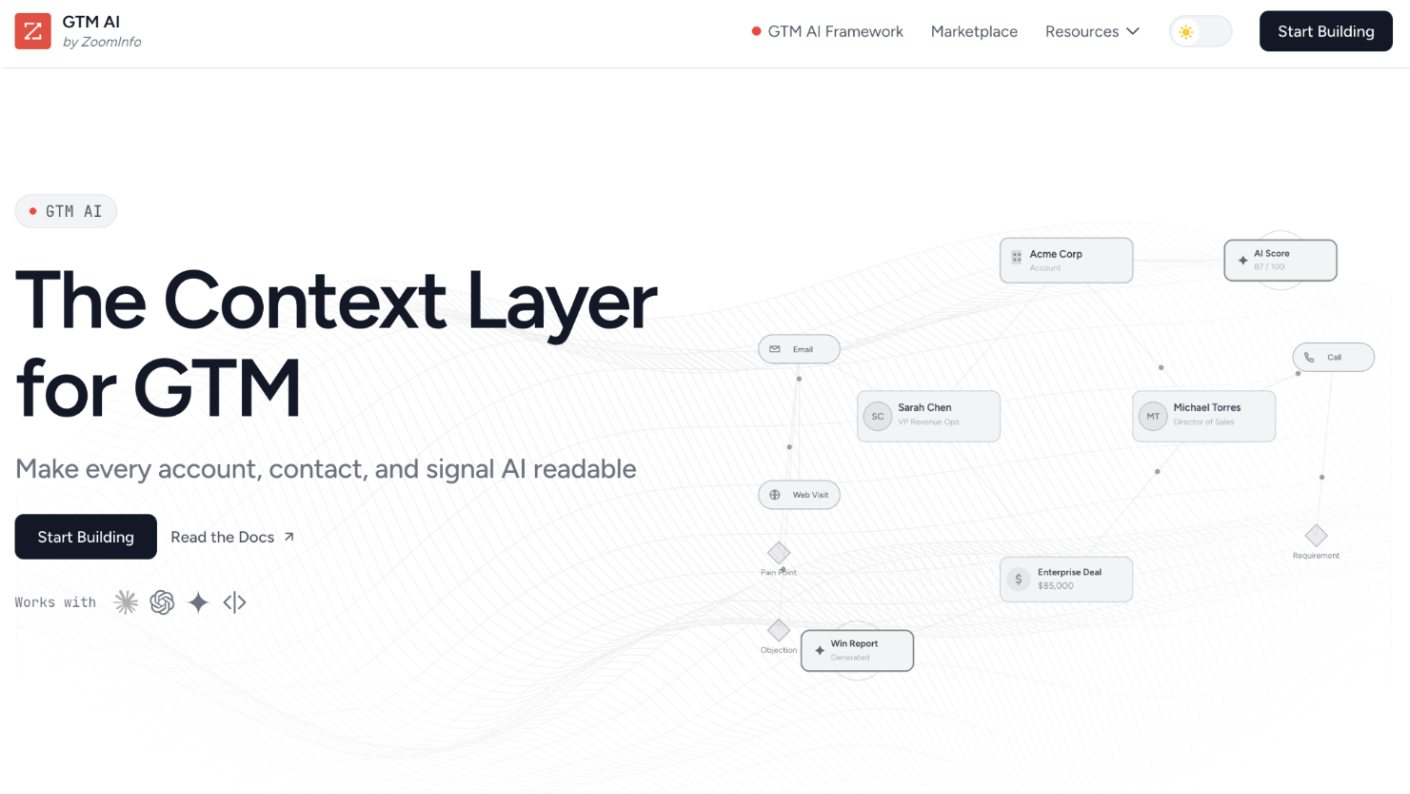 GTM AI reduces this friction because useful information appears closer together. You can understand account behavior without jumping across disconnected sources. This helps research fit more naturally into your workflow.
You spend less time collecting information, which gives more time for prospecting and outreach. Research supports action when it no longer slows momentum.
Better Research Leads To Better Prioritization
Prospecting becomes difficult when every account looks qualified. Industry filters may group companies together. Company size may place businesses in the same category.
Context helps explain the difference between similar accounts. One company may show active buyer research. Another business may show zero engagement. Generic filters treat both accounts similarly.
Good research should explain which account deserves attention first.
Useful prioritization signals may include:
• Product research tied to buying interest
• Hiring inside sales or marketing teams
• CRM activity from earlier touchpoints
• Leadership transitions tied to change
• Stakeholder relationships connected to influence
These details narrow your focus so you spend less time chasing low-priority accounts.
Better Context Leads To Better Outreach
Research influences how outreach gets written. Generic messaging sounds broad because useful context is missing. Buyers notice relevance quickly when messaging connects to current priorities.
A company hiring inside revenue teams may care about onboarding or scaling. Another account researching software may enter evaluation. Research gives messaging more direction because context explains why outreach fits the account.
Useful outreach improves when you understand:
• Why the company deserves attention
• Which signal explains timing
• Which contact influences decisions
• What business activity supports outreach
These details help personalization sound more informed, which reduces reliance on industry assumptions alone.
GTM AI Helps Research Support Sales Decisions
Sales reps do not need more information. More information increases noise when the context stays disconnected. You need better interpretation instead of more scattered information.
GTM AI connects AI with intelligence from ZoomInfo so research reflects current business behavior. This gives sales reps a clearer direction during account research.
You understand why an account belongs inside your prospect list. Timing becomes easier to interpret. Outreach improves because research explains what deserves attention.
Research becomes more useful when information connects together.
Better Research Leads To Better Sales Conversations
Sales reps make dozens of decisions before outreach even begins. You decide which accounts deserve attention, which contacts belong inside the sequence, and which companies justify deeper effort. Research guides every one of those choices.
Weak research creates hesitation. You may spend extra time validating accounts because the information still feels incomplete. Outreach slows when timing stays unclear. Prospecting becomes harder when every company looks equally qualified.
GTM AI changes that process by bringing business context closer to research. You no longer rely only on scattered information or broad company descriptions. Hiring activity, buyer research, CRM engagement, and stakeholder relationships help explain what deserves attention. This gives account research a clearer purpose.
You understand why a company belongs inside your pipeline before outreach begins. Prioritization becomes easier because account activity explains where effort should go.
Good research does more than save time. It helps sales reps make smarter decisions earlier in the process.
Related Posts
- Why Configuration Management Matters for Magento and Cloud-Hosted Stores
- Best AI Website Builder in 2026: Tested, Ranked, and Compared
- Why Customer Service Calls Are Getting Answered by AI Agents
- How to Choose the Best Data Quality Tools for E-commerce and Software Teams
- How AI Is Transforming Website Development Tools in 2026
- Self-Hosted n8n vs Cloud n8n: Which Option Is Better for Your Business?