



Customer expectations are evolving rapidly in 2026. Buyers want faster service, effortless product discovery, and seamless buying experiences. Operating an online store is no longer sufficient. Companies should be aware of emerging e-commerce trends and the rapid change in customer behavior.
Shopping through AI and social commerce is redefining how customers look for products. Personalization is making shopping more relevant. Mobile commerce and speedy delivery are creating better convenience. Easy and flexible payment options are removing friction at checkout.
The major e-commerce trends in 2026 are AI shopping assistants, social commerce, hyper-personalization, mobile-first shopping, speedy fulfillment, flexible payment options, and B2B digital commerce.
The good news is that companies do not need to pursue all the trends at once. They need to focus on solutions that address specific customer problems.
1. AI-Powered Shopping Is Becoming the New Normal
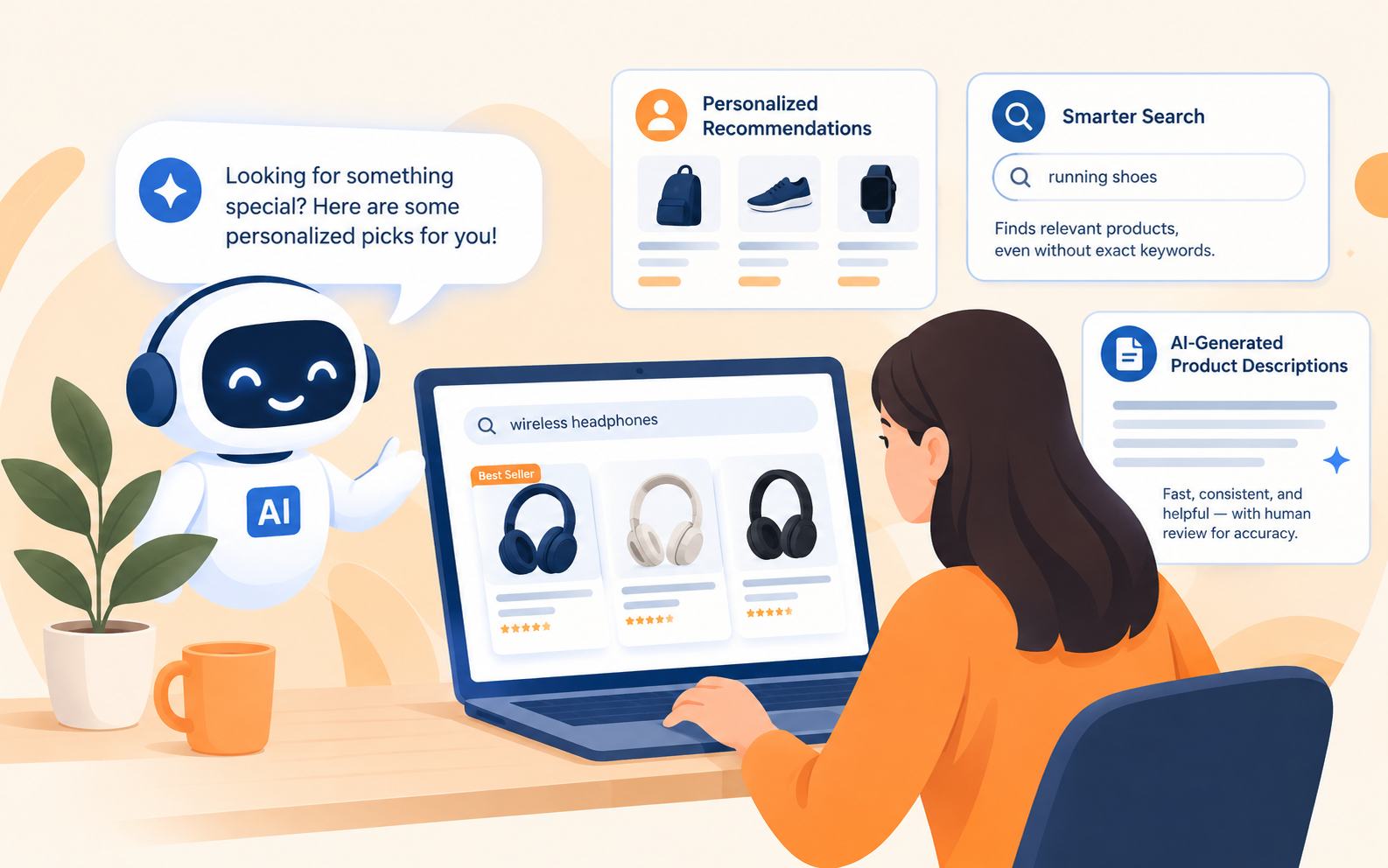
AI is now practical for e-commerce. It can help online retailers better understand what customers are looking for and streamline product discovery. AI can also automate mundane tasks, freeing the sales team to focus on its clients.
How AI Is Changing the Online Shopping Experience
One key trend in e-commerce technology is the increasing use of AI shopping assistants. They can respond to product-related questions and direct the buyer to the most suitable products. AI can also suggest products based on shopping and purchase patterns. More intelligent search can help buyers find relevant products even if they do not have the exact product name.
Businesses could also employ AI to produce product descriptions and provide simple customer support. Human review is still vital, though. AI information may include inaccuracies or false claims. All of the product details must be examined before reaching the consumer.
2. Social Commerce Will Drive More Product Discoveries
Social media sites are now becoming key channels for discovering products. Customers can come across a product in a video and be attracted to it without having even searched for it. Social media is therefore a key aspect of today's online shopping habits.
Turning Social Media Into a Shopping Channel
Short-form videos can demonstrate a product. Creator recommendations can reach new audiences. Live shopping can provide an opportunity for consumers to see products in action, and buyers can ask product-related questions freely.
This is suitable for fashion and beauty products. This is also suitable for home goods and consumer goods. A B2B company can also use educational videos to demonstrate product specifications and manufacturing capabilities.
Keep the buying journey simple. Make sure product links are visible. Ensure landing pages load fast. Don't make your buyers go through a lot of unnecessary steps before reaching checkout.
3. Personalization Will Go Beyond "Recommended for You"
Customers don't want to spend time sorting through irrelevant products. Personalization can encourage your business to show more relevant products and offers. It's one of the significant online retail trends for 2009 that will help increase customer engagement.
What Customers Expect From Personalized Shopping
Offering recommendations on product pages based on browsing histories, email campaigns targeted at customers based on previous orders, and showing offers available for a particular store.
However, personalization should not seem intrusive. Customers expect useful suggestions without being tracked constantly. Firms need to communicate how customer data is used. They should provide customers with a straightforward privacy policy and meet all data protection guidelines.
4. Mobile Commerce Will Remain a Major Growth Engine

Mobile devices have become a key part of the buying journey. Many buyers use their mobiles to do product research and supplier comparison before making actual purchases. As such, every e-commerce company must give the mobile experience a high priority.
Why Mobile Shopping Experience Matters
A mobile-friendly store should load fast, and navigation should be easy. Pictures of products must be easy to see without taking much time to load, and "buttons" must be big enough for you to click on. The checkout process should have as few steps as possible.
Your mobile app can also streamline payments. If a mobile checkout is not simple, it can lead to customers leaving a site before buying. Companies need to check websites across multiple screen sizes. If done well, a good mobile experience can greatly facilitate product discovery and purchase.
5. Social Proof and User-Generated Content Will Influence More Purchases
Customers are interested in whether a product truly provides the specified benefits. Feedback and experiences from other customers can be helpful before purchasing. For this reason, customer feedback will continue to be a valuable aspect of the e-commerce industry.
Why Buyers Trust Other Customers
Reviews can help address questions not answered by the product description. Customer photos can give a clear idea of what the product is like in real life. Videos can show how the product works and its quality. Testimonials can build customer confidence.
B2B Buyers also have the opportunity to use social proof. Supplier reviews and business references can help a company compare potential business partners.
Companies should never mention fake reviews; having authentic reviews is always better than false ones. Businesses should also address bad reviews professionally and use them to reflect on and improve their services.
6. Faster and More Flexible Delivery Will Shape Customer Loyalty
Delivery is no longer only a matter of logistics. It is a matter of customer experience. Buyers expect to be informed about the delivery before they finalize their transaction. This is particularly significant for international buyers, who have to cope with a longer delivery period and customs.
What Buyers Want From E-commerce Fulfillment
Clear delivery estimates help lower customer uncertainty. Order tracking also helps keep customers informed after purchase. For fulfillment purposes, businesses can use regional warehouses and local inventory.
Fast delivery is convenient, but it is not always the sole concern. Some end customers might be happy to wait longer if they know when it will arrive. B2B buyers may trust suppliers that offer timely delivery and keep them updated.
7. Flexible Payments and Checkout Options Will Matter More
Payment choices differ by country and customer type. U.S. and international buyers tend to want different currencies and ways to pay. Knowing these differences can simplify buying.
Digital wallets may reduce the time spent at checkout. Offering local payment methods could make international consumers feel more at home. Offering multiple currencies may also reduce confusion. Buy Now Pay Later will only suit some consumer businesses.
A streamlined checkout is just as critical. Allowing customers to check out as guests can make life easier. Businesses should avoid adding payment options simply because they are popular. The better approach is to offer methods that match the target market.
8. Cross-Border E-commerce Will Create New Growth Opportunities
More businesses of different sizes can sell across borders. Online channels enable traders to sell to markets beyond their home country. This is a key feature of the future of e-commerce.
How Online Stores Can Reach International Buyers
Businesses may begin by researching market demand for their products in specific regions. They can then establish localized product pages and provide local currencies and payment options. They should also assess shipping costs and customs procedures before entering a new market.
Product details may be required to differ from region to region. Buyers from other countries can have different preferences and requirements. Localized content can make a store more relevant.
B2B marketplaces can also help suppliers connect with overseas buyers. This can give manufacturers and wholesalers another channel for testing international demand without building a presence in every market.
9. Sustainable E-commerce Will Become a Competitive Factor
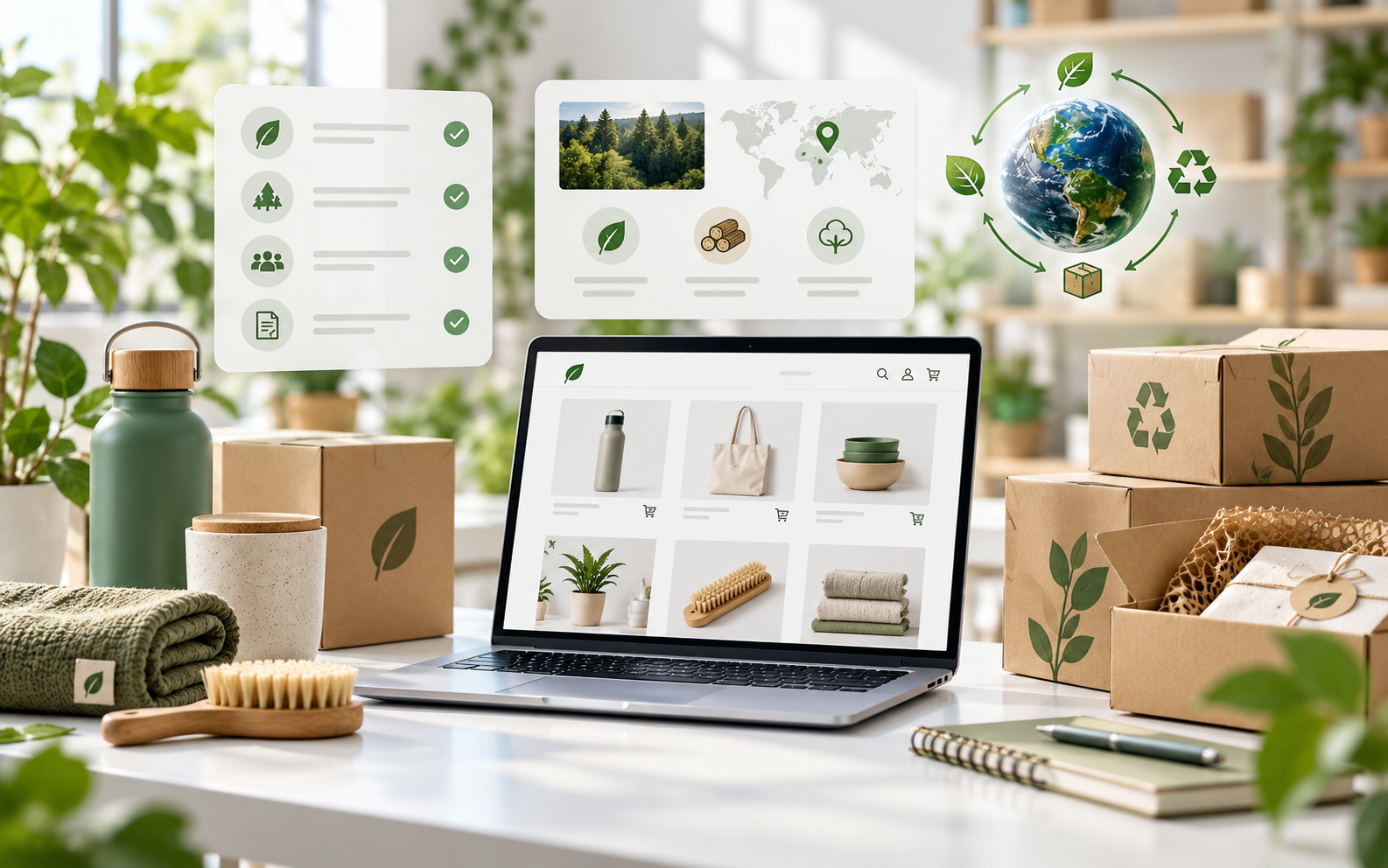
Sustainability is becoming more relevant to purchasing decisions. Buyers are interested in packaging and product sourcing. They may also consider product durability and reduced manufacturing.
Businesses can cut down on excess packaging and streamline shipping. They can also be transparent about sourcing and materials used.
But rather than diluting the message by talking about vague environmental benefits, claim nothing unless you have real information to support it. It's far better to be frank than to make unsubstantiated significant claims.
For B2B buyers, sustainability may also become part of the supplier evaluation. Buyers may ask suppliers about materials and manufacturing processes before placing a large order.
10. B2B E-commerce and Digital Marketplaces Will Keep Expanding
B2B purchasing is becoming increasingly available through the internet. Firms require more rapid methods for finding products and evaluating vendors. This is one of the online shopping trends of 2026 that B2B businesses should be aware of.
Why Online Wholesale Buying Is Growing
Digital catalogs simplify searching for products. RFQ's allow buyers to communicate with suppliers about their needs. Digital channels can also provide opportunities for companies to source suppliers outside of their local areas.
Buyers can use these channels to reach distributors. Distributors can establish links with retail firms. Buyers may search for products according to the specifications and purchasing requirements.
Reliable B2B Marketplace
Online B2B marketplaces like Tradewheel.com help connect buyers with global suppliers and vice versa. Buyers can source products from various industries and countries in bulk. But you should do proper due diligence before ordering in bulk. Suppliers on this comprehensive platform offer flexibility on prices and MOQs, so businesses of all sizes can access their services.
Buyers can explore sellers' profiles, check company information, ask questions about products, and request samples and certifications, which will help minimize sourcing risks and enable more informed purchasing decisions. There are niche-based marketplaces as well, such as BeauteTrade, that specialize in beauty and personal care. It depends solely on what the business owner wants to do, so it's best to choose a marketplace that suits your business type.
11. Omnichannel Shopping Will Become More Important
Buyers no longer use a single channel to buy. They may find a product on Facebook, then go to the company's website, and then browse a marketplace to compare.
That's why businesses need to know the difference between multichannel and omnichannel selling. Multichannel means selling through many channels. Omnichannel is about integrating those channels into one seamless experience.
Pricing and product information should remain consistent where possible. Inventory information should also be accurate. Customer support should not feel disconnected between platforms. A connected experience can make it easier for buyers to move from product discovery to purchase.
Which E-commerce Trends Should Your Business Prioritize in 2026?
Not every business needs to adopt every trend. The right choice depends on your customers and current business problems.
Business Goal | Trend to Prioritize |
Increase conversions | Personalization + social proof |
Improve customer experience | AI + mobile optimization |
Reach younger shoppers | Social commerce |
Expand internationally | Cross-border commerce |
Reduce cart abandonment | Flexible payments + simple checkout |
Improve repeat purchases | Personalization + loyalty |
Find wholesale buyers | B2B marketplaces |
Improve customer trust | Reviews + transparent information |
Start with the area that creates the biggest problem for your customers. A business with poor mobile performance should fix its website before investing heavily in advanced AI tools. A supplier looking for international buyers may benefit more from B2B marketplaces and localized product information.
How to Prepare Your Online Store for These Trends
The most effective way to adapt to new trends is through a simple process.
1) Observe how your potential customers will find products and make buying decisions.
2) Determine the points at which lead buyers leave or become disinterested.
3) Focus on changes that directly address the problem.
4) Don't go with assumptions; track results.
5) Invest more in strategies that show measurable improvement.
Average order value can provide insights on whether customers are making larger or smaller purchases. Repeat purchase rate can be used as an indicator of customer loyalty. Customer acquisition cost and customer lifetime value can be useful for understanding whether growth is sustainable.
Conclusion
The newest trends of e-commerce are reshaping the ways buyers find and buy products. These e-commerce trends include artificial intelligence, social commerce, personalized shopping experiences, shopping on smartphones, flexible payment options, and international sales. This blog provides you with a list of the latest trends that make running a business challenging. So keep on reading and expanding your business horizon.
Related Posts
- Running Age Checks on a Magento Store After Launch
- Adobe Commerce Website Development: Building a Connected B2B Purchasing Workflow
- Why Ongoing Magento Maintenance Matters for Growing eCommerce Stores
- Ecommerce SaaS vs Custom Ecommerce Software: Which Model Fits Enterprise Retail?
- Integrating Mini-Games into Magento 2 Mobile Apps to Boost Retention
- Why Your App Needs a Content Backend: Pairing Mobile App Development Services With a Headless CMS