



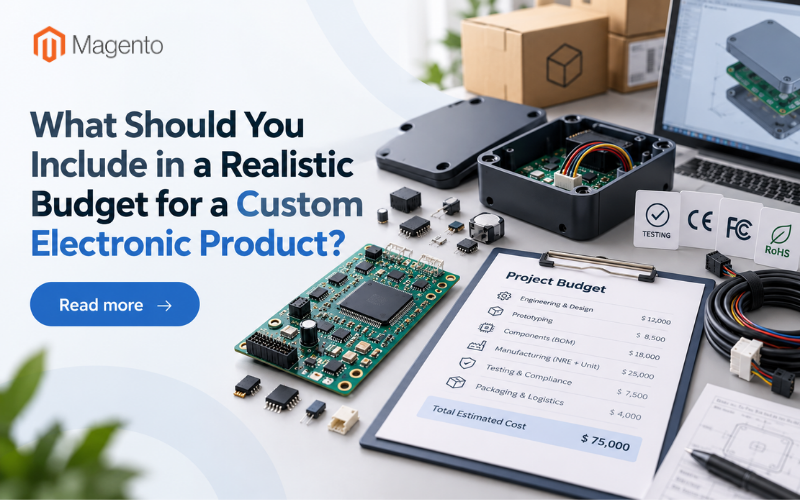
A Custom Electronic Product requires more than a budget for the circuit board, enclosure, and main components. Product teams also need to account for prototyping, wiring, assembly, testing, certification, packaging, and shipping. Missing these costs can quickly lead to budget overruns just before manufacturing begins.
Most product teams are woefully underestimated in terms of the actual cost of getting custom hardware to market. They obtain a quote for the printed circuit board and calculate the unit cost of a plastic enclosure; they add a generous buffer for the work the factory will do and assume that their financial modeling is done. That's typically the road to a funding crisis at the last minute before manufacturing gets underway.
A realistic budget takes into consideration that discrete parts must be assembled at scale. It covers the unspoken work that gets done, the failures that must occur over and over again, the physical connections that have to exist in order to make a device work. I have seen projects come to a halt because the team spent money on the main parts and missed out on the budget for the assembly, testing and shipping.
Non-Recurring Engineering and Prototyping
You have to pay to prepare a product for mass production. Non-recurring engineering covers the one time costs to get your design ready for the factory floor. This includes steel tooling for custom plastics, custom test jigs for the assembly line and setup fees charged by your manufacturing partner.
You also need to budget for multiple prototype revisions. The first prototype proves the core concept works on a bench. The second proves the electronics actually fit inside the chosen enclosure. The third proves the unit can be manufactured repeatedly at scale. Each round requires small batch component orders, expedited shipping and dedicated engineering time. If you only budget for a single perfect prototype you will run out of capital very quickly.
Managing Internal Power and Signal Routing
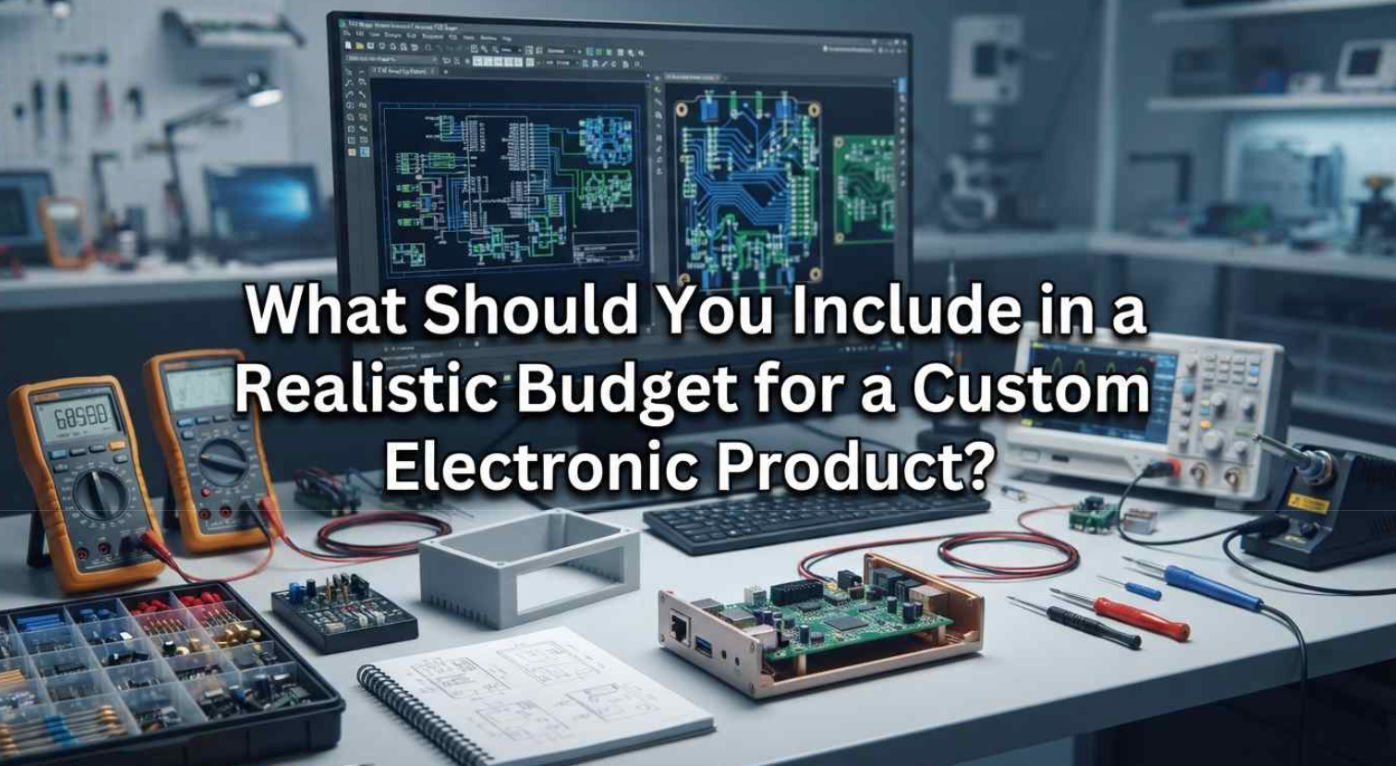
A circuit board is completely useless if it cannot communicate with the rest of the device. Designers often remember the main processor but forget the physical space and cost required for the cables linking everything together.
A custom Factory Wiring Harness is frequently necessary to route power and data securely through a complex product enclosure. You cannot rely on off the shelf cables if your device operates in a constrained physical space or requires specific environmental ratings to survive high temperatures. Custom cabling requires its own set of design drawings, dedicated tooling and substantial minimum order quantities. Budgeting for these bespoke interconnects early prevents expensive mechanical redesigns late in the development cycle.
User Interface and Hardware Integration
The human element of your product introduces significant manufacturing costs. Physical buttons, capacitive screens and heavy duty switches require precise mounting and secure electrical connections to survive daily use in the field.
When you build the financial model for the user interface you have to account for Control Panel Wiring. This involves the specialized materials and precise routing needed to connect manual switches from the main processing board out to external facing components. It's a highly manual process requiring skilled operators. Poorly planned wiring here leads to pinched cables, dead buttons and unacceptably high failure rates on the assembly line. The labor time to wire these interface panels correctly must be a distinct line item in your unit cost projections.
Component Sourcing and Supply Chain Strategy
Where you buy your parts changes your budget entirely. You have to account for international shipping delays, regional expertise and import duties. Different regions specialize in different tiers of hardware manufacturing.
If you need highly specialized or automotive grade connections for a harsh operational environment, sourcing a custom wire harness in South Korea might make sense due to their established infrastructure in high reliability electronics. You will pay a distinct premium for that level of regional expertise, but it buys you engineering consistency and lower defect rates. Your budget needs to reflect not just the raw unit cost of a component, but the total landed cost based on its specific country of origin.
Shifting Costs for Volume Production
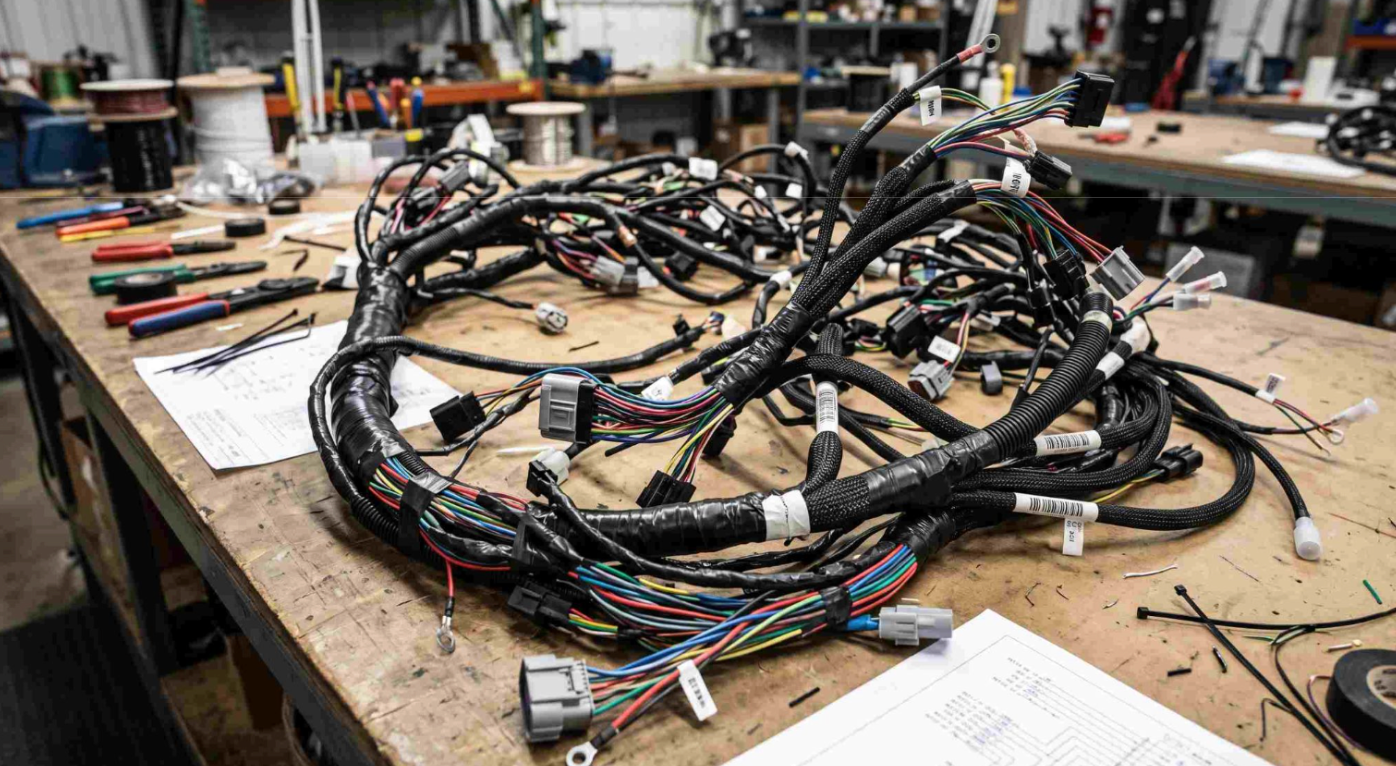
The math changes completely when you move from building five hundred units a month to fifty thousand. Manual assembly processes that were affordable at low volume suddenly become major financial bottlenecks. You often have to look at different regional partners to hit your target consumer price at scale.
Many hardware companies optimize their spending by moving certain sub assemblies to emerging manufacturing hubs. Contracting for a wire harness in Thailand is a common operational move for companies looking to balance strict quality requirements with more favorable labor rates at high volumes. Your financial plan must include the transition costs of auditing and qualifying these new suppliers when you are finally ready to scale up operations.
Final Product Assembly and Testing
Putting all the pieces together is where hidden costs accumulate the fastest. You are not just paying for someone to screw a circuit board into a piece of plastic. You are paying for a complete box build assembly.
This process covers the entire final stage of manufacturing. It includes installing the electronics, routing all internal cables, sealing the enclosure securely, loading the final firmware and running the device through a functional test. Every single second a worker spends handling your product costs money. If your design is difficult to assemble; your per unit cost will skyrocket. A realistic financial model accounts for final assembly time in minutes and seconds.
Compliance Testing and Regulatory Certification
Hardware must be legally allowed to be sold. Depending on your target market, your device will need testing for electromagnetic interference, battery safety and wireless transmission standards. FCC, CE, and UL certifications are mandatory legal hurdles. You have to pay certified testing laboratories to put your product through rigorous technical evaluations.
Testing is expensive and failure is incredibly common. Most products do not pass emissions testing on their very first attempt. A responsible budget includes the cost of the initial lab time, the engineering hours required to fix any compliance failures and the fees for at least one full round of retesting.
Packaging and Outbound Logistics
Packaging is a physical component of your product rather than an afterthought. Custom retail boxes, protective foam inserts and master shipping cartons require their own design phase and physical tooling.
You also have to pay to move pallets of finished goods across the ocean or via air freight. Shipping heavy or bulky products will eat into your hardware margins very quickly. Budgeting for logistics means calculating the exact physical dimensions of your final package and figuring out how many units fit into a standard shipping container. Air freight is fast but it destroys profit margins. Ocean freight is much cheaper but requires you to carry heavy inventory costs for weeks while the product is sitting on a boat.
Related Posts
- What Developers Should Understand Before Moving an Ecommerce Store to the Cloud
- RWA Tokenization Platform Development Trends 2026: Technologies, Benefits, Costs & Business Opportunities
- What Essential Tools Do You Need for Road Trip Vlogging?
- How Do You Choose an Electronics Manufacturing Partner for Your First Product?
- What Documents Should You Request With Custom Electrical Components?
- What Should You Include in a Realistic Budget for a Custom Electronic Product?