



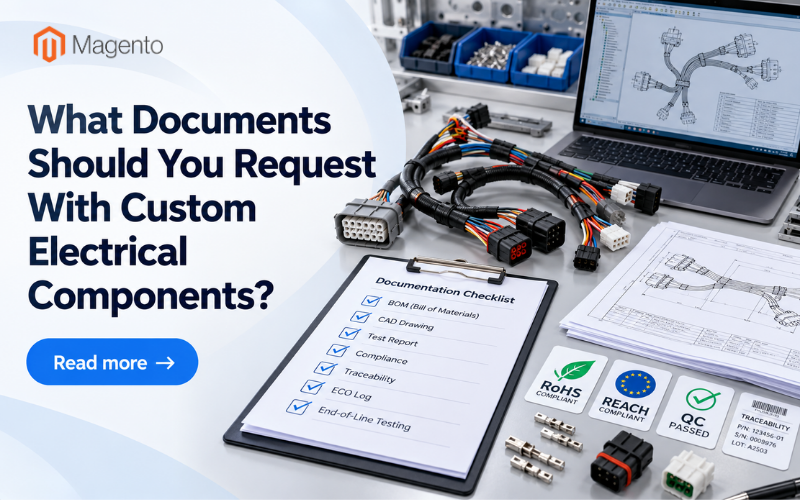
When you order standard off-the-shelf parts, what you receive is largely what you see. Custom electrical components are a different story entirely. Accepting a shipment of complex, bespoke assemblies without the right paperwork means you are operating completely blind. You won't know exactly what materials were used, how the units were tested or if they actually meet your original operational specifications until something fails out in the field.
Skipping the documentation phase is a massive risk. It leads to assembly line delays when parts don't fit properly. Worse, it results in expensive warranty claims when substandard components fail under real world conditions. Requesting the correct documentation upfront protects your product and your timeline. It gives your engineering and quality assurance teams the hard data they need to verify everything before full scale production begins. Here are the specific documents you need to collect.
Start With the Basics: The Bill of Materials
Every custom build needs a comprehensive Bill of Materials. We usually just refer to this as the BOM. This document is far more than a simple list of wire colors and connector types. A robust BOM details the exact manufacturer part numbers, the authorized supplier for every single component, and the specific component revisions used in your build.
If you are working with a new cable harness manufacturer, comparing their final production BOM against your original engineering specification is the most effective way to catch unapproved part substitutions. Sometimes suppliers swap out a specific connector shell or a terminal for a cheaper alternative due to supply chain delays. A detailed, line item BOM forces them to disclose those changes before the parts hit your loading dock. Pay attention to the small details on this list. Items like the specific type of heat shrink, the brand of electrical tape and even the type of dielectric grease should be explicitly documented.
Design and Manufacturing Drawings

You must secure the finalized 2D and 3D CAD files for the entire assembly. These drawings need to show the exact physical dimensions, pinout configurations, wire routing paths and all acceptable physical tolerances. Don't allow a supplier to keep the final design files locked away as their internal intellectual property if you are the one paying for the custom design work.
Make sure the manufacturing drawings include the granular production details. This means clear specifications for strip lengths, crimp heights and the required torque values for all terminal block connections. Let's say you ordered a specialized wiring harness in italy for an industrial machine. The factory technicians putting the machine together need those exact mechanical drawings to ensure the routing clears moving parts and fits into the designated chassis channels without chafing. Without accurate drawings your assembly team is left guessing during the final build.
Test Reports and Quality Certificates
A visual inspection only gets you so far. You need objective data proving the component actually performs the way it is supposed to. Start by requesting a First Article Inspection report. This document proves that the very first unit off the production line meets every single requirement outlined in your specification.
Alongside the FAI, ask for the standard factory acceptance test results for the production batch. For basic assemblies, this means point-to-point continuity testing and pull force data on the crimps. If your project involves High voltage harnesses, the testing requirements increase significantly. You absolutely need dielectric withstand reports to verify the insulation can handle voltage spikes without breaking down. Do not accept a generic certificate of conformity in place of actual test data. You want to see the raw numbers generated by their testing equipment.
Component Traceability Records
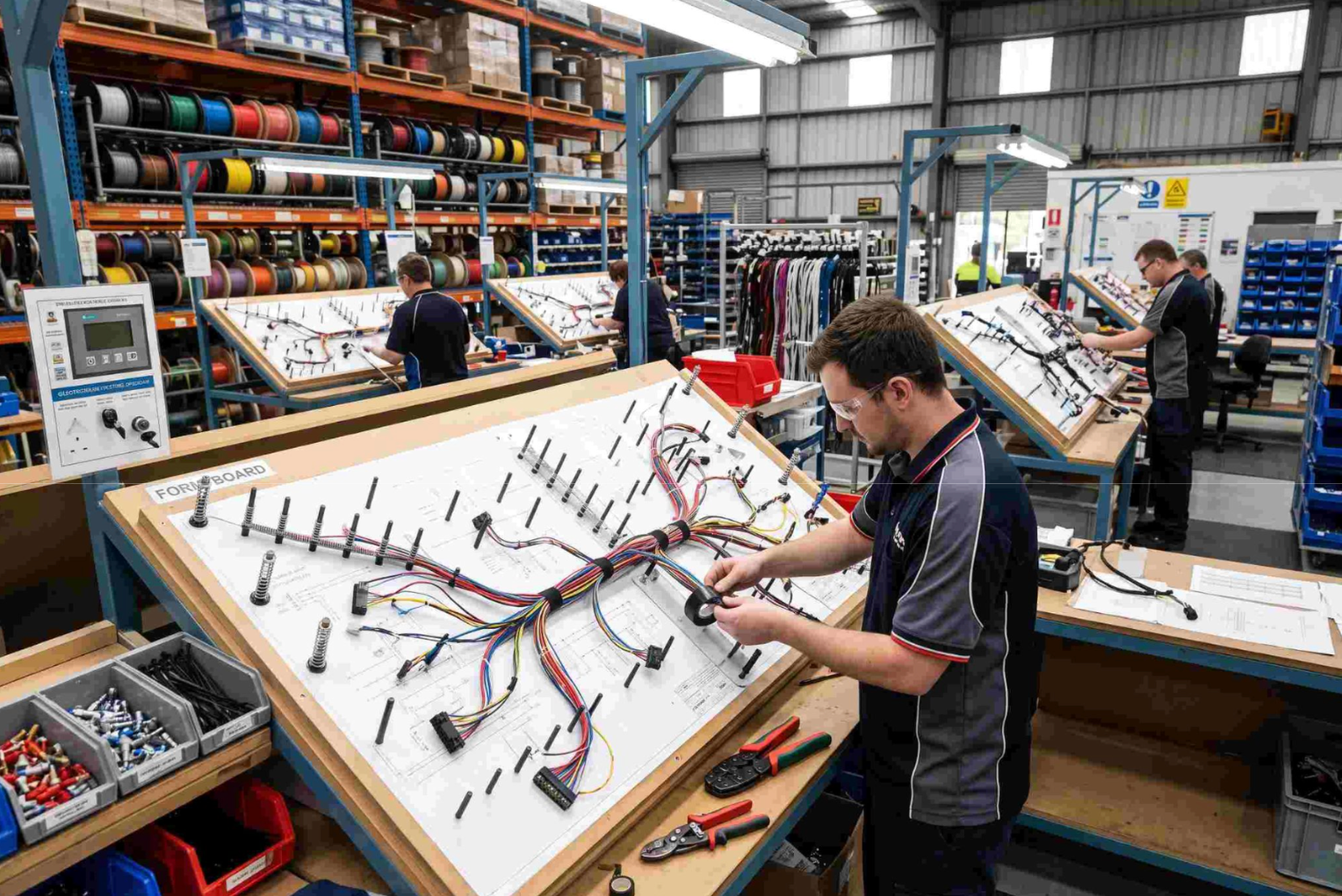
Things go wrong in manufacturing all the time. A crimping tool falls out of its calibration window or a bad batch of copper wire makes it through the supplier network. When a failure inevitably happens; you need to know exactly how many units are affected to contain the damage.
Traceability records provide the specific date codes and lot numbers for the raw materials used in your custom assemblies. If a specific relay inside a custom control box fails prematurely in the field, traceability documents let you isolate the problem to a single production week rather than recalling a year of product. Ask your cable harness producer for their standard lot tracking documentation. Competent suppliers will have this process automated and can generate a report in minutes. If they push back or say it takes days to compile the paperwork, consider that a major warning sign about their internal quality controls.
Compliance and Environmental Declarations
Where you plan to sell and use your final product will decide what papers you must keep. You will likely need proof that the product meets environmental and legal rules. Many teams rely on RoHS and REACH statements. These documents show the parts do not include certain banned toxic substances, such as lead or cadmium.
Even if the supplier claims their standard parts are compliant custom builds often introduce new materials. Specialized adhesives, custom potting compounds or unique sheathing materials can all impact compliance. Get the declarations in writing for the entire custom assembly, not just the base wire. For example if you are shipping a control panel containing a complex wiring harness in finland, the whole assembly needs to meet stringent European environmental regulations. Your internal compliance department will need those material declarations on file to legally ship the product.
Change Management and Revision Histories
Custom electrical projects rarely stay exactly the same from the first prototype to the final production run. I've seen projects stall simply because an undocumented change caused massive confusion on the assembly line. Wires get lengthened slightly to improve fitment. Connectors are swapped out based on availability. Pinouts change based on early field testing feedback. You need a formal document tracking every single one of these changes.
This usually comes in the form of an Engineering Change Order log. The log should clearly state what was changed, exactly when it was changed, who authorized the modification and why the change was made in the first place. Without a clear revision history, it's incredibly easy for a supplier to accidentally build the second production run using the outdated version one drawings. Having a paper trail of changes keeps both your engineering team and the supplier completely aligned on the current build standard.
End of Line Testing Protocols
Finally request documentation that outlines the exact end of line testing protocols the supplier uses. This should be a step-by-step description of how they test the completed assemblies before putting them in a shipping box.
You want to see their specific methodology. Are they doing a functional test on every single unit or are they relying on statistical sampling? Are they using automated test fixtures that eliminate human error or is a technician manually checking pins with a multimeter? Knowing their exact testing protocol helps you understand the real risk of a defective unit slipping through the cracks. If their testing process looks weak or inconsistent on paper, you have the opportunity to define a better test procedure before the bulk of your order gets manufactured. Good documentation here eliminates surprises later.
Related Posts
- What Developers Should Understand Before Moving an Ecommerce Store to the Cloud
- RWA Tokenization Platform Development Trends 2026: Technologies, Benefits, Costs & Business Opportunities
- What Essential Tools Do You Need for Road Trip Vlogging?
- How Do You Choose an Electronics Manufacturing Partner for Your First Product?
- What Documents Should You Request With Custom Electrical Components?
- What Should You Include in a Realistic Budget for a Custom Electronic Product?