



Discover how engineering teams use AI across the full development lifecycle from meetings and DevRel to product demos and infrastructure to boost productivity and scale faster.

The conversation about Artificial Intelligence in software development used to be about one thing: code completion. You would open your Integrated Development Environment, a suggestion would appear and you would either accept it or not. That was the story.
That story has changed a lot.
In 2026 the forward-thinking engineering organizations are no longer treating Artificial Intelligence as a single tool that they add to the development workflow. They are using Artificial Intelligence in every layer of how their teams operate. From the moment a sprint planning meeting starts, to how they ship product announcements to how they build the infrastructure that other developers use. The result is that Artificial Intelligence investments in one part of the organization make everything else work faster and better.
This article explores how performing engineering teams are making that change. And which Artificial Intelligence tools are emerging as foundational across each stage of the modern development lifecycle.
The Myth of the Single Artificial Intelligence Tool
There is an idea in enterprise software right now: find the right Artificial Intelligence tool use it everywhere and watch productivity increase. It is simple and almost entirely wrong.
The reality is more complicated and interesting. Engineering teams work in different contexts at the same time. Design reviews, customer calls, sprint ceremonies, documentation sprints, demo preparation, Application Programming Interface integrations, marketing collaboration. In each of these contexts different Artificial Intelligence tools work better or worse. The teams that are doing well are not the ones that found one tool. They are the ones that built a group of tools that work well together and connected them into a real workflow.
What does that group of tools look like in practice? It varies by organization. Some categories have become consistent across high-output teams.
1. Async Communication: Capturing What Actually Matters
Engineering teams spend a lot of time in meetings. Architecture reviews, incident postmortems, vendor evaluations, one-on-one meetings with reports, cross-functional syncs with product. It adds up fast.. For every hour spent in a meeting there is a cost later on. The documentation of what was decided who owns what and what the follow-up actions are.
Taking notes by hand in discussions is not very effective. The people who are best at capturing a decision about database schema design or Application Programming Interface versioning strategy are the people who are actively contributing to the conversation. You cannot do both things well at the time.
This is why Artificial Intelligence meeting notes have become a tool for senior engineers and engineering managers at companies that take execution seriously. Tools like Krisps Ai note taker automatically capture, transcribe and summarize conversations in real time producing structured summaries with action items, decisions and open questions. Without anyone having to step back from the discussion to write things down.
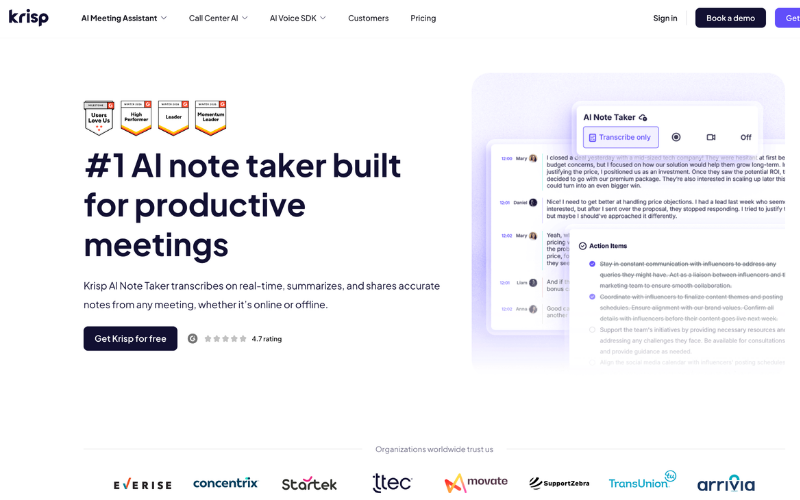
The impact goes beyond meetings. When technical decisions are captured reliably and consistently new team members can learn by reading the decision history rather than trying to remember the context. Postmortem reviews become more productive because the timeline of what was said and decided's documented.. Engineering managers spend less time writing weekly status updates because the source material is already organized.
For teams using cloud development environments like Coder, where distributed teams across time zones collaborate asynchronously this kind of reliable meeting capture becomes more valuable. A developer in Singapore reviewing a workspace template decision made in a San Francisco architecture review should not have to wait for someone to write it up. They need the summary now while the work is happening.
2. Developer Relations and Technical Content: The Rise of Artificial Intelligence-Powered Personas
is a role that did not exist in most engineering organizations five years ago and is now considered essential at any developer-focused company: the developer advocate.
Developer advocates sit at the intersection of engineering and marketing. They write tutorials speak at conferences build sample applications, host livestreams, post on social media and generally work to build trust and credibility with external developer communities. In the context of platforms like Coder. Which runs self-hosted cloud development environments for enterprises. Developer advocates are often the primary interface between the product and the broader engineering community that evaluates, adopts and champions it.
The challenge is scale. A single developer advocate, no matter how talented can only produce much content.. The content must feel real. Too polished or too corporate and technical audiences immediately disengage.
An emerging solution is the use of an Ai influencer as a branded content persona. A Artificial Intelligence-generated character or virtual ambassador that represents the developer platforms voice across channels. Picsarts Persona tool allows teams to build these Artificial Intelligence-generated creator identities complete with visual style, tone and presence. For DevRel teams under pressure to maintain active engaging media presences alongside their other responsibilities this kind of tool allows them to extend their output without sacrificing the consistency that technical audiences respond to.
This is not about replacing technical voices. The best developer advocates. The ones who deep-dive into Terraform configurations on a Thursday afternoon and post about it. Are irreplaceable. What Artificial Intelligence persona tools offer is coverage: consistent brand presence in spaces where a human advocate simply does not have the time to be every day.
Used thoughtfully this approach lets a four-person DevRel team have a bigger impact in community presence while their actual humans stay focused on the high-signal deeply technical work that no Artificial Intelligence persona can replicate.
3. Product Demos and Release Communications: Making Technical Work Visible
Engineering teams build things. They routinely redesign infrastructure that runs millions of requests per second refactor codebases that have accumulated a decade of complexity and ship features that fundamentally change how their platform behaves. Most of this work is completely invisible to anyone outside the team.
Part of this invisibility is structural. Engineering work is hard to communicate, to audiences who did not participate in the build.. Part of it is a resource problem. Producing a product announcement video, a visual walkthrough of a new feature or a demo reel for an upcoming conference appearance requires skills and time that most engineering teams simply do not have in house.
This is where text to video ai Intelligence tools have become genuinely useful. Platforms like Renderforest allow engineering teams to convert written descriptions. Changelog entries, feature documentation launch blog posts. Into video content, with voiceover, motion graphics and on-brand presentation without requiring a video production team or significant post-production time.
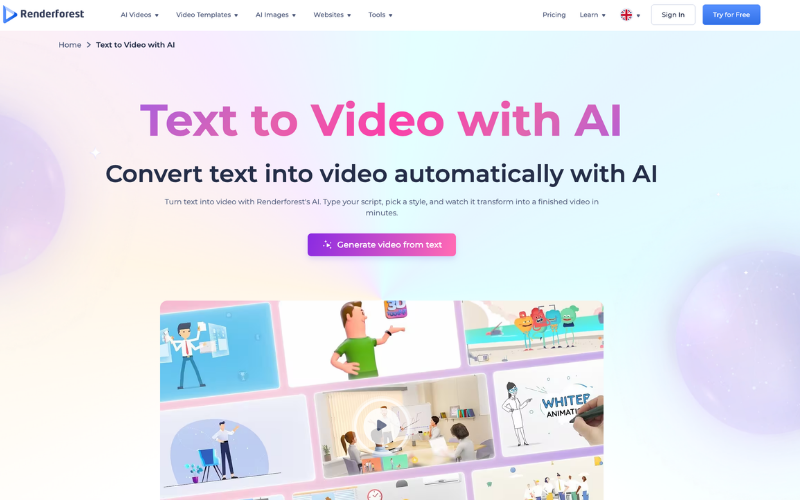
For a team shipping an update to their cloud development environment. Say, a new Artificial Intelligence governance layer that controls how coding agents access sensitive repositories. Turning that announcement into a two-minute explainer video used to take a week and a contractor. With text-to-video Artificial Intelligence it takes an afternoon. Produces content that genuinely communicates value to an audience of Chief Technology Officers and platform engineers evaluating whether to expand their deployment.
This matters more than it might initially seem. Engineering credibility is increasingly built through consistent communication. Teams that ship in silence good the underlying work lose ground to teams that ship publicly and explain what they built and why it matters. Artificial Intelligence video tools lower the activation energy for that kind of communication to a point where it becomes a part of the release cadence rather than a special project.
4. Internal Tooling and SaaS Integration: Building With a Website Builder API
One category of Artificial Intelligence adoption in engineering organizations that often flies under the radar is the use of Application Programming Interfaces to accelerate internal product development. Particularly the web-facing layer that customers and developers interact with.
Many engineering teams at developer platforms need to spin up web properties documentation portals, trial environment landing pages, partner integration microsites, event registration pages for developer conferences. Traditionally this work falls to a web team that has priorities or to engineers who would rather be building core product. Either way it is slow.
A website builder API changes that calculus significantly. 10Webs API allows engineering teams to programmatically generate, customize and deploy Artificial Intelligence-powered WordPress sites. Complete with hosting, optimization and structure. Through code than through a manual design and build process. For platform engineering teams that need to ship web infrastructure without pulling senior engineers away from core work this kind of API-first approach to site creation fits naturally into the same Continuous Integration and Continuous Deployment mindset that governs the rest of their toolchain.
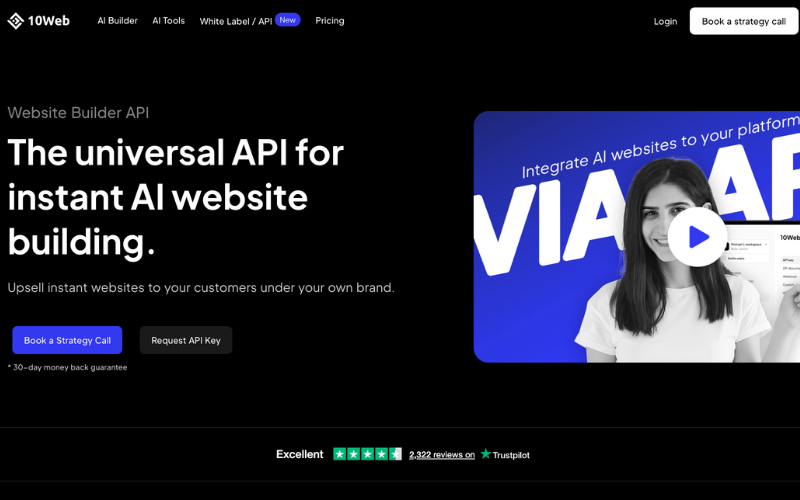
Think about what this means. A platform team launching a Coder workspace template for financial services customers needs a dedicated landing page explaining the compliance controls, the deployment architecture and the onboarding steps. They do not need a six-week design sprint. They need a functional well-structured page that is live in days. A website builder API gives them that. Programmatic control over web output, integrated into the automated workflows they already use.
This is also relevant for developer platforms that offer label or reseller capabilities, where partners need to spin up branded instances of a product under their own domain and visual identity. The API approach means that process can be fully automated than manually managed by a professional services team for each new partner.
Connecting the Stack: What These Tools Have in Common
If you step back and look at the four categories above. Meeting capture, content personas, video communication and API-driven web tooling. A pattern emerges. Each of them addresses a problem that engineering teams have traditionally solved with either effort that could be better spent elsewhere or with specialized external teams that introduce delay and coordination overhead.
Artificial Intelligence tools, in each of these categories are not replacing judgment. They are eliminating the friction between having an idea or decision and getting it into a form where it can actually be acted on communicated or shipped.
The real promise of Artificial Intelligence across the development lifecycle is not about machines coding your platform for you. It is about reducing the tax of coordination, communication and production that comes with great engineering work. This tax is what makes things expensive. When this tax goes down the benefits are really big.
What This Means for Platform and Engineering Leaders
If you are an engineering leader thinking about Artificial Intelligence adoption you might want to focus on Artificial Intelligence coding tools. This is because these tools can show you productivity results in metrics.. The teams that are building strong competitive advantages are thinking about more than just this.
They want to know which meetings should never need notes again. They are creating DevRel strategies that use Artificial Intelligence personas to be present in the developer community at a cost. They treat every release as a communication event, not just a deployment event. They use Artificial Intelligence video tools to make communication easy to make and easy to understand. They choose to use APIs of manual processes when it is possible to generate the web and content infrastructure that supports their product programmatically.
The infrastructure layer for Artificial Intelligence development is where the technical work happens. This includes platforms like Coder that provide environments for developers and their agents.. The tools that surround this infrastructure and the workflows that connect them are also very important.
The engineering teams that get both right will move faster than the ones that focus on one or the other.
The definition of developer productivity is now bigger. It is not about the code editor. It includes how decisions are recorded how work is communicated, how developer communities are built and how the web infrastructure that supports a platform is created and maintained.
Artificial Intelligence tools are available for all these areas. The question for engineering leaders is not whether to use them but which ones to use, in what order and how to connect them into a workflow that gets better over time.
The teams that are doing this right are not using Artificial Intelligence randomly. They are making choices about where human effort is really valuable and where Artificial Intelligence can handle the rest. This frees their people to do the work that actually makes a difference.
Interested in how enterprise teamsre structuring their Artificial Intelligence development infrastructure? Coder provides self-hosted cloud development environments, with built-in Artificial Intelligence governance. This gives engineering organizations the control and scalability they need to adopt Artificial Intelligence on their own terms.